Union talks over working hours collapsed without a deal, triggering a board-level halt on all domestic capital spending.
No new money. That is what Mercedes-Benz told its German factories after wage and working-hour negotiations with unions broke down without agreement. Production chief Michael Schiebe confirmed the freeze in an internal interview circulated on the company's intranet. Plant closures are now under active review.
The investment halt covers every German Mercedes-Benz site simultaneously — a scope that goes beyond any single labour dispute. For comparison, Volkswagen's 2024 restructuring targeted specific plants in Osnabrück and Dresden; Mercedes is pausing capital allocation system-wide before deciding which sites survive. According to Mercedes-Benz's intranet statement, published in early 2025, the board acted jointly and unanimously. The German automotive sector shed roughly 35,000 jobs in 2024, according to the ACEA Workforce Report, published January 2025.
What the Intranet Statement Actually Said
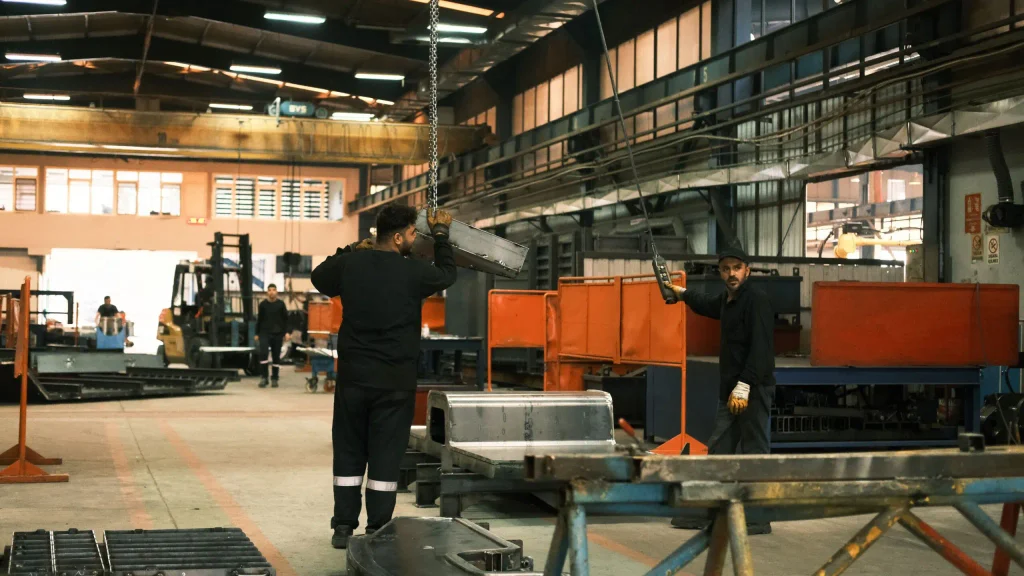
Michael Schiebe, head of production at Mercedes-Benz Group AG, delivered the news through an internal channel rather than an investor call or press conference — a deliberate choice that limited immediate external scrutiny. The statement, posted to the company's intranet in early 2025, carried a direct formulation: the board had "jointly decided to stop all further investments in the German locations." No staging, no phased reduction. A full stop on new capital. Schiebe's title and the intranet format gave the announcement executive authority without triggering mandatory stock-exchange disclosure obligations that a formal strategic announcement would require. This matters for timing: workers at affected sites learned of the freeze through internal channels before any public confirmation. The document does not name which plants face closure review, nor does it set a deadline by which site assessments will conclude. Those omissions are not accidental. For broader context on how this fits the current wave of European automotive restructuring, see the industry restructuring tracker for 2025–2026.
The Cost Arithmetic Driving the Decision
Mercedes-Benz operates eight major production sites in Germany, employing approximately 75,000 direct production workers. Labour costs at German plants average roughly €58 per hour in total employment cost, according to the VDA Automotive Industry Cost Benchmark, published Q3 2024 — against €22–€28 per hour at comparable Mercedes facilities in Hungary and South Africa. That gap runs to at least €30 per hour per worker. At 75,000 workers averaging 1,700 annual hours, the differential compounds: 75,000 × 1,700 hours × €30 = €3.825 billion in annual labour cost premium above comparable offshore sites. That figure does not include energy costs, which rose 41 percent for German industrial users between 2021 and 2024, according to the German Federal Network Agency's Energy Cost Index, published February 2025. Mercedes reported a 12.6 percent operating margin in 2022; by Q3 2024 that figure had compressed to 7.9 percent. The directional pressure is unambiguous, even before accounting for softening EV demand across European markets.
The Freeze Comes Before Any Closure List
Here is what does not add up. Standard corporate restructuring sequences a site review first, identifies underperforming locations, then suspends investment in those specific plants while protecting others. Mercedes inverted that order. The investment freeze arrived before any site assessment was published or announced. Workers at Sindelfingen — which assembles the S-Class and EQS, two of the company's highest-margin products — face the same capital freeze as lower-volume plants whose futures are genuinely uncertain. Sindelfingen employs around 35,000 people and is the single largest Mercedes-Benz plant globally by headcount. Blanket suspension of investment there, alongside smaller sites, suggests either that the board moved faster than its own review process, or that the freeze is primarily a negotiating instrument against IG Metall rather than a genuine operational decision. The union has not publicly accepted that interpretation. What Mercedes-Benz has not confirmed: a timetable, a list of plants under closure review, or any severance framework. Those gaps leave approximately 75,000 employees without clarity on their sites' futures.
How Mercedes Compares to Its German Rivals Right Now
Volkswagen Group reached a restructuring agreement with IG Metall in December 2024 after months of confrontational negotiations. That deal preserved all six German VW-brand plants while cutting costs through a voluntary redundancy scheme and reduced hours rather than closures — a compromise that cost roughly €1.5 billion in one-off charges but avoided the reputational and legal exposure of forced site shutdowns. BMW, by contrast, has announced no equivalent freeze on German investment; its Munich and Leipzig plants are scheduled to receive EV retooling capital through 2027. Mercedes is therefore the outlier among the three German premium volume producers: uniquely exposed, uniquely stuck in a labour standoff, and uniquely unwilling — or unable — to commit to the kind of negotiated settlement Volkswagen ultimately accepted. The contrast is sharper when output is considered. Mercedes delivered 2.04 million vehicles globally in 2024, down from 2.49 million in 2022 — a 18 percent volume decline over two years, calculated from Mercedes-Benz Group AG annual delivery data.
What Happens Next for IG Metall and the Affected Sites
IG Metall, the industrial union representing Mercedes production workers, now faces a harder position than it held before the freeze. The union entered negotiations seeking a pay increase and resistance to working-hour extensions. The board's response — a blanket capital halt rather than targeted concessions — shifts leverage away from site-level bargaining and toward a company-wide threat. Christiane Benner, chairwoman of IG Metall, has publicly criticised automotive management decisions that use restructuring announcements as bargaining tools, though she has not commented specifically on the Mercedes freeze as of the date of publication. The practical consequence for individual plants is immediate: planned tooling upgrades, capacity expansions, and EV production line retrofits are suspended with no restart date. At Rastatt, which produces the A-Class and was scheduled to begin GLC electric variant assembly in 2026, that suspension affects a production changeover already in engineering planning. Suppliers to Rastatt — including several Tier-1 firms in Baden-Württemberg — have received no formal communication on revised timelines, according to industry body Südwestmetall's March 2025 member briefing.
Mercedes-Benz's German workforce has not seen a plant closure since the company shuttered its Düsseldorf van assembly site in 2021 — a significantly smaller operation than any passenger-car plant now under review. The company's works council holds statutory co-determination rights under German law, meaning no closure can proceed without a negotiated social plan, a process that typically takes 12 to 18 months minimum. Time is not neutral here. The complete Mercedes-Benz model history and specifications are catalogued in the Global Auto Index manufacturer database.
