
More than 750 robots and 5,000 weld points per body are active as the Traveler SUV and Terra pickup take shape.
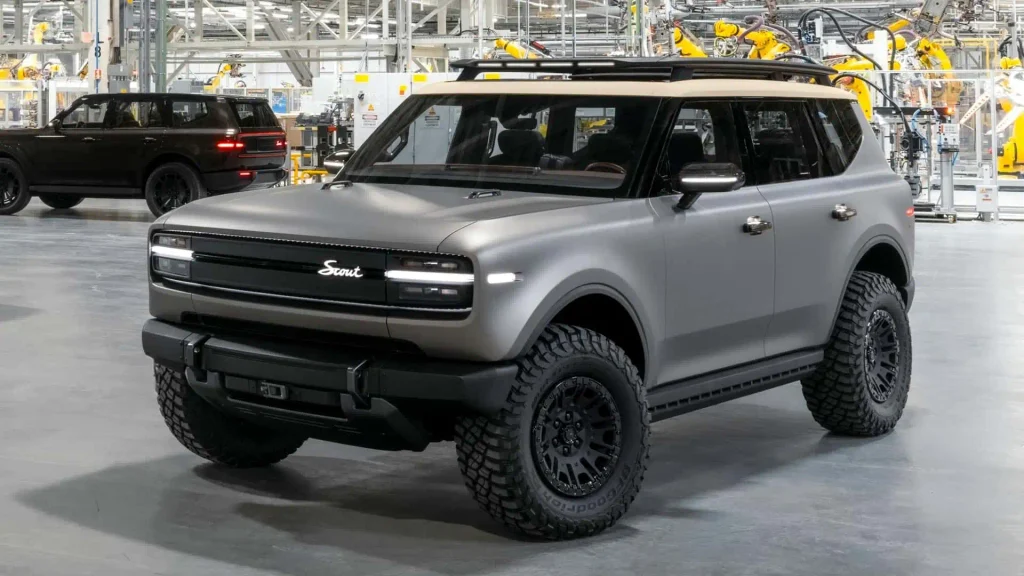
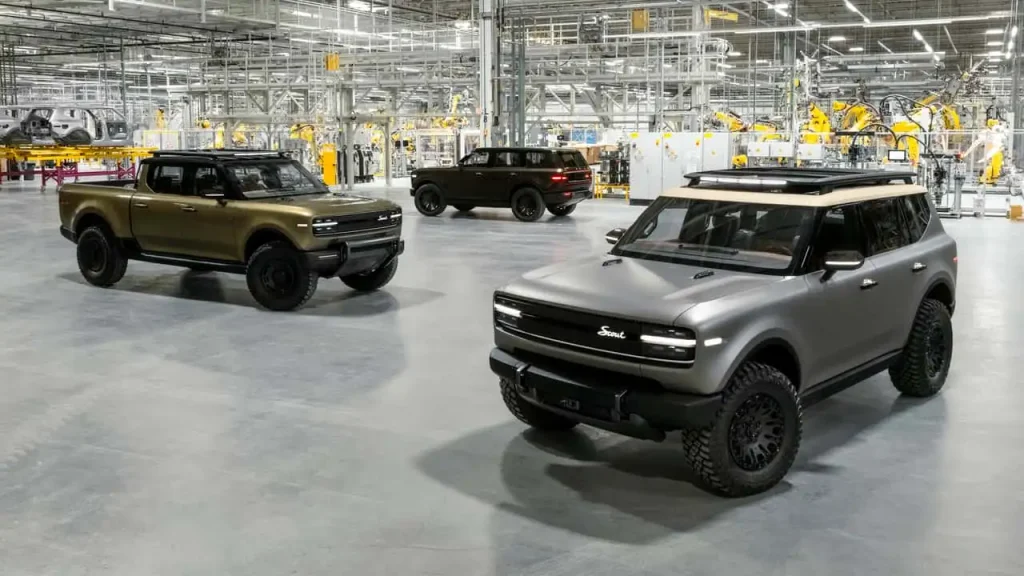
Scout Motors has started building real vehicles in Blythewood, South Carolina. Not renders. Not mules. The Traveler SUV and Terra pickup are moving through the body shop, paint shop, and assembly line of a facility that cost $2 billion to construct and is still hiring.
The move from factory construction to validation builds is the clearest signal yet that Scout—a brand revived after a four-decade absence—intends to compete directly with Ford's F-150 Lightning and Ram 1500 REV in the full-size electric truck segment. According to Scout Motors' official production announcement, published November 2024, full-scale manufacturing readiness is not expected before 2027, putting the program roughly three years behind Rivian's first deliveries in 2021.
From Construction Site to Body Shop
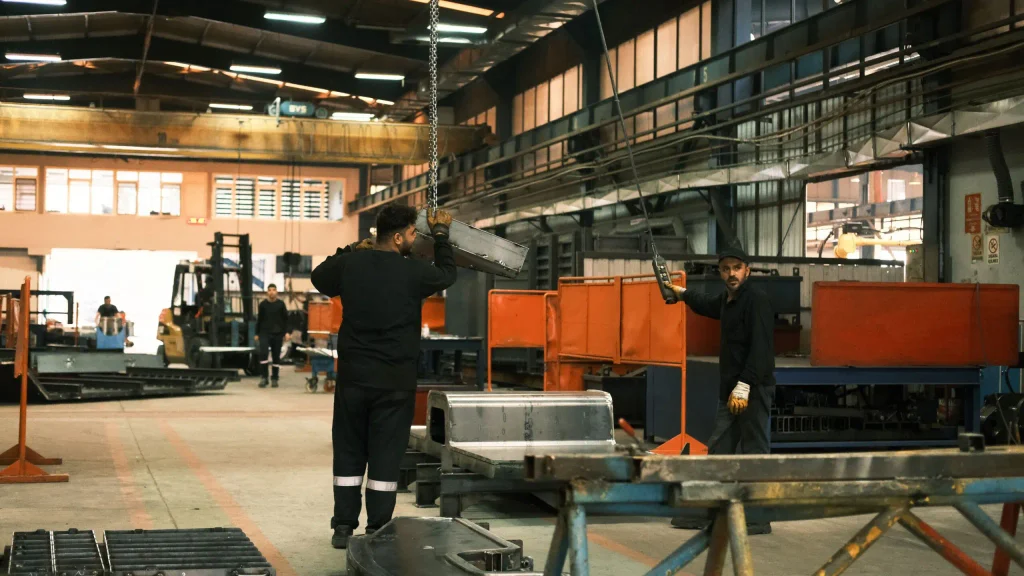
Workers at the Blythewood plant assembled the first validation bodies in November 2024. The body shop pulls together approximately 160 individual parts to form each vehicle shell. Robots weld them. Automated measurement systems scan them. Sample bodies receive thousands of individual measurements before anything moves to the paint shop. After welding, each body enters an electrified paint shop for cleaning, coating, corrosion protection, painting, drying, and a final inspection pass. From there, human assembly teams install wiring harnesses, window glass, seats, steering columns, and tires. The sequence mirrors conventional high-volume auto production—deliberately. Scout is not inventing a new manufacturing process; it is proving it can execute a proven one at a facility that had no vehicles rolling through it twelve months ago. This production ramp is part of a broader industry restructuring underway across North American EV manufacturing in 2026, as multiple new entrants attempt the same transition from construction to output.
The Numbers Behind the Factory Floor
Scout Motors is spending more than $2 billion on the Blythewood production center. Add the $300 million Supplier Park announced in 2025 and the total committed capital reaches at least $2.3 billion. The Supplier Park is projected to draw a further $368 million in third-party supplier investment—meaning total ecosystem capital tied to the site could reach $2.668 billion, calculated as $2,000M + $300M + $368M. On employment: the main plant targets more than 4,000 direct jobs; the Supplier Park supports approximately 1,000 additional supplier positions, putting the combined headcount projection at roughly 5,000 workers. Inside the body shop, 750-plus robots handle welding across approximately 5,000 weld points per completed body. At full rated capacity, the body shop is designed to process around 40 vehicles per hour—one vehicle every 90 seconds. Scout is nowhere near that rate during validation. The gap between rated capacity and current output is not a flaw; it is the definition of a validation phase.
Keogh: 'No Longer a Promise on Paper'
Scott Keogh, President and CEO of Scout Motors, issued a statement tied directly to the start of validation builds. His words were unambiguous: 'What we are building in Blythewood is no longer a promise on paper. Our equipment is coming to life, and our teams are building our first validation vehicles right here in the factory.' The 26-word extract is notable for what it concedes as much as what it claims. 'No longer a promise on paper' acknowledges the credibility deficit any new brand faces before metal moves. Keogh joined Scout Motors after leading Volkswagen Group of America, where he oversaw the ID.4 launch—a vehicle that also faced production delays and quality concerns in its first model year. His presence signals that Volkswagen Group is treating Scout as a serious volume program, not a low-risk concept exercise. Whether that confidence holds through the 2027 pre-production phase remains to be confirmed.
Scout vs. Rivian: The Clock That Already Started
Rivian shipped its first R1T pickup in September 2021 from its Normal, Illinois plant—a facility that also cost roughly $5 billion in cumulative investment by 2023, according to Rivian's annual SEC filing for fiscal year 2023. Scout's Blythewood plant, at $2.3 billion in committed capital, is a leaner build. But Rivian had a three-year head start on deliveries by the time Scout's first validation body cleared the weld shop. Ford began F-150 Lightning deliveries in spring 2022. Ram's 1500 REV reached customers in late 2023. By the time Scout targets full manufacturing readiness—no earlier than 2027 per the company's own stated timeline—Rivian will have had six model years on the road to work out software, range, and service network issues. That accumulated field data is a structural advantage Scout cannot buy. It can only close the gap by executing validation and pre-production faster than its own published schedule suggests.
212,000 Reservations, Zero Confirmed Specs
Scout reported 212,000 reservations for the Traveler and Terra as of late 2024. That figure is striking. It is also unverified by any independent audit, and Scout has not published reservation deposit amounts, refund terms, or cancellation rates—none of which were confirmed in the November 2024 production announcement. For context, Rivian cited approximately 55,000 reservations at its IPO in November 2021; that number later proved a poor predictor of near-term conversion rates. Scout has not confirmed the final EPA range estimates, towing ratings, payload figures, or pricing for either the Traveler or the Terra. The company has also not stated whether the Terra pickup will arrive simultaneously with the Traveler SUV or on a separate schedule. A report cited in trade coverage suggested the Terra could slip to as late as 2030—a date Scout has neither confirmed nor formally denied. That silence is itself a data point.
Scout Motors traces its nameplate to the original International Harvester Scout, produced between 1961 and 1980 across roughly 532,000 units before International Harvester exited the consumer vehicle market. Volkswagen Group acquired the Scout trademark and relaunched the brand in 2022. If Blythewood reaches its rated 40-vehicle-per-hour capacity on a standard two-shift schedule, annual output could theoretically exceed 460,000 units—a number that would surpass the entire original Scout production run in a single year. That ceiling is theoretical. The complete Scout Motors model history and specifications are catalogued in the Global Auto Index manufacturer database.
