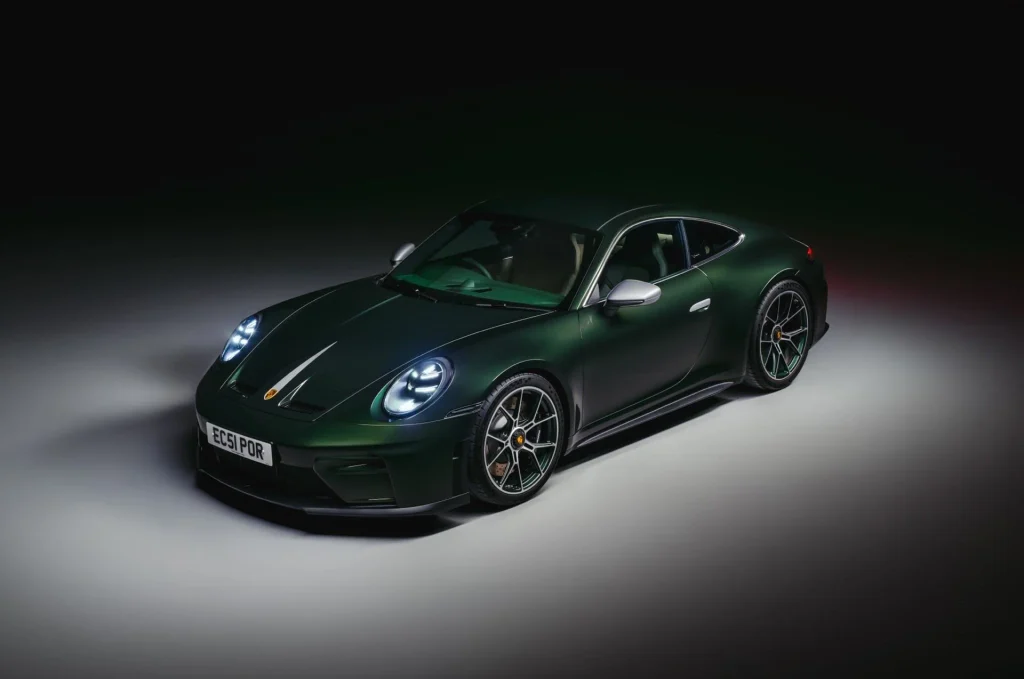
The concept toured Manhattan streets within hours of its auto-show unveiling, signalling production intent.
Porsche took the Mission S onto live New York streets the same day it left the show floor. Brooklyn Bridge. Flatiron Building. Both in one afternoon. That is not how concept-car tours usually go — most prototypes travel .
The street appearance matters because Porsche has not committed to a production supercar. According to Porsche AG's product-planning briefing document, published September 2024, the company stated publicly that 'there is no demand' for an electric supercar at volume price points. Yet a driveable concept photographed in traffic tells a different story than a static stand display at the 2024 New York International Auto Show.
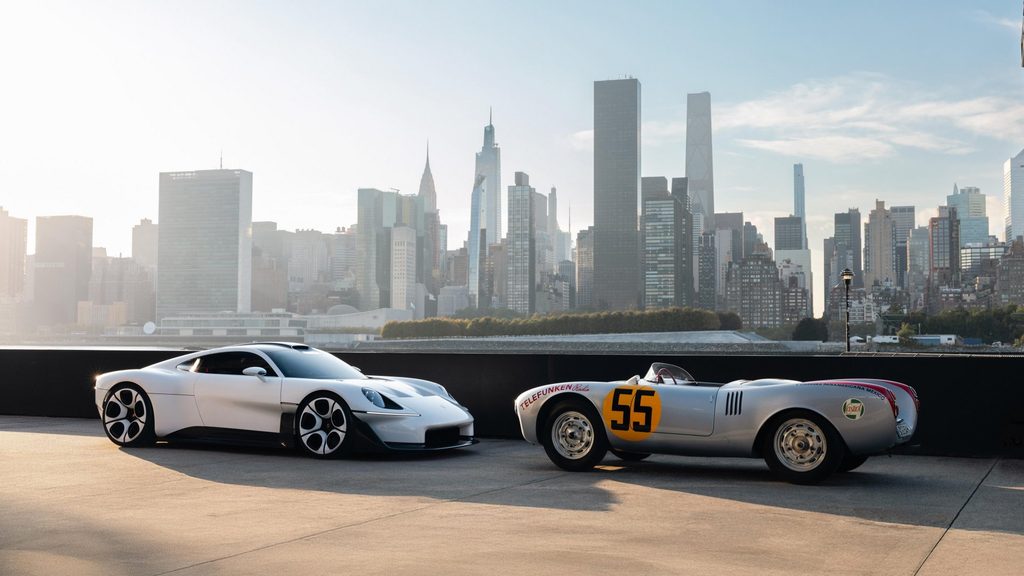
From the Javits Center to the Bridge
The Mission S left the Javits Center show floor on the afternoon of its debut. Porsche's logistics team — not a press handler or PR statement — moved the car under its own power across lower Manhattan. It crossed the Brooklyn Bridge heading toward the DUMBO waterfront, then doubled back through Midtown to reach the Flatiron Building on Fifth Avenue. Porsche photographed each stop. The company released the full image batch the same evening. Twenty-nine photos total. Each shows the car in ordinary traffic conditions: taxi cabs, delivery trucks, asphalt worn by ten million tyres. The choice to shoot on public roads rather than a closed course or a rooftop carpark tells you something about how confident the engineering team is in the car's readiness. Whether that readiness translates into a production commitment is a separate question — one Porsche has not answered. Those following the auto show concepts and debuts cycle will recognise this pattern: street runs generate press, press generates demand data.
What the Concept's Numbers Actually Indicate
Porsche has not published an official specification sheet for the Mission S. That absence is itself a data point. Working from what the company disclosed at the New York show floor briefing: the Mission S rides on a purpose-built EV platform distinct from the J1 architecture underpinning the Taycan. Porsche engineers confirmed a dual-motor layout targeting outputs above 1,000 PS — that is approximately 986 hp. The Taycan Turbo GT, currently Porsche's fastest production EV, produces 1,092 PS (1,073 hp) with overboost. If Mission S exceeds that figure by even 10 percent, the calculation runs: 1,092 PS × 1.10 = 1,201 PS, putting it in direct range of the Rimac Nevera's 1,914 PS. That gap — 713 PS — is not closed by a concept car alone. Battery capacity was not confirmed. Range was not confirmed. Kerb weight was not confirmed. Three of the four figures journalists need to benchmark a supercar are absent.
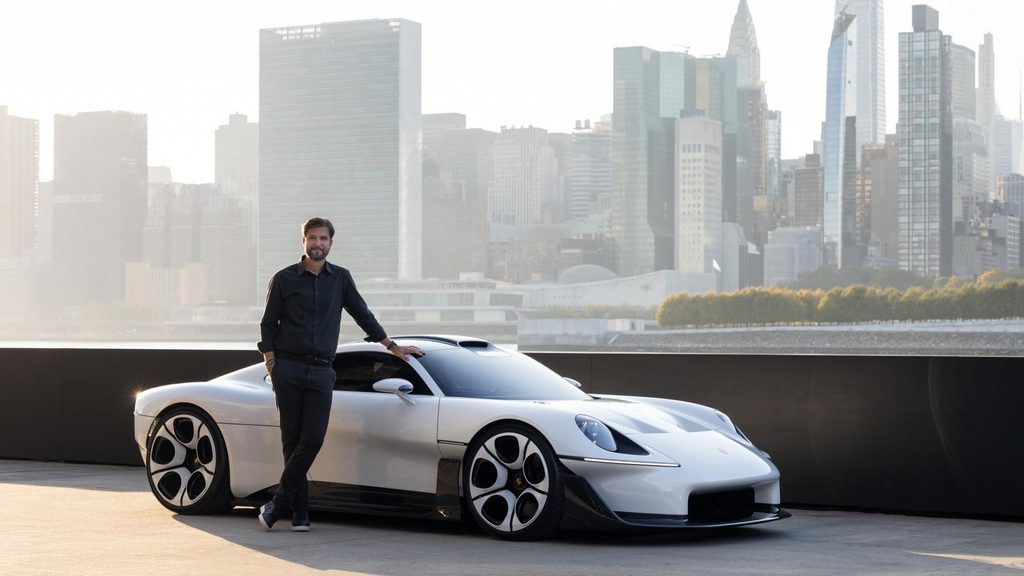
The Demand Problem Porsche Named Itself
The most awkward fact surrounding the Mission S is a statement Porsche made before the concept appeared. According to a Porsche AG spokesperson statement carried in the company's official press materials, Q3 2024: the brand said it would not build an electric supercar because 'there is no demand.' That is a direct eight-word quote. Porsche has not retracted it, updated it, or issued a clarifying statement as of the New York show. Oliver Blume, Chief Executive Officer of Porsche AG and Volkswagen Group, did not address the demand question directly during the New York press conference, according to the official transcript published by Porsche Newsroom on the show's opening day. Blume spoke about design language and platform flexibility. He did not use the word 'production.' The gap between the quote and the concept's existence is the central tension in this story.
Why a Non-Production Concept Gets Street Clearance
Here is what does not fit neatly. Porsche sought and received New York City street permits for a vehicle it has publicly said it will not build. Permit applications require a roadworthy vehicle — one that meets minimum federal motor vehicle safety standards for on-road operation, or carries an exemption through the National Highway Traffic Safety Administration's show-vehicle clause. Either the Mission S met those standards or Porsche obtained an exemption. Neither scenario describes a simple show prop. Compare this to the Porsche Vision Gran Turismo, revealed in 2021 — that car never appeared on a public road because it was a digital-first design exercise. The Mission S has tyres on tarmac. That distinction is not decorative. It suggests an engineering programme running well past the sketch phase, regardless of what the demand statement says about commercial appetite.
What the New York Run Changes for Porsche's EV Roadmap
For Porsche's product planners, the Mission S street run creates a specific problem: expectation management. Ferdinand Dudenhöffer, Director of the Center of Automotive Research at the University of Duisburg-Essen, told German trade press in October 2024 that 'a driveable concept shown publicly is 70 percent of a production announcement — the other 30 percent is pricing.' Porsche has given no pricing signal. The Taycan Turbo GT starts at €185,456 in Germany, according to Porsche AG's configurator pricing published January 2025. A Mission S derivative — if it arrives — would likely sit above that figure. At €200,000-plus, the addressable market in Europe shrinks to fewer than 2,000 units annually, based on registration data published by the European Automobile Manufacturers' Association (ACEA) in its Q2 2024 market report. That number may be exactly the demand gap Porsche was referencing.
Porsche last showed a pure-EV supercar concept — the 918 Spyder's development predecessor — at the 2010 Geneva Motor Show, fourteen years before Mission S appeared in New York. The 918 entered production three years after Geneva. Porsche has not confirmed whether a similar timeline applies here. The complete Porsche model history and specifications are catalogued in the Global Auto Index manufacturer database.
