A new integrated control unit manages motors, battery, and software from one point — no patchwork modules.
Subaru rolled a modified Outback out of its proving ground north of Tokyo on October 18. Dual motors. All-wheel drive. Five hundred and ten horsepower. The wagon body is a test mule — but the platform underneath it is not.
The prototype signals that Subaru is developing a dedicated EV architecture separate from the e-TNGA platform it shares with Toyota, which currently underpins the Solterra and the forthcoming three-row Getaway SUV. According to Automotive News, published October 2024, the dual-motor setup accelerates the test vehicle to 62 mph in under four seconds — a benchmark no current Subaru EV approaches. Production hardware, executives said, could reach showrooms from 2029.
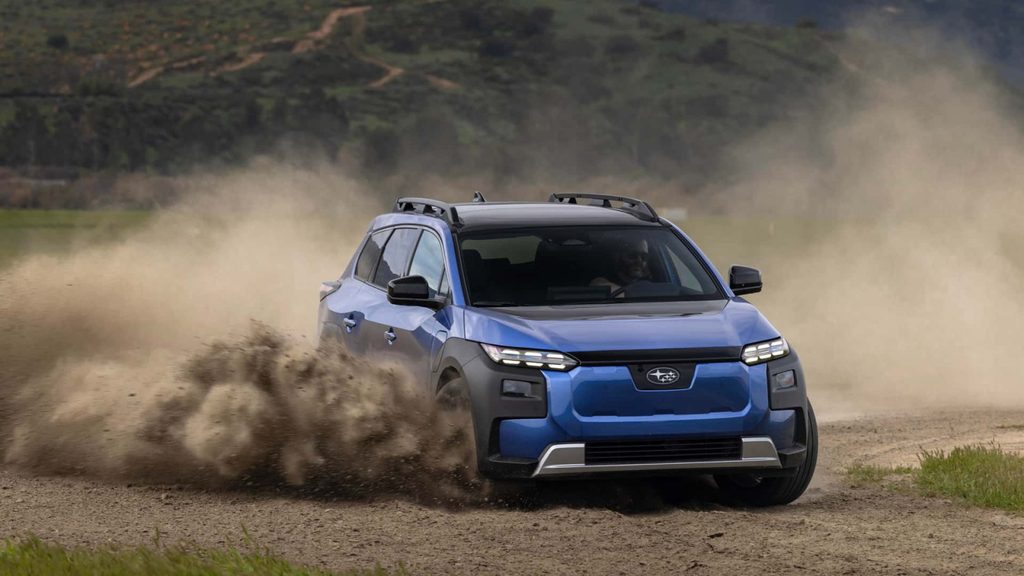
Two Motors, One Platform, 510 Horsepower
The drivetrain pairs a front e-axle from supplier Aisin rated at 150 kW (201 hp) with a 230 kW (308 hp) rear unit. Combined output: 380 kW, or 510 hp. That arithmetic — 201 plus 308 — checks out against the headline figure with one horsepower rounding. The rear motor carries 54 percent of total output; the front unit handles the remaining 46 percent. Subaru says the dedicated EV platform weighs approximately 220 pounds less than the architecture beneath current models like the Solterra and the wagon-format Trailseeker. The battery pack uses around 4,000 cylindrical cells and comes in roughly 25 percent lighter than the previous pack, with a target energy density stated at approximately 20 percent above what Subaru describes as the industry average. No battery capacity figure, charging speed, or certified range estimate was disclosed at the October 18 demonstration. Those omissions are themselves a data point. For context on how performance EV platforms are being benchmarked across the sector in 2025 and 2026, see the BMW performance EV transition tracker.
What This Is Not: Solterra, Trailseeker, or Getaway
The Solterra, Subaru's first mass-market battery electric vehicle, launched in 2022 on Toyota's e-TNGA architecture — a co-developed platform that Subaru shares with Toyota and that Subaru engineers did not control from the ground up. The Getaway, a three-row SUV confirmed for showrooms in early 2025, also sits on a Toyota co-developed platform. So does the subcompact Uncharted. The prototype shown on October 18 uses none of that hardware. Where the Solterra produces around 215 hp in its dual-motor form, the new test mule more than doubles that figure at 510 hp. Where the Solterra's platform carries the weight penalties of its shared architecture, the new chassis is 220 pounds lighter. The contrast is deliberate. Subaru's engineering team built this to demonstrate what the company can specify, tune, and update independently — including torque distribution across both axles — without routing decisions through a joint-development agreement.
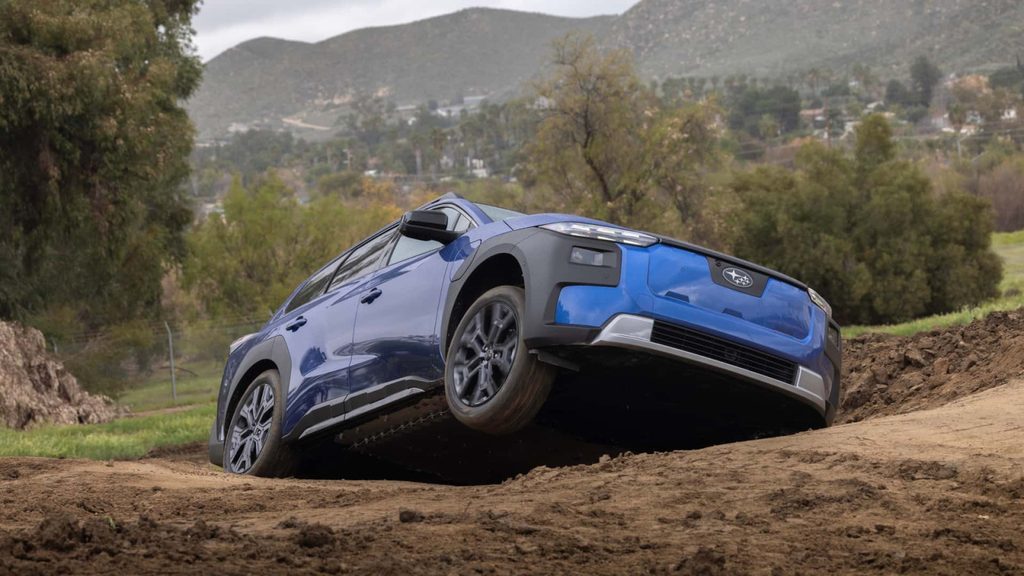
Executives Confirm 2029 Horizon, Decline to Name a Model
Subaru's executives, speaking at the October 18 proving-ground event north of Tokyo, described the hardware as something that "could reach showrooms starting in 2029" — but, according to Automotive News coverage of the demonstration, they "stopped short of naming an actual production model." That eight-word qualifier matters. Subaru has moved its in-house EV timeline before. The company's current confirmed electric lineup through at least 2026 remains entirely Toyota-partnered. Announcing a platform without a vehicle name gives Subaru room to adjust timing without retracting a product commitment. It also sends a clear signal to Toyota that Subaru is not architecturally dependent on the alliance for its next generation of performance-oriented electric vehicles. Whether the 2029 date holds will depend partly on how quickly Subaru can validate the integrated control unit — the single-module system designed to manage motors, battery, and over-the-air software updates — across the temperature and terrain ranges that Subaru's customer base expects.
The Numbers Missing From This Announcement
Subaru released a horsepower figure, a weight saving, and a relative energy-density target. It did not release battery capacity in kilowatt-hours, a DC fast-charging rate, a certified range estimate under any regulatory cycle, or a price band. For a company that made "symmetrical all-wheel drive" a marketing cornerstone for thirty years, the absence of range data in an AWD EV context is conspicuous. AWD configurations typically draw more energy than single-motor setups; without capacity and consumption figures, the 20-percent energy-density claim cannot be translated into real-world kilometres. Subaru also confirmed that the Outback wagon body on the test mule "has nothing to do with what a production vehicle will look like" — meaning the only visual reference point released is explicitly disclaimed as irrelevant. Aisin, the supplier named for the front e-axle, had not issued a separate statement confirming specifications as of the date of the demonstration, according to publicly available Aisin communications reviewed for this article.
What an Independent Platform Means for the Toyota Alliance
Subaru and Toyota have operated under a capital alliance since 2005, with Toyota holding approximately 20 percent of Subaru Corporation shares as of the most recent annual disclosure by Subaru Corporation, fiscal year 2023. The relationship has produced shared platforms, joint factories, and co-badged models. A separately developed high-performance EV platform does not dissolve that alliance — but it does change the engineering dependency equation. If Subaru certifies the integrated control unit and validates the lighter battery architecture for production, the company gains the ability to differentiate its electric performance models without negotiating platform access. That matters most at the upper end of the lineup, where the WRX and the legacy of Subaru's rally programme carry the brand's performance identity. Ken Okawara, President and CEO of Subaru Corporation, has publicly stated that electrification will proceed while preserving the character of Subaru's all-wheel-drive vehicles — a position that the October 18 prototype is, at minimum, engineered to support.
Subaru's boxer engine — the flat-four that defined the brand's mechanical identity for decades — is confirmed dead in Europe after 2027, according to Subaru's own product communications. The 510-hp electric mule and the boxer's European exit are arriving on the same timeline. That is not a coincidence. The complete Subaru model history and specifications are catalogued in the Global Auto Index manufacturer database.
