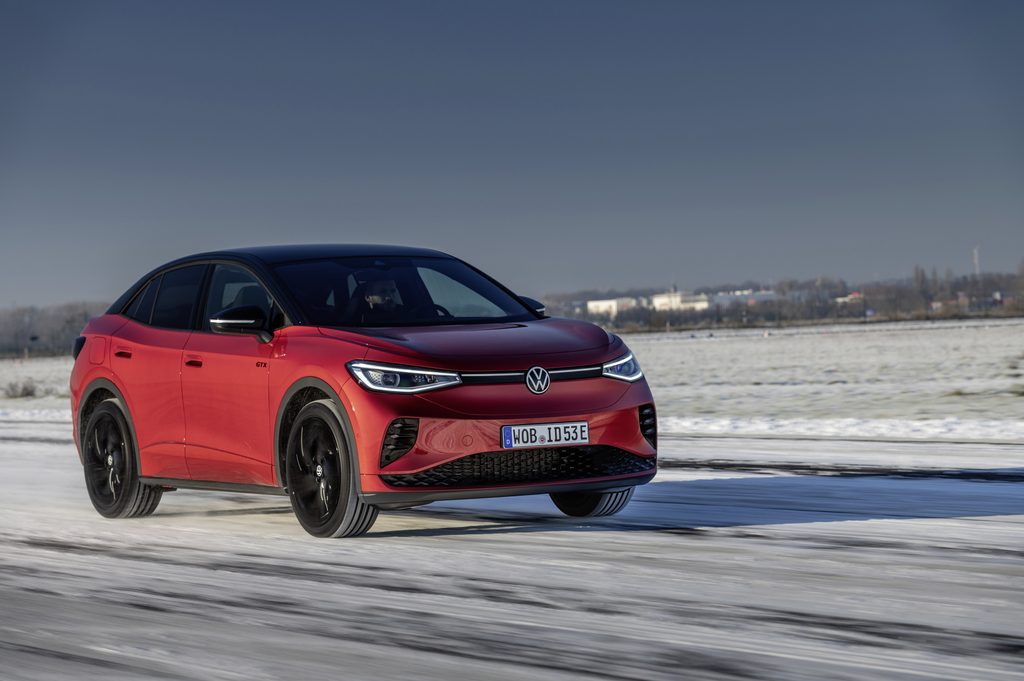
The ID.5 coupe variant is simultaneously being retired, cutting VW's electric SUV count from two to one.
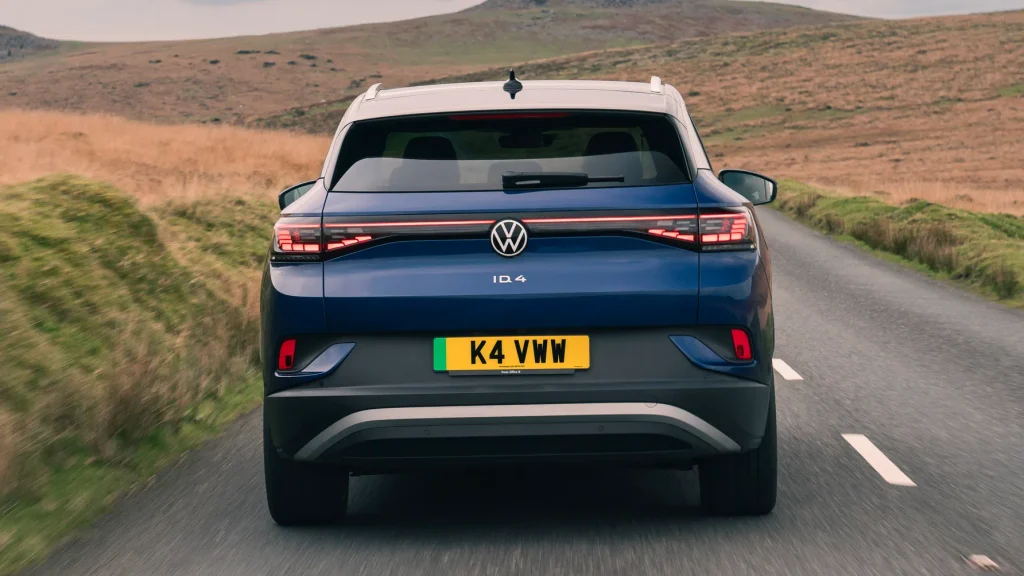
Volkswagen has confirmed it. The ID.4 is dead in name — replaced . Tiguan from early 2027. Europe gets it first. The United States follows later, filling the gap left when the outgoing ID.4 exits the North American market. Physical controls return. The ID.5 does not.
The rename is more than cosmetic. Tiguan has moved over 8.3 million units since its 2007 debut, according to Volkswagen's own product communications, giving the badge recognition that ID.4 — introduced in 2020 — never achieved at comparable scale. , BMW has retained alphanumeric identifiers across its electric iX and i4 lines. Volkswagen is betting the opposite direction pays off faster.
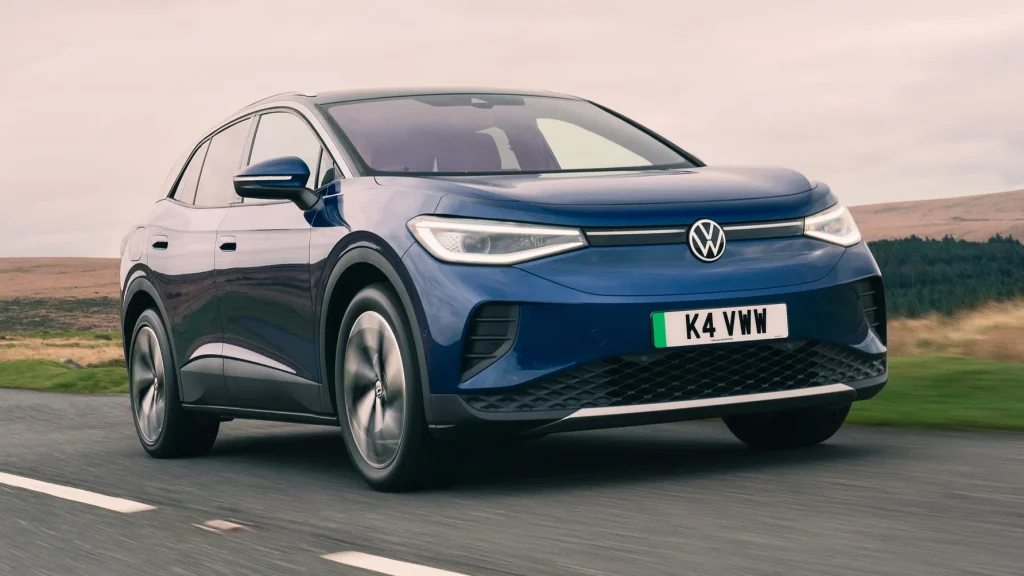
A Name Change That Buries Seven Years of ID Branding
Volkswagen unveiled camouflaged prototypes of the updated electric crossover in late September, signalling a reveal scheduled for early October. The production model carries the ID. Tiguan badge across all markets. Europe receives deliveries in early 2027. North American timing remains unconfirmed, though Volkswagen stated: the ID. Tiguan is planned to succeed the ID.4 in the North American market, with additional market-specific details to follow after the European launch. The ID.5 — the coupe-roofed sibling launched in 2021 — will not receive a comparable update. It is being retired outright. Two electric SUVs become one. The decision folds the entire volume electric crossover range into a single model wearing a name that, unlike ID.4, already exists in the memory of repeat Volkswagen buyers. Analysts covering Volkswagen Group production decisions since the 2000s have noted the group periodically retreats to legacy nameplates when novel branding underperforms registration targets.
8.3 Million Tiguans: The Commercial Logic Behind the Rebadge
Volkswagen's own product documentation puts cumulative Tiguan sales at more than 8.3 million units across the nameplate's roughly 18 years on sale. The original Tiguan launched at the 2007 Geneva Motor Show. From 2007 through end-2024 — 17 full calendar years — that averages to approximately 488,000 units per year: 8,300,000 ÷ 17 = 488,235 units annually. The ID.4 launched in volume in 2021. European registration data published by the European Automobile Manufacturers' Association (ACEA) in its 2024 full-year report shows the ID.4 recorded roughly 88,000 European registrations in 2023, against the combustion Tiguan's 207,000 in the same period — a gap of 119,000 units in a single market. The arithmetic makes the brand logic plain. Meanwhile, Kia UK's experience reaching 100,000 EV sales while calling the ZEV mandate pace unrealistic underscores just how hard sustained electric volume has proven, even for brands with stronger EV reputations than Volkswagen currently holds in Britain.
What Volkswagen Actually Committed To — and What It Left Blank
Volkswagen's official statement, distributed to media on 28 September, contained a precise but narrow commitment: "The ID. Tiguan is planned to succeed the ID.4 in the North American market. Following its European launch in early 2027, Volkswagen will share North American timing and additional market-specific details in due course." Twelve words do the real work there — "planned to succeed" and "in due course" are not a launch date. No pricing was attached. No battery specifications were published. Thomas Schäfer, chief executive of the Volkswagen passenger car brand, has spoken publicly about returning tactile controls to VW's electric models, but the September prototype release carried no powertrain figures. The omission is pointed: VW confirmed a name and showed a camouflaged body, but withheld every number a buyer or dealer network would need to act on. That gap will narrow only at the formal October reveal.
Two Tiguans, One Platform Gap — and No Plan to Merge Them
Here is what does not fit neatly. The ID. Tiguan and the combustion Tiguan share a name but nothing underneath it. The electric model rides on Volkswagen's MEB dedicated battery-electric architecture. The petrol, diesel, and plug-in hybrid Tiguan uses the MQB modular platform — a separate engineering lineage. Volkswagen has not announced any plan to consolidate the two onto a common base. A future merger onto a single electric platform would require retiring the combustion variant entirely, a step the group considers premature given what its own planning documents describe as uneven electric adoption worldwide. The result is a portfolio with two SUVs wearing the same name, aimed at the same size class, sold in some overlapping markets, built on incompatible architectures — a situation Volkswagen's communications team has not yet explained to the satisfaction of its own dealer associations in Germany, according to trade body statements reported by Automobilwoche in August 2025. Changan's rejection of shared European production arrangements shows rival Chinese brands are making harder structural bets, which increases the pressure on VW to resolve the dual-platform contradiction before the decade closes.
Interior Overhaul Targets the ID.4's Weakest Point
The single most consistent criticism levelled at the ID.4 since its 2020 reveal has been its capacitive-touch control surfaces. Camouflaged interior shots of the ID. Tiguan prototype, released by Volkswagen on 28 September, show a row of physical buttons mounted beneath the central touchscreen, discrete window switches per door, and proper buttons on the steering wheel — changes that mirror what Volkswagen applied to the ID.3 Neo during its own mid-cycle update earlier in 2025. Oliver Blume, Volkswagen Group chief executive, committed publicly in 2023 to restoring physical controls across the electric range after customer satisfaction data flagged the touch-only interface as a purchase deterrent. That commitment now appears in hardware on the ID. Tiguan prototype. A larger digital instrument cluster replaces the ID.4's driver display. The full reveal, confirmed for early October, will show whether a volume knob — visible in partial silhouette between the seats — makes production. Retailers in Germany and the UK have reportedly been briefed to expect the vehicle in showrooms by March 2027.
The combustion Tiguan entered its current third generation in 2023, priced from €37,490 in Germany at launch. The electric ID. Tiguan has not had a public starting price attached to it in any market. Volkswagen Group's global electric vehicle sales target for 2025 was set at 500,000 units in planning documents from 2023 — a figure the group acknowledged it will fall short of. The complete Volkswagen model history and specifications are catalogued in the Global Auto Index manufacturer database.
