
Output could reach 400,000 units annually by 2028, according to Nikkei Asia reporting.
Toyota is heading into China's extended-range EV market. Production reportedly begins April 2027. Initial volumes will be modest — a few hundred units per month. Then the ramp. According to Nikkei Asia, the company is targeting 200,000 units across 2027 and roughly 400,000 in 2028.
The move matters because China's EREV segment is already contested and fast-moving, not embryonic. Li Auto sold more than 500,000 extended-range vehicles in 2024 alone, according to the China Passenger Car Association's full-year registration data, published January 2025. Toyota, which spent three decades building hybrid dominance on a different architecture, is now entering a category shaped on local terms. That's a different kind of catch-up.
A Generator, Not a Drivetrain
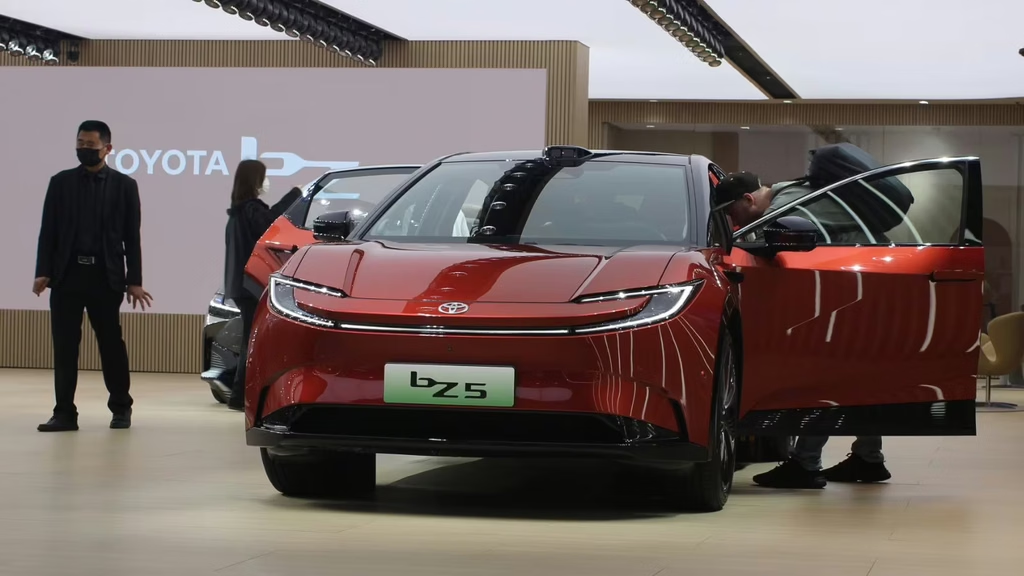
Toyota's EREV will not work the way its Prius-derived hybrids do. In a conventional Toyota hybrid, the petrol engine and electric motor share drivetrain duties, switching between each other depending on load and speed. In the planned extended-range vehicle, the combustion engine never turns the wheels directly. It runs as a generator, charging the battery pack while electric motors handle propulsion entirely. That distinction matters for Chinese customers, who have absorbed EREV logic through years of Li Auto and Aito marketing. Toyota will be selling into a market where buyers already know what a range extender is and what it is not. The company plans to manufacture the model inside China rather than adapt an existing export product — a decision that tracks with how quickly EREV specifications have evolved there. Local production also sidesteps the import tariff exposure that has complicated European and American OEM calculus in China throughout 2025 and 2026. For context on how tariff pressures are reshaping broader EV trade flows, see GlobalAutoIndex's coverage of EV regulation developments in Europe through 2026.
The Production Curve Toyota Needs to Hit
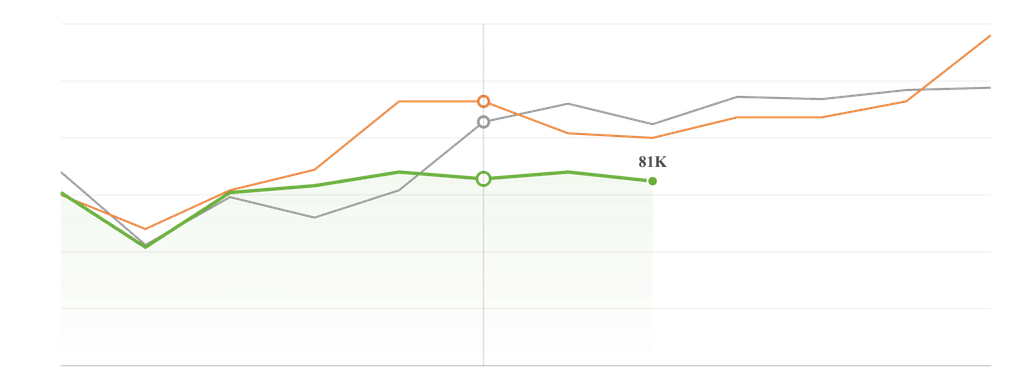
The numbers Nikkei Asia reported reveal how steep Toyota's ramp needs to be. Starting from a few hundred units per month in April 2027 — call it 300 per month as a working midpoint — the company needs to reach roughly 16,700 units per month by December 2027 to average 200,000 across the full year. That is a 55-fold increase in monthly output within eight months: 16,700 ÷ 300 = 55.7x. Reaching 400,000 units in 2028 requires sustaining 33,333 units per month across all twelve months — approximately double the exit rate implied for late 2027. Toyota's joint-venture plants in China with GAC and FAW have produced petrol and hybrid models at scale, but EREV-specific battery integration lines are a different capital question. No figure for plant investment has been confirmed publicly. That gap in the disclosure will matter to anyone trying to assess whether the production targets are engineering commitments or aspirational numbers set by a planning team with optimistic spreadsheets.
Where Toyota Stands Against the EREV Field
Li Auto delivered 500,000-plus extended-range vehicles in 2024. Huawei-backed Aito posted record monthly figures in the fourth quarter of that year. Toyota, by contrast, has zero EREV deliveries to date and a production start still six-plus months away at time of writing. The gap is not just volume — it is data. Li Auto has over three years of real-world EREV battery degradation, thermal management feedback, and software refinement in Chinese conditions. Toyota is starting that clock in April 2027. BMW finds itself in a broadly comparable position; reports in the German trade press suggest the long-wheelbase iX5 for China may also receive an extended-range configuration, and the next X7 generation is rumoured to follow. Toyota and BMW already share hydrogen fuel-cell development work, which makes them parallel latecomers to the EREV category as well as partners in a different powertrain bet. Kia's experience hitting 100,000 EVs in the UK while calling mandate timelines unrealistic illustrates how even electrification leaders find specific targets harder than headline commitments suggest.
The Hybrid Paradox
Here is what does not add up. Toyota has operated petrol-electric powertrains longer than any volume manufacturer alive. The company sold its one-millionth Prius before most of its current Chinese EREV competitors existed as legal entities. The engineering distance between a series-hybrid generator system and Toyota's existing e-CVT architecture is not trivial, but it is shorter for Toyota than for almost any other OEM approaching this category cold. Yet Toyota waited. Competitors with no hybrid heritage — Li Auto was founded in 2015 — built the category Toyota was arguably best equipped to define. Takeshi Uchiyamada, the engineer who led original Prius development, retired from Toyota's board in 2023 without the company having launched a single EREV. No Toyota spokesperson has publicly explained the decision to delay. The company has not published a technical rationale, a comparative efficiency argument, or a document stating when internal EREV feasibility studies were completed. That absence of explanation, from a company that publishes detailed environmental reports annually, is itself a data point worth noting.
What This Means for Toyota's China Position
Toyota's China sales fell in 2024 for the second consecutive year, according to the Japan Automobile Manufacturers Association's market summary published February 2025. The EREV announcement is at least partly a response to that pressure. Chinese customers who would previously have considered a Corolla hybrid are now choosing EREV SUVs from Li Auto or Aito, and a Toyota badge does not carry the purchase-decision weight it held in 2019. The EREV product gives Toyota's GAC and FAW dealership networks something to sell into the fastest-growing powertrain category in the market. Whether it arrives early enough is a different question. Changan's rejection of shared European production arrangements shows how Chinese OEMs are moving in the opposite direction — exporting capacity rather than ceding domestic ground. Toyota re-entering China's conversation on local terms, with a locally built EREV, is a tactical acknowledgement that the old import-and-adapt model no longer works in this segment. The company has not confirmed pricing, trim levels, or which joint-venture partner will lead manufacturing.
Toyota's global BEV sales reached approximately 140,000 units in 2024, against a company target of 1.5 million pure-electric vehicles annually by 2026 — a target the company quietly revised downward in mid-2024. The EREV programme adds a third electrification track alongside battery EVs and the existing hybrid portfolio. Honda's parallel struggle to maintain North American product cadence through 2027 suggests Toyota is not alone in managing electrification timing against market expectations. Toyota first put a hybrid powertrain into volume production in 1997. The complete Toyota model history and specifications are catalogued in the Global Auto Index manufacturer database.
