







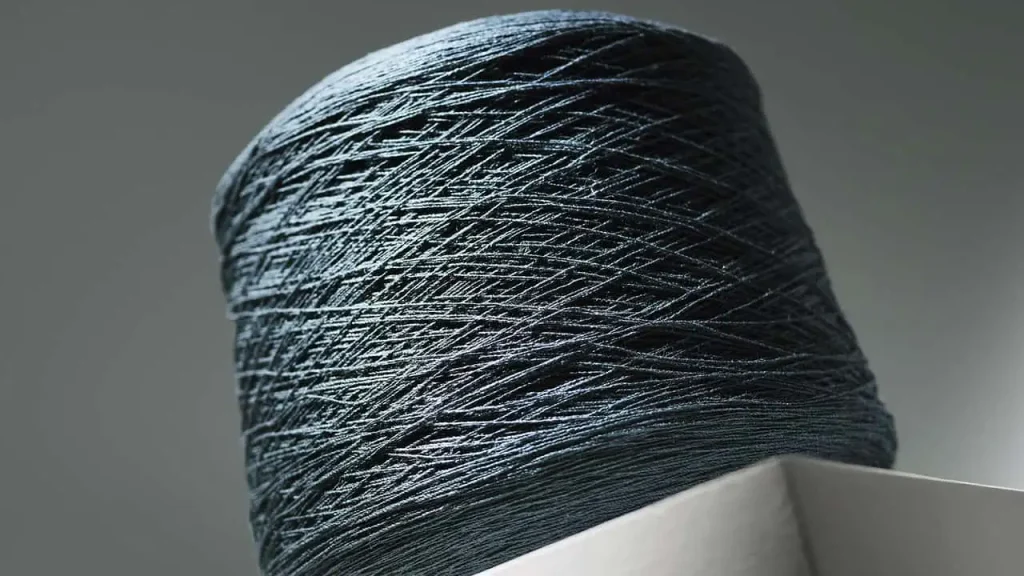
Fox Brothers, a historic British mill, supplied the wool fabric — certified under the Responsible Wool Standard.
Bentley confirmed the Torcal's full interior on August 19. No leather. The flagship SUV's upholstery is 100 percent Merino wool, certified from farm to finish. A full reveal follows September 23. That's the date that matters.
The Torcal arrives as the EU's End-of-Life Vehicles Regulation, updated in draft form according to the European Commission's proposal published February 2023, tightens recyclability requirements across interior materials. Against that backdrop, Bentley's wool pivot reads differently than a styling choice. Tesla's Model S and Porsche's Taycan both went synthetic years ago. Bentley is moving the other direction.
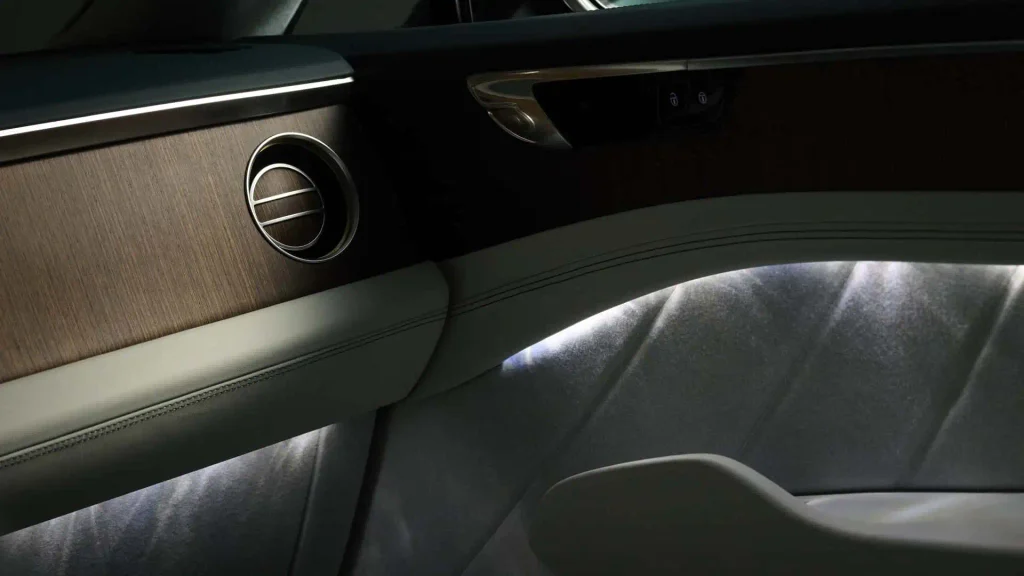
Fox Brothers Supplied the Cloth; Bentley Engineered the Durability
Bentley approached Fox Brothers — a Somerset mill operating since 1772 — to develop a Merino wool cloth tough enough for daily use in a luxury SUV. The brief was not decorative. It required the fabric to pass automotive abrasion standards while retaining the hand-feel of fine suiting wool. Fox Brothers wove the material to spec. Bentley then submitted the finished cloth for Responsible Wool Standard certification, which tracks animal welfare practices at the farm, land management, and chain-of-custody documentation through every processing stage. The certification was granted — making the Torcal's upholstery the first pure Merino automotive fabric to carry that accreditation, according to Bentley's own product documentation released ahead of the September 23 reveal. The available colourways — Soft Linen and Portland — are both light-toned, a deliberate departure from the dark hides that have defined Bentley interiors since the Arnage. For coverage of how EV regulation in Europe is reshaping interior material choices across the sector, the cluster index tracks developments from Brussels through to manufacturer response.
1,000 Layers, Sub-Millimetre Slices, and What the Maths Produces
The Ombre Veneer trim is the other material story. Bentley compresses walnut off-cuts and recycled paper into blocks of up to 1,000 individual layers. Each finished slice is cut to under 1 millimetre thick — meaning the full 1,000-layer block yields, at maximum, just 1,000 mm of usable veneer surface, or 1 linear metre of material per complete block before edge waste is removed. The colour graduation — near-black at one edge fading through smoke tones to natural walnut at the other — is a function of layer sequencing during compression, not staining or printing. A complementary aluminium finish called Mulliner Sunburst uses a three-directional brushing pattern. Where a standard two-axis brushed finish produces parallel lines, the three-way process creates an intersecting geometric texture across the surface. Bentley positions the Sunburst finish as a reference to engine-turned instrument panels of the 1920s and 1930s, though the production method is entirely CNC-controlled rather than hand-worked.
Where Bentley's Material Choice Sits Against the Synthetic Consensus
Tesla removed all leather options from its line-up in 2021, replacing hides with a polyurethane synthetic it calls Ultra White or Black. Porsche's Taycan has offered Race-Tex — a microfibre recycled-polyester product — as its headline sustainable option since 2019. Both are petroleum-derived. Bentley's Merino wool is animal-derived and biodegradable under composting conditions, which creates a different kind of supply-chain scrutiny: land use, water consumption, and methane output from sheep farming are not captured by recyclability metrics alone. The Responsible Wool Standard addresses animal welfare and land management but does not publish lifecycle carbon figures for individual certified products. That gap will matter as the EU's Corporate Sustainability Reporting Directive, which took effect for large companies in the financial year beginning January 2024 according to the European Financial Reporting Advisory Group's implementation guidance, requires Bentley's parent Volkswagen Group to disclose Scope 3 emissions — including upstream material sourcing — in consolidated annual reports from 2025 onward. Kia's ZEV mandate dispute in the UK illustrates how regulatory timelines and commercial decisions are colliding across the EV sector.
The Certification Claim Bentley Has Not Fully Documented
Bentley describes the Torcal's Merino wool as the first automotive fabric to achieve full Responsible Wool Standard certification. The Responsible Wool Standard is administered by Textile Exchange, a US-based non-profit. As of the date of Bentley's announcement, Textile Exchange's public certified-products database — last updated according to the organisation's website in Q2 2025 — did not list an automotive-specific Merino fabric entry tied to Fox Brothers or Bentley Motors. Textile Exchange confirmed to trade press, in a statement reported by Ecotextile News in August 2025, that certification records for industrial clients are not always published in the consumer-facing database. Bentley has not released the certificate number, the certifying body's audit date, or the specific farm-level traceability scope. That is not evidence the certification does not exist. It is evidence the claim has not been independently verified by a named third-party audit report available for inspection. The distinction matters: in an environment where the EU Green Claims Directive, proposed by the European Commission in March 2023, targets unsubstantiated environmental assertions, documentation will eventually be required rather than assumed. The EU Industrial Accelerator Act is already reframing what counts as verifiable compliance for materials entering European production.
What the Torcal Interior Means for Bentley's Mulliner Division
Bentley's Mulliner coachbuilding division — which handles bespoke commissions and limited series — has historically been the channel through which unusual materials enter the range before scaling to standard production. The Sunburst aluminium finish credited to Mulliner in the Torcal announcement follows that path. If the Merino wool option sells in volume on the Torcal, Mulliner's material library expands with a certified-natural-fibre baseline that can be offered across the Continental GT and Flying Spur at next refresh. If take-up is low — which remains possible, given that Bentley's own survey data, cited in internal communications reported by Autocar in July 2024, found that 8 in 10 prospective Torcal buyers said they were open to an electric SUV but the survey did not ask specifically about wool interiors — the experiment stays contained to one model. Either way, the Torcal represents the first time Bentley has launched a new model without a leather upholstery option as the headline interior choice. That structural change in the product brief, not the wool itself, is what other manufacturers in the £150,000-and-above segment will watch. McLaren's parallel push into the SUV space will face the same material-choice scrutiny when its own cabin specifications emerge.
The Torcal name refers to El Torcal de Antequera, a limestone karst nature reserve in Málaga, Spain — consistent with Bentley's established practice of naming models after geographical landmarks. Bentley has produced vehicles in Crewe, England, without interruption since 1946. Production of the Torcal is scheduled to begin at Crewe in 2026. The complete Bentley model history and specifications are catalogued in the Global Auto Index manufacturer database.
