







Pilot production starts in H1 2028, two years before the sixth-generation model has turned three.
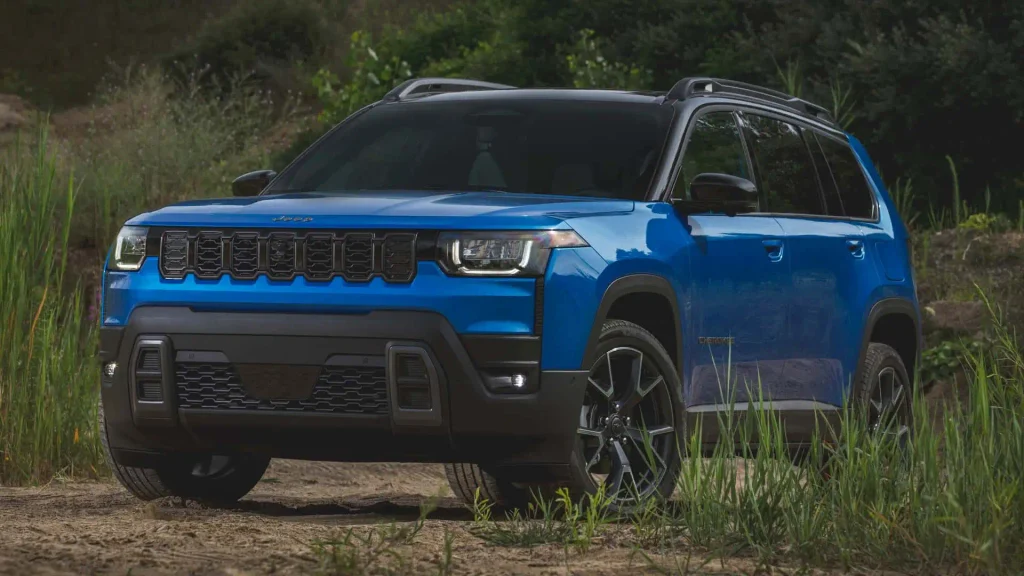
Stellantis confirmed the eighth-generation Jeep Cherokee last week. Production begins at Belvidere, Illinois, in the second half of 2029. The sixth-generation model only debuted in 2024. That's a tight window — barely five years between platform generations on the same nameplate.
The announcement compresses Jeep's traditional model cycle in ways that would have looked reckless before the STLA architecture programme existed. According to Stellantis's FaSTLAne 2030 product plan, published May 2025, the STLA One architecture is intended to underpin more than 30 models by 2035 — a shared-platform volume play the previous Fiat Chrysler regime never attempted at this scale. Honda's comparable position is worth noting: Honda faces a North America product gap until the 2027 CR-V redesign, leaving Jeep an opening if the eighth-generation Cherokee arrives on schedule.
The $800 Million Belvidere Bet
Stellantis has now committed two tranches of capital to the Belvidere Assembly Plant outside Chicago. A $600 million investment announced in October 2025 covers tooling for the sixth-generation Cherokee and the Compass. A further $200 million, confirmed alongside the STLA One announcement, prepares the line for the eighth-generation model. Total committed spend: $800 million. At a plant that was idled entirely in February 2023 — with zero vehicles produced across that shutdown period — the turnaround arithmetic is striking. The factory is scheduled to reopen in 2026 on two shifts, capable of running all powertrain types. If pilot production begins in H1 2028 as stated, Belvidere will have gone from mothballed to producing its second distinct platform within roughly five years. Whether $800 million is adequate for that scope of retooling is a question Stellantis has not fully answered in published documentation. This article is part of the OEM model launches tracker covering major platform transitions across the decade.
Filosa's Platform Logic
Antonio Filosa, CEO of Stellantis North America and the division's Chief Operating Officer, provided the formal rationale for the accelerated transition. His statement, issued by Stellantis on the day of the announcement, reads in part: 'Launching the next-generation Cherokee on STLA One allows us to deliver a more competitive product while leveraging the strength of our U.S. manufacturing operations.' The language is corporate-standard, but the operational decision underneath it is not routine. Filosa took direct charge of both the CEO and COO roles following Stellantis's North America leadership restructuring in late 2024 — a consolidation that itself reflected pressure on the group's U.S. margins. That context matters when reading the phrase 'more competitive product.' The sixth-generation Cherokee, starting at $36,995 including destination, already carries a hybrid system as standard equipment. If the eighth-generation version targets a lower price point through platform-cost reduction, Filosa's framing suggests the current model's price position is the problem being solved.
A Platform Barely Warm Before the Next One Arrives
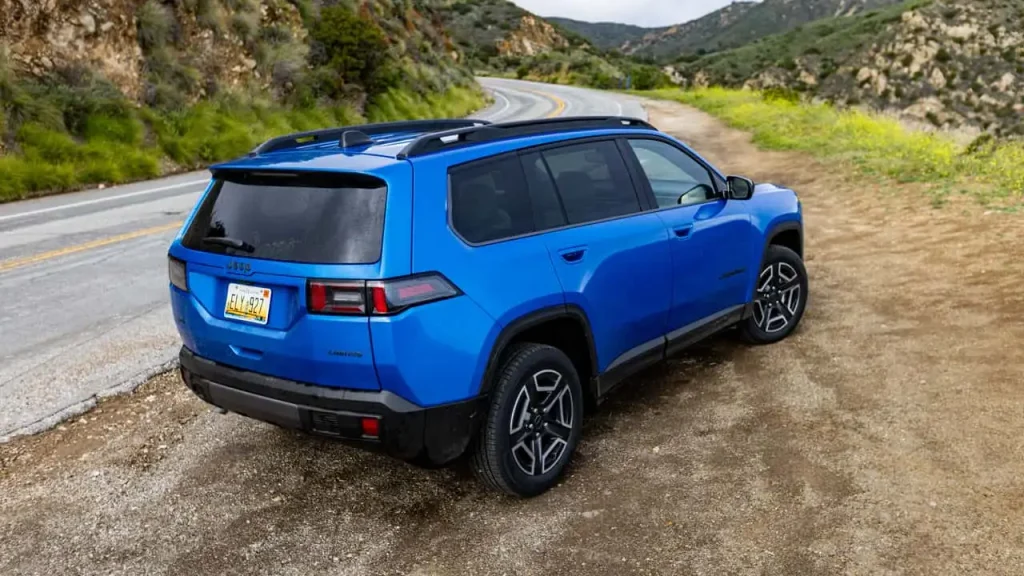
Here is what does not quite line up. The sixth-generation 2026 Cherokee rides on the STLA Large platform — the same architecture that underpins the new Dodge Charger. Stellantis invested in that transition. Now, before a single Belvidere-built STLA Large Cherokee has reached a customer driveway, the company is publicly committing to replace it with a STLA One-based successor. The overlap period is not a gap — the eighth-generation model enters production while the sixth-generation is still in the early years of its life cycle. Stellantis has not published a confirmed end-of-production date for the sixth-generation car, nor has it indicated whether the Compass will follow the same accelerated path onto STLA One. That silence is notable given Compass shares Belvidere production capacity. The Chevrolet C8 Corvette halt earlier this year reminded the market how quickly a production disruption can destabilise a model's commercial momentum — Stellantis will need Belvidere's 2026 reopening to be clean.
STLA One vs. the Competition's Platform Ambitions
Stellantis says STLA One will support more than 30 models by 2035. Volkswagen Group's MQB architecture, by comparison, underpins vehicles across Volkswagen, Seat, Škoda, and Audi — a count that exceeded 40 derivatives within roughly eight years of MQB's 2012 introduction, according to Volkswagen Group's 2020 Annual Report. If Stellantis hits 30 models on STLA One by 2035, it will have achieved comparable scale in a shorter window, but from a weaker industrial base: Stellantis reported a net loss of €6.4 billion in its full-year 2024 results, published February 2025, versus a profit the prior year. That financial position makes the Cherokee's role as the first U.S.-assembled STLA One vehicle more than symbolic — it is the test case for whether the platform's cost savings materialise in practice. Tariff pressure adds another variable: as reported in coverage of the 25% U.S. truck tariff and European IVA tightening, North American production decisions now carry currency and trade exposure that did not exist at this scale two years ago.
UAW, Belvidere Workers, and the Benefit Calculation
The Belvidere workforce has lived through three distinct phases since February 2023: indefinite idle, a negotiated UAW contract promising restart, and now a two-stage production plan that extends into 2029. Stellantis confirmed it will continue supplemental unemployment benefits and offer temporary relocation opportunities through the reopening period. The United Auto Workers union, which signed the contract in late 2023, now holds Stellantis to a production commitment that spans two platform generations at the same facility. That is an unusual degree of union leverage on capital investment timelines — and it may partly explain why Belvidere, rather than a lower-cost site, was selected for first-run STLA One U.S. assembly. The eighth-generation Cherokee being built there is not purely an engineering or commercial choice. It is also the payoff on a labour relations agreement that was, in the UAW's framing at the time of signing, a test of Stellantis's good faith in North America.
The sixth-generation Cherokee's 1.6-litre four-cylinder paired hybrid produces 210 horsepower and 230 lb-ft of torque — powertrain specifications Stellantis has not yet disclosed for the STLA One successor. Belvidere's planned two-shift capacity has not been translated into an annual production volume figure. The complete Jeep model history and specifications are catalogued in the Global Auto Index manufacturer database.
