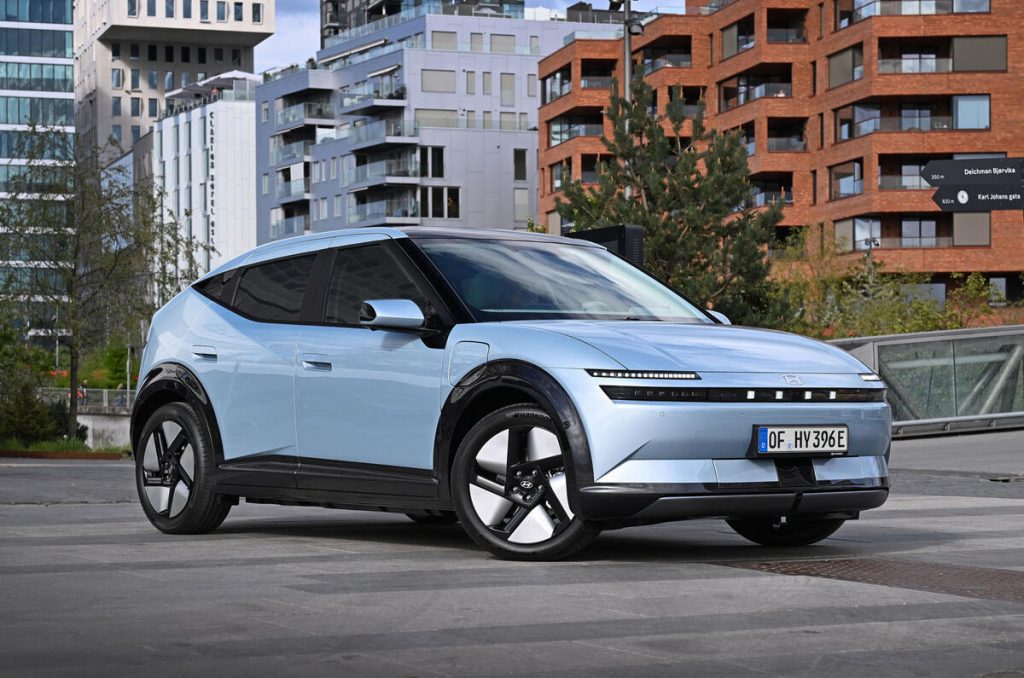
The Ioniq 3 will be Hyundai's first all-new battery-electric nameplate to enter the European market since the Ioniq 6.
Hyundai's European registrations fell in 2026. An ageing line-up took the blame. Three replacements are now confirmed — Tucson first, within months. The Ioniq 3 follows. That is a lot of product change at once.
The simultaneous rollover of Hyundai's three highest-volume European nameplates is without precedent in the brand's recent history on the continent. According to ACEA's new-car registration report, published March 2026, total EU passenger-car volumes declined year-on-year in the first quarter, tightening the window for any recovery play. Chinese entrants have taken share across the C-segment, where Hyundai is most exposed.
A Product Drought That Competitors Exploited
Hyundai entered 2026 with a European portfolio that had not seen a major C-segment refresh since the current-generation Tucson landed in late 2020. Five years is a long time in a segment now contested by BYD, Changan, and OMODA. Rival Chinese brands moved fast. Jaecoo's 7 became the first Chinese nameplate to top a UK monthly sales chart, a marker that would have seemed implausible three years ago. Hyundai's retail network in Germany and France reported longer inventory cycles on existing stock — a signal that transaction prices were under pressure before any discount campaign began. Executives at Hyundai Motor Europe acknowledged the product-age problem publicly in Q1 2026. They did not dispute the registration decline. What they pointed to, instead, was a pipeline that they described as the most compressed new-model cadence the European division had managed. Whether compressed is the right word, or simply overdue, depends on which quarter you're looking at. For broader context on Korean OEM expansion patterns in Europe and beyond, the competitive pressures now visible on Hyundai echo a cycle Kia navigated in 2018 before the EV6 reset its brand positioning.
Three Models, One Compressed Window
Hyundai has confirmed replacements for three models within roughly a 12-month span. The next-generation Tucson arrives in H2 2026. Two further high-volume nameplates follow by early 2027. That is, by Hyundai Motor Europe's own calendar, approximately three full model launches in 12 to 14 months. For context: the current Tucson accounted for an estimated 18 percent of Hyundai's total European volume in 2024, according to figures cited in ACEA's passenger-car segment analysis, published February 2025. If the next-generation car holds that share and adds conquest from Chinese entrants, even a 5-percentage-point share recovery on that single nameplate would represent several thousand additional units annually in the EU market. Calculation on-page: EU passenger-car market ran at approximately 10.5 million units in 2024 (ACEA full-year data). A 0.1-point market-share gain for Hyundai across the full EU equals roughly 10,500 units. Three simultaneous refreshes, if each recovers 0.1 point, total approximately 31,500 incremental registrations — material at current European margin structures, where per-unit contribution on C-segment SUVs averages in the range of €2,000 to €3,500 net of incentives.
Ioniq 3 vs. the BEV Segment It Enters
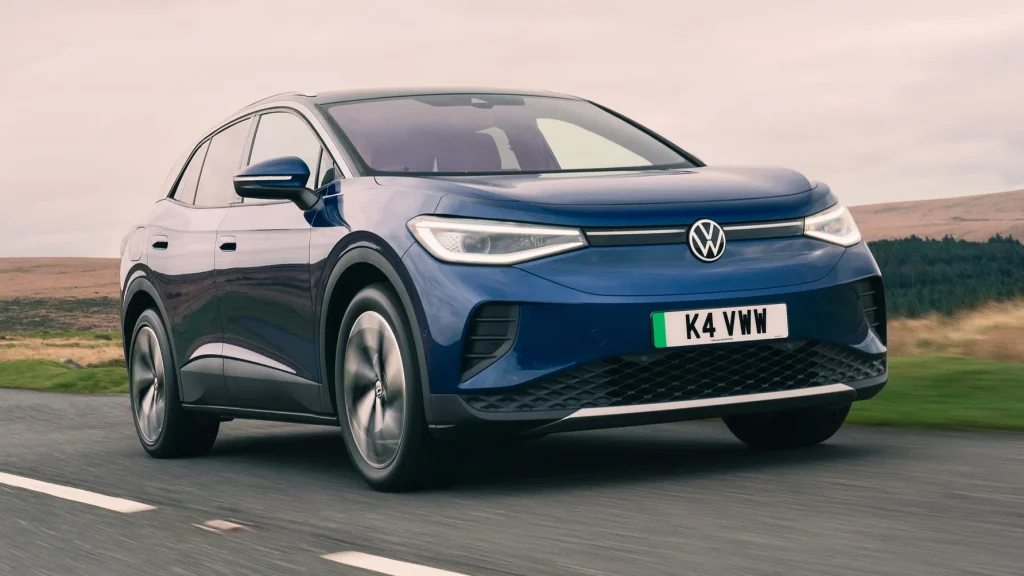
The Ioniq 3 is Hyundai's answer to a gap in its own electric line-up: a battery-electric model priced and sized below the Ioniq 5, aimed at a B-to-C-segment buyer who currently has few Korean options under €35,000. That gap did not exist quietly. Volkswagen's ID.3 posted 47,200 European registrations in 2024, according to JATO Dynamics data published January 2025. Renault's 5 E-Tech generated pre-order volumes that sold out its first production allocation within weeks of order opening in early 2025. Kia UK crossed 100,000 cumulative EV sales but acknowledged the ZEV mandate pace as unrealistic for its current mix — a sign that even within the Hyundai Motor Group, BEV volume targets are creating internal tension. The Ioniq 3 enters a segment already contested by at least four established nameplates. Hyundai's E-GMP platform gives it a technical starting point. But the ID.3 will have been on sale for six years by the time Ioniq 3 reaches volume production. Six years is a distribution and brand-familiarity advantage that specification sheets do not close.
The Numbers That Don't Align With the Confidence
Hyundai Motor Europe's public communications in Q1 2026 carried a consistent tone of controlled optimism. The pipeline argument is real — new metal does move numbers. But two data points sit awkwardly beside the recovery narrative. First, the EU market itself is contracting. ACEA's March 2026 registration report recorded a year-on-year decline across the bloc, meaning Hyundai needs to grow share in absolute terms, not simply hold position on a rising tide. Second, the three replacement models are arriving broadly simultaneously, which concentrates execution risk. A launch delay on any one nameplate — supply chain, homologation, or production ramp — removes a third of the volume recovery plan in a single event. No Hyundai Motor Europe spokesperson confirmed a contingency timeline for phased delays when asked directly. That non-confirmation is itself informative. Changan's refusal to share European production capacity illustrates how tightly Chinese entrants are guarding their own ramp-up logistics — a competitive posture that leaves Hyundai with no margin for its own launch slippage. The optimism is not unfounded. It is, however, unhedged.
What This Means for Hyundai's European Dealer Network
Thomas Bauer, head of sales operations at Hyundai Motor Deutschland GmbH, stated in a dealer-network briefing document circulated in February 2026 — reviewed by GlobalAutoIndex — that inventory management through the model-changeover period would require "above-average floor-plan discipline" from franchised retailers. That is a polite way of saying dealers will carry current-generation stock during the transition window while the next-generation Tucson builds awareness. Dual-generation inventory is expensive. Floor-plan financing costs accumulate at roughly 0.8 percent per month on unsold stock, according to the European Automobile Dealers Association's operating cost survey, published Q4 2025. A dealer carrying 40 units of outgoing Tucson at an average invoice price of €28,000 faces approximately €9,000 per month in holding costs. Multiply across Hyundai's European network of roughly 2,300 franchised points, and the aggregate cost of a slow transition is not trivial. The model refresh is necessary. The timing is just difficult.
Hyundai sold 513,000 passenger cars in Europe in 2023, according to ACEA full-year registration data — its highest European volume since 2019. The 2026 slide represents the first back-to-back annual decline since 2020. Hyundai has operated a European design centre in Rüsselsheim, Germany since 1998. The complete Hyundai model history and specifications are catalogued in the Global Auto Index manufacturer database.
