Twin 56-millimeter Garrett turbos push peak torque to 3,000 rpm, 50 percent earlier than the outgoing Sixpack tune.
Dodge confirmed the 2027 Charger Super Bee on August 7. Six hundred horsepower. A nameplate silent since 2021 now tops the Sixpack lineup. All-wheel drive is standard, with a steering-wheel switch that flips the car to full rear-wheel drive on the move.
The Super Bee badge last appeared on a Dodge production car in the 2021 model year, and that car used a naturally aspirated V8. The 2027 model abandons the V8 entirely, running a 3.0-litre twin-turbocharged inline-six that Dodge has progressively tuned upward since the Charger relaunch. According to Dodge's product announcement, published August 2025, the Super Bee variant now sits above the 550-hp Charger Sixpack in the range.
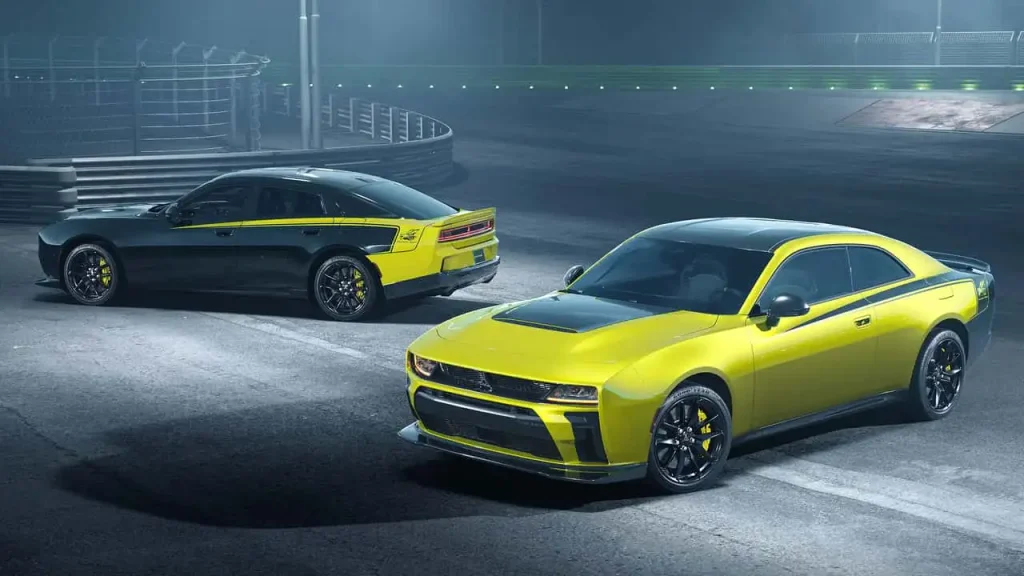
The Numbers Behind 600 Horsepower
The power figure comes from a pair of 56-millimetre Garrett Motion turbochargers — each one larger than those on the standard Sixpack — that together push 7.5 percent more air through the 3.0-litre block. Peak output lands at 600 hp and 531 lb-ft of torque, with that torque plateau beginning at 3,000 rpm and holding through 5,900 rpm, a 2,900-rpm sustained band. Dodge quotes a 0–60 mph time of 3.6 seconds and an 11.8-second quarter-mile. For reference, the standard Sixpack runs a 4.0-second 0–60 on Dodge's own published sheets — a 0.4-second gap that translates to roughly two car lengths at launch. The cooling architecture behind those numbers is equally aggressive: high-temperature radiator capacity rose by more than 50 percent, while the low-temperature circuit more than doubled. Auxiliary radiators hide behind the restyled front-fascia corners. This article is part of our ongoing coverage of the GM and Stellantis portfolio restructuring in 2026.
Garrett Motion Spec Sheet and What It Confirms
Garrett Motion's published turbocharger specification data, referenced in Dodge's August 2025 press release, identifies the units as 56-millimetre compressor-wheel assemblies matched to the inline-six's 3.0-litre displacement. The document does not disclose maximum boost pressure, and Dodge has not published that figure independently. What the release does confirm: Torque Reserve — a feature carried over from lower Sixpack variants — spools both turbines against a held brake, delays ignition timing to limit wheel torque temporarily, then releases the stored torque on brake-pedal lift. The Super Bee is also the first Charger Sixpack to receive Race Prep, a software mode that keeps the electric cooling fan running after engine shut-off. Dodge describes Race Prep as a track-session cooling tool, though no cooldown duration figure appears in the release materials. Pricing and ordering details were explicitly listed as unavailable at time of publication.
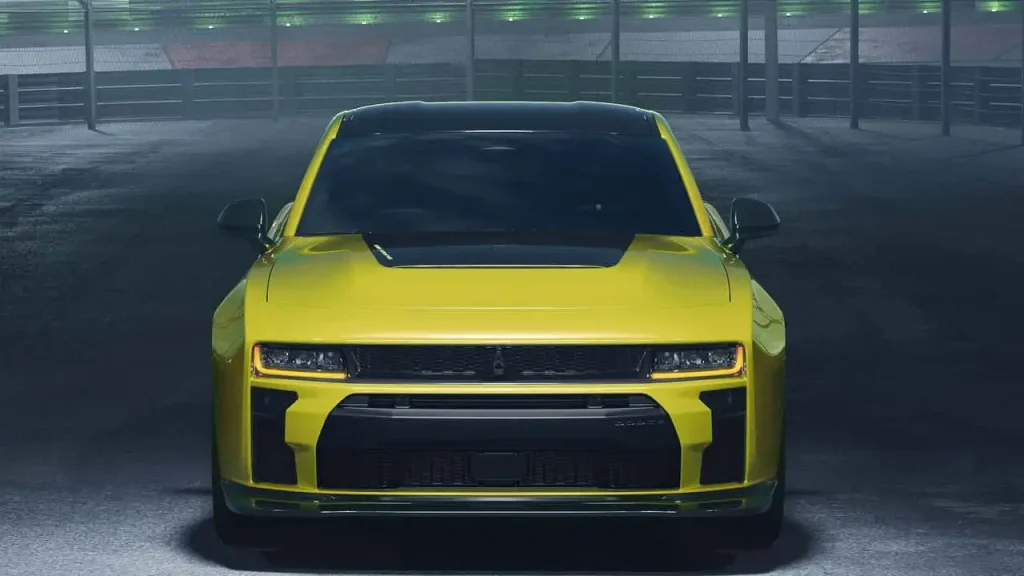
Brembo Hardware Versus the Standard Sixpack Setup
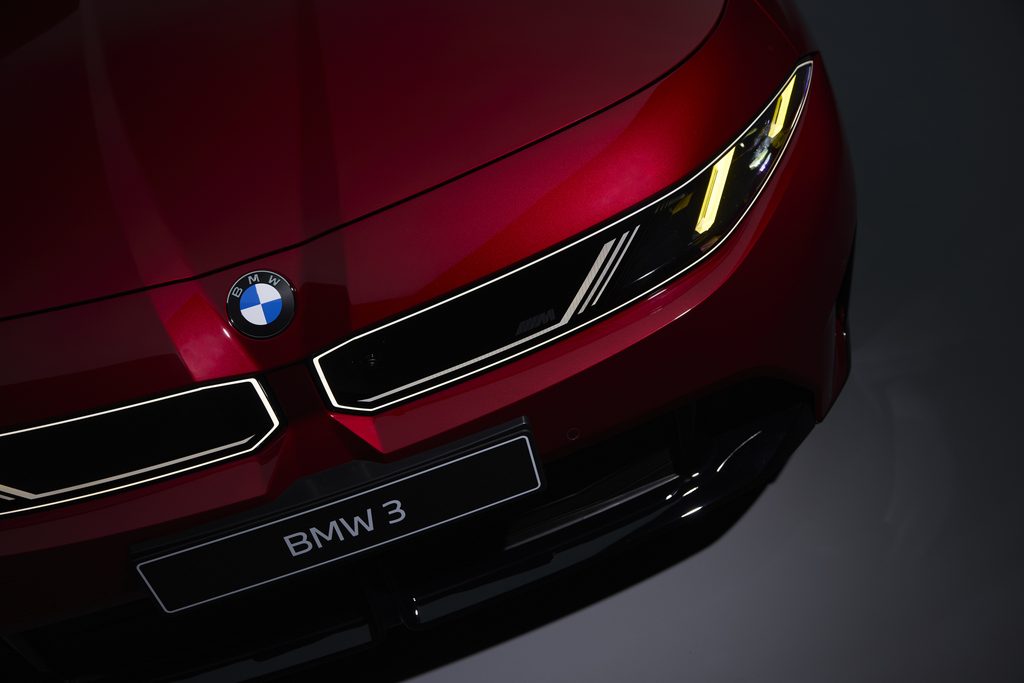
The Super Bee's brake package is a meaningful step beyond the base Charger Sixpack. Front rotors measure 16.0 inches across, clamped by six-piston fixed Brembo calipers; the rear uses four-piston fixed units on matching 16.0-inch rotors. The standard Sixpack ships with 15.0-inch front rotors and a four-piston front caliper — 1.0 inch smaller at the front and two fewer pistons per corner. Wheel and tyre sizing also widens: the Super Bee rides on 20-by-11-inch forged wheels wrapped in Goodyear Eagle F1 Supercar 3 rubber in 305/35ZR20 specification. The suspension on the Launch Edition adds Continuous Damping Control dual-valve adaptive dampers. Front tension-link bushings are 25 percent stiffer; front handling-link bushings are 50 percent stiffer; the rear stabiliser bar is 20 percent stiffer; front spring rates rise 12 percent and rear spring rates 6 percent. That is a measurable increase at every contact point between the chassis and the road. Compare the ambition here with BMW's four-motor M3, confirmed for 2027 at 1,300 hp, which shows how far dedicated performance variants are stretching across the segment.
No Price, No Order Date — and a Nameplate Question
Dodge has not published a price for the 2027 Charger Super Bee. The August 2025 announcement states that pricing, ordering details, and availability windows will follow later in 2025. That gap is unusual for a vehicle presented with full engineering specifications and a confirmed model-year designation. The original Super Bee — introduced by Dodge in 1968 as a no-frills, budget-performance car built around the 383-cubic-inch V8 — sold on the strength of a low sticker price relative to its horsepower. The 2027 version carries none of those constraints by definition. At 600 hp, Brembo six-piston calipers, forged wheels, and a Launch Edition trim with a unique SuckerPunch yellow-green exterior colour, this is not a stripped muscle car. Whether buyers who remember the original nameplate will read a twin-turbo inline-six as authentic is a different question entirely — and one Dodge has not addressed in any published material. It is also worth noting that Chevrolet's C8 Corvette faced a sales halt over a brake-light fault earlier this year, underscoring that performance launches carry regulatory exposure even post-announcement.
What the Super Bee Means for Dodge's Performance Lineup
For Dodge, the Super Bee variant does something the standard Sixpack could not: it gives the brand a sub-four-second, track-configured car without a V8, at a moment when the Hemi is no longer in production passenger-car use. Tim Kuniskis, Dodge brand chief executive at Stellantis North America, has repeatedly framed the Charger Sixpack as proof that electrification-adjacent performance — the Sixpack remains ICE-powered but shares the STLA Large platform engineered for both powertrains — can carry the brand's muscle-car identity. The Super Bee adds aerodynamic downforce exceeding 100 pounds at 150 mph, a new Track Mode with revised traction and stability calibrations, and a Drag Mode that adjusts suspension damping front-to-rear to improve sixty-foot times. Interior changes include bolstered seats with Super Bee branding, a leather-wrapped steering wheel housing the dedicated RWD button, and enlarged paddle shifters. The Launch Edition arrives first; standard Super Bee trim sequence and allocation have not been disclosed.
The Super Bee nameplate traces to the 1968 model year, when Dodge priced the original at $3,027 — roughly $26,500 in 2025 dollars. The 2027 car carries 20-inch forged wheels as standard equipment and a spoiler calibrated in the brand's own wind tunnel. No production volume target has been published . The complete Dodge model history and specifications are catalogued in the Global Auto Index manufacturer database.
