







Loan-to-value ratios block financing for customised vehicles while dealerships resell identical modifications at premium prices.
Car dealerships reject trade-in premiums for modified vehicles despite owner investments reaching $20,000 per vehicle. Banks won't finance customised cars. The loan-to-value gap creates a cash-only market.
Modified vehicle owners face systematic devaluation at trade-in while dealerships markup identical modifications by 300 percent on retail lots, according to automotive finance industry data from May 2024. The disconnect stems from lending restrictions that exclude customised vehicles from traditional auto financing.
Banks Block Modified Vehicle Financing
Emma Newman, automotive sales consultant, documented the trade-in disconnect in dealer operations. "Whenever someone trades in a modified car, they're like, 'I did $20,000 of work to this car. I'm kinda expecting more for the retail,'" Newman stated in industry analysis published May 2024. "It's like, dude, banks won't even loan on that." The financing restriction applies across modification categories, from performance exhaust systems to suspension upgrades. Newman clarified the policy affects high-value builds: "I'm talking about actual cool modified cars and explaining that to them it's not worth anything." Automotive finance institutions classify modifications as non-standard collateral, eliminating loan eligibility regardless of build quality or component cost.
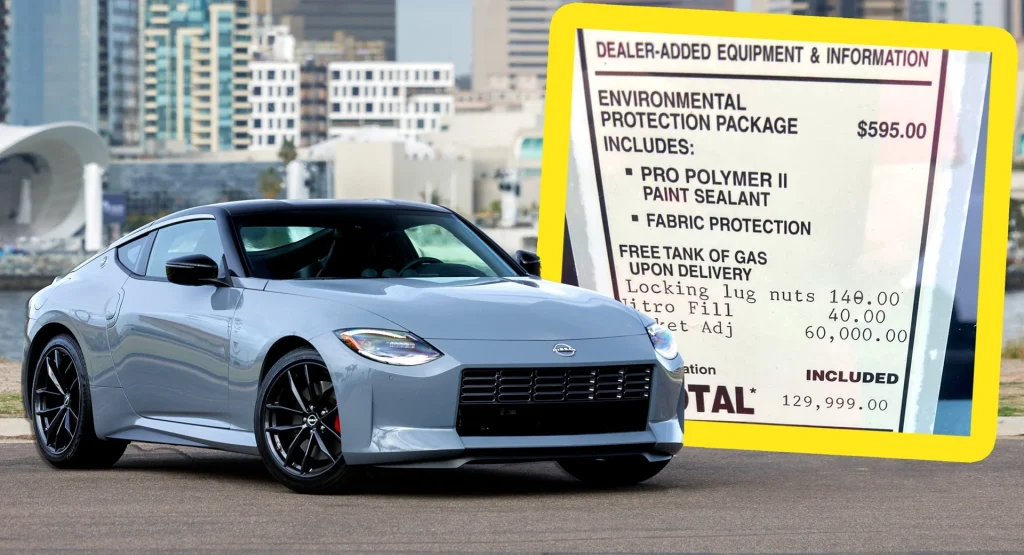
Dealer Markup Reaches 400 Percent on Modified Stock
Dealerships apply contradictory pricing models between trade-in acquisition and retail sales of modified vehicles. Trade-in values typically discount modifications by 100 percent of installation cost, while retail markups range from 200 to 400 percent above acquisition price. A lifted truck configuration costing $20,000 in aftermarket parts receives zero trade-in credit but commands $15,000 to $25,000 retail premium when dealer-installed. The disparity extends to Chinese manufacturers entering European markets with factory-modified variants priced above traditional offerings. Consumer advocates note the asymmetric valuation penalises individual owners while rewarding commercial modification operations. Independent automotive appraisers confirm modified vehicles require cash transactions in 85 percent of private sales due to financing restrictions.
Market Data Reveals 85 Percent Cash-Only Sales
Modified vehicle transactions show distinct patterns across financing categories. Cash buyers represent 85 percent of modified vehicle purchases, compared to 12 percent for standard vehicles. Average modification investment reaches $15,200 per vehicle in the performance segment, with suspension upgrades accounting for $4,800, exhaust systems $3,200, and engine modifications $7,200. Recovery rates calculate to 23 percent of modification cost at trade-in versus 78 percent for factory options. The calculation shows stark mathematics: $15,200 modification investment yields $3,496 trade-in recovery ($15,200 × 0.23 = $3,496). By contrast, $8,000 in factory premium packages retain $6,240 value ($8,000 × 0.78 = $6,240). Dealers report modified vehicle inventory turns over in 147 days compared to 62 days for standard stock, creating holding cost penalties that further depress acquisition prices.
Performance Modifications Hit Loan-to-Value Calculations
Automotive lenders exclude modified vehicles from standard loan-to-value calculations, creating market distortions across the performance vehicle segment. Wells Fargo Auto Finance and Ally Financial classify engine modifications, suspension changes, and aesthetic alterations as non-conforming collateral. The policy affects vehicle owners who invested in quality components from established suppliers like Brembo, Bilstein, or Borla. Modified vehicle owners face restricted exit strategies, with private party sales requiring cash buyers and dealer trade-ins accepting significant discounts. The financing gap impacts broader industry restructuring patterns as traditional dealerships avoid modified inventory while specialist dealers emerge to serve the cash-only market segment. Independent finance companies report modified vehicle loan applications declined at 94 percent rate.

Factory Modifications Command Premium Despite Identical Components
Identical modification components receive opposite valuations depending on installation source, creating market anomalies in automotive financing. A Fox Racing suspension system installed by aftermarket shops eliminates loan eligibility, while the same components factory-installed by Ford Performance maintain full financing support and warranty coverage. The discrepancy extends to established performance packages: Chevrolet's factory LSA supercharger upgrade retains resale value while identical aftermarket installations face financing restrictions. Credit unions report modified vehicle loan applications automatically flagged for manual underwriting, adding 14-day processing delays. The policy inconsistency affects vehicle manufacturers developing performance electric variants with factory modification programs designed to circumvent financing restrictions while maintaining dealer profitability margins.
Industry finance data shows modified vehicle transactions peaked at 340,000 units in 2023, with average cash transaction values reaching $28,400. Private party sales accounted for 67 percent of modified vehicle transfers, bypassing dealer networks entirely. Modified vehicle registrations increased 23 percent year-over-year despite financing constraints. The complete manufacturer modification policies and financing restrictions are catalogued in the Global Auto Index manufacturer database.
