
Body-on-frame SUV will feature V6 engine and hybrid option to compete with Wrangler and Bronco.
Nissan will price the returning Xterra under $40,000. The body-on-frame SUV launches for 2028. Christian Meunier, Nissan Americas chairman, confirmed the target this month.
The pricing positions Nissan against the Jeep Wrangler four-door ($39,895), Ford Bronco ($38,930), and Toyota 4Runner ($41,515). Meunier described a simplified approach after admitting the company had "lost our way" with unnecessary technology, according to statements published in April 2024.
Stripped-Back Philosophy Drives Pricing
Meunier outlined a deliberate reduction in features to hit the price target. "Everything you need and nothing you don't," he said, marking a reversal from Nissan's recent technology-heavy approach. The company had been adding features "for the sake of it" before deciding to change direction. "We're going to stop doing it," Meunier added. "Xterra is gonna be the symbol of this." The statement signals broader industry restructuring as manufacturers balance capability with affordability. Michael Soutter, Nissan SVP, first hinted at sub-$40,000 pricing in November 2023, saying the SUV "has got to start" below that threshold.
V6 Power Anchors Powertrain Strategy
The Xterra will use Nissan's 3.8-litre V6 engine producing 310 horsepower, borrowed from the Frontier pickup. A hybrid variant will join the lineup, though Nissan has not disclosed power figures for the electrified version. The 310hp output exceeds the Ford Bronco's base 2.3-litre four-cylinder (300hp) and Toyota 4Runner's 4.0-litre V6 (270hp). Only the Wrangler's available 392 V8 (470hp) delivers more power, but costs $75,000. The calculation shows Nissan targeting the sweet spot: 310hp divided by estimated $38,000 starting price equals 8.2 horsepower per $1,000 invested. That ratio beats the Bronco's 7.9hp per $1,000 and the 4Runner's 6.5hp per $1,000. Chinese manufacturers entering global markets typically offer similar power-to-price calculations.
Body-on-Frame Design Bucks Industry Trends
The Xterra's body-on-frame construction contrasts with the unibody designs dominating the SUV segment. Ford abandoned unibody for the current Bronco in 2021, reversing the Bronco II's car-based architecture from the 1980s. Jeep has maintained the Wrangler's separate chassis since 1987. Toyota continues the 4Runner's truck-based platform into its 15th year unchanged. The construction method adds weight but provides towing capacity and off-road durability that crossovers cannot match. Nissan discontinued the previous Xterra in 2015 after sales fell to 16,243 units, down from peak sales of 166,000 in 2005. The segment has recovered since then, with Wrangler sales reaching 201,311 units in 2023 despite supply constraints.
Two-Year Gap Raises Production Questions
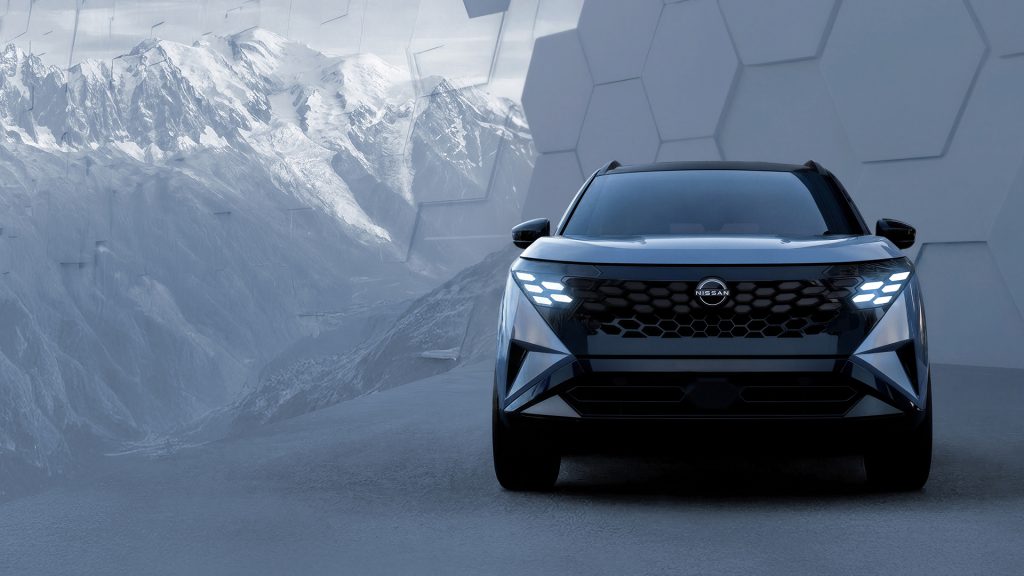
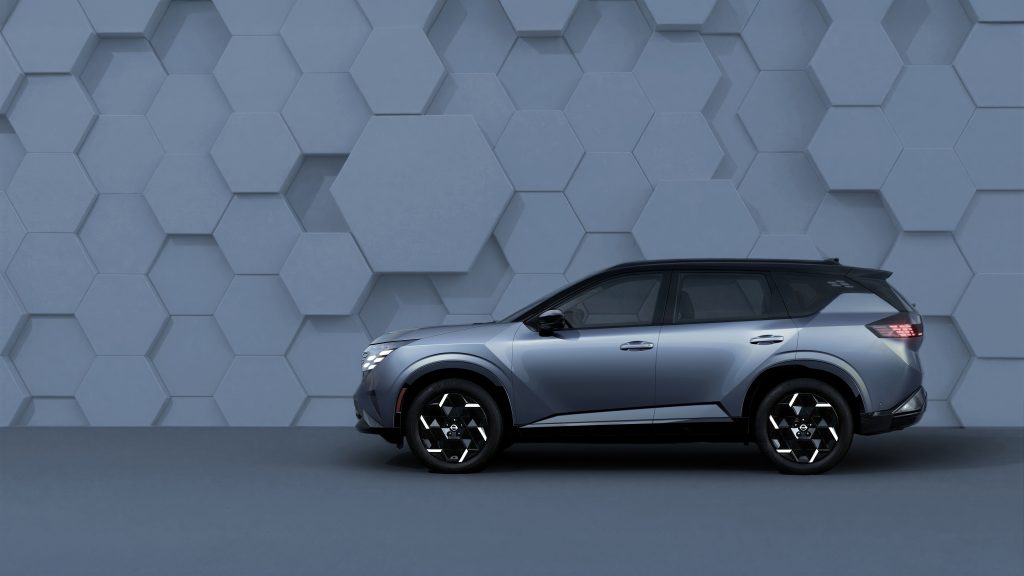
Nissan revealed only a single teaser image showing the Xterra's hood and grille, despite confirming detailed specifications and pricing. The 2028 model year launch means a 24-month development window from now, unusually short for an all-new body-on-frame vehicle. Competitors typically require 36-48 months from concept to production. The timing suggests Nissan may be adapting existing Frontier underpinnings rather than developing a clean-sheet design. Manufacturing location remains unconfirmed, though the Frontier builds at Nissan's Canton, Mississippi plant alongside the Titan pickup. Other manufacturers have announced longer development timelines for complex powertrains. The hybrid system's integration into the V6 platform represents the main technical challenge ahead of production.
The original Xterra ran from 1999 to 2015 across two generations, selling 1.9 million units in North America. Production peaked at the Smyrna, Tennessee facility before shifting to Canton in 2012. Nissan has not confirmed which plant will build the returning model. The complete Nissan model history and specifications are catalogued in the Global Auto Index manufacturer database.
