Rimac sold just 71 Neveras against a 150-unit target, giving Porsche's decision hard numbers to stand on.
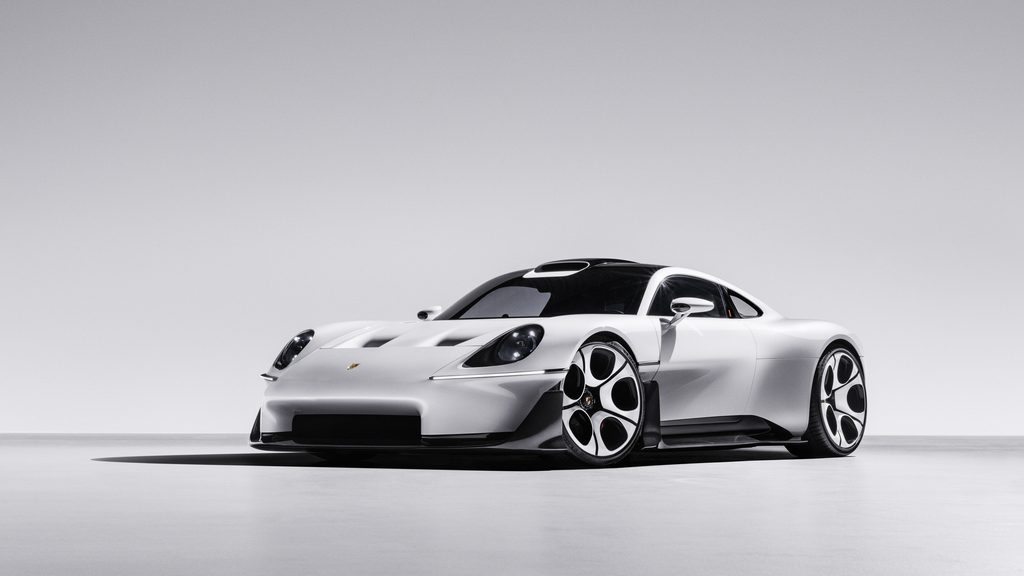
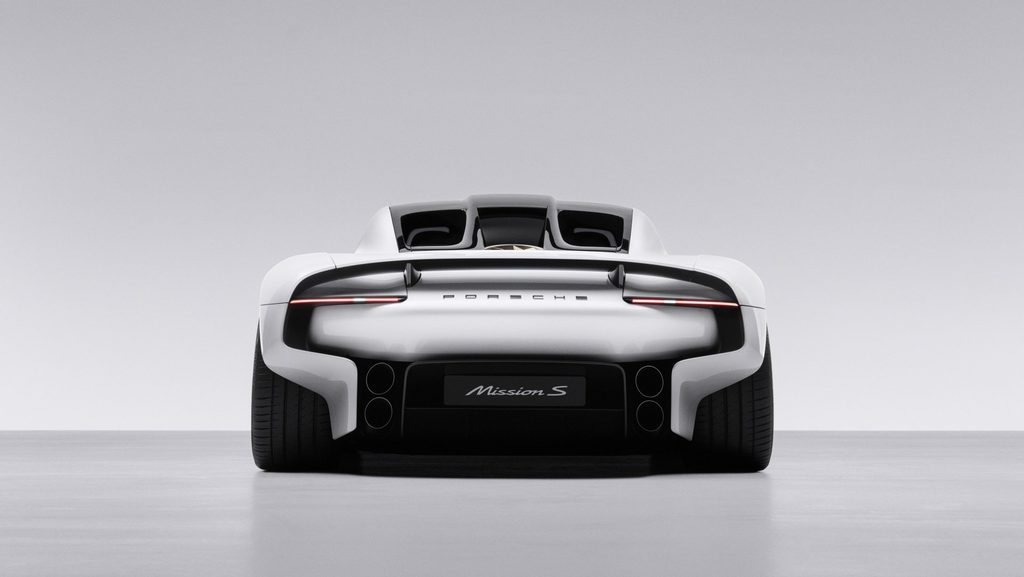
Michael Leiters said it plainly. No BEV. The Porsche Mission S — a mid-engined machine slated to sit above the 911 — will launch with combustion or hybrid power, Leiters confirmed in October 2025. The platform accommodates internal combustion engines, conventional hybrids, and plug-in hybrids. A pure battery configuration is off the table.
The decision matters because Porsche already sells three electric models — the Taycan, the Macan EV, and the electric Cayenne — and has confirmed the 718 Boxster and Cayman will drop combustion entirely in 2026. Yet the company draws a hard line at its flagship supercar tier. According to Automotive News reporting cited by Motor1, October 2025, Leiters framed the choice as a customer-demand calculation, not an engineering constraint. That distinction separates Porsche from peers who frame BEV delays as technical problems rather than market ones.
Leiters Draws the Line in Plain Language
Porsche CEO Michael Leiters left almost no room for interpretation. "There won't be a BEV on that platform because there is no demand, in this segment, for an EV there," he stated, as reported by Motor1 in October 2025. That eight-word core — there is no demand, in this segment — is the entire argument. Leiters did not cite battery packaging difficulties, weight penalties, or thermal management constraints, the usual technical excuses. He cited the customer. That framing shifts responsibility away from Porsche's engineering teams and onto the supercar-buying public, which is either refreshingly honest or a convenient deflection, depending on your read. For the performance EV transition across the German luxury segment, it is a data point worth tracking: when a brand with Porsche's electrification credentials declines to build an electric flagship, the reason it gives shapes how the rest of the segment responds.
Rimac's 71-Car Reality Check
Numbers from the Rimac Nevera programme give Leiters's claim some empirical weight. Rimac Automobili planned to build 150 Neveras. It sold 71. That is a shortfall of 79 units — 52.7 percent of the original target unmet. The Nevera's list price sat at approximately €2 million per car; 79 unsold units therefore represent roughly €158 million in unrealised revenue at full retail (79 × €2,000,000 = €158,000,000). Mate Rimac addressed the sales figure publicly in a video circulated in early 2026, framing it as a lesson in the gap between technical achievement and buyer appetite. The Nevera's specification — over 1,900 hp from four electric motors, a sub-two-second sprint, a claimed top speed of 412 km/h — was not in question. Buyers who could afford the car, in enough numbers, chose not to order it. Porsche's planners almost certainly have those figures in their briefings.
Lamborghini and Pagani Reached the Same Conclusion by Different Routes
Porsche is not alone. Lamborghini CEO Stephan Winkelmann described the electric supercar market as an "expensive hobby" and said the customer base is not ready, according to reporting from Automotive News. Sant'Agata Bolognese subsequently walked back plans to produce the Lanzador as a pure BEV gran tourer, reworking it as a hybrid instead. Pagani's experience was starker. The Modena-based atelier spent years developing an electric variant of the Utopia, showed the concept to dealers and customers, and received no orders. Horacio Pagani's team killed the project. Contrast that with the mainstream performance segment: BMW's M division confirmed an electric M car for 2027, and Mercedes-AMG has already delivered the EQE 53 4Matic+. Below the €500,000 threshold, electrified performance finds buyers. Above it — at the level where Porsche's Mission S, the Lamborghini Revuelto, and the Pagani Utopia compete — the combustion engine retains a grip that no specification sheet has yet broken.
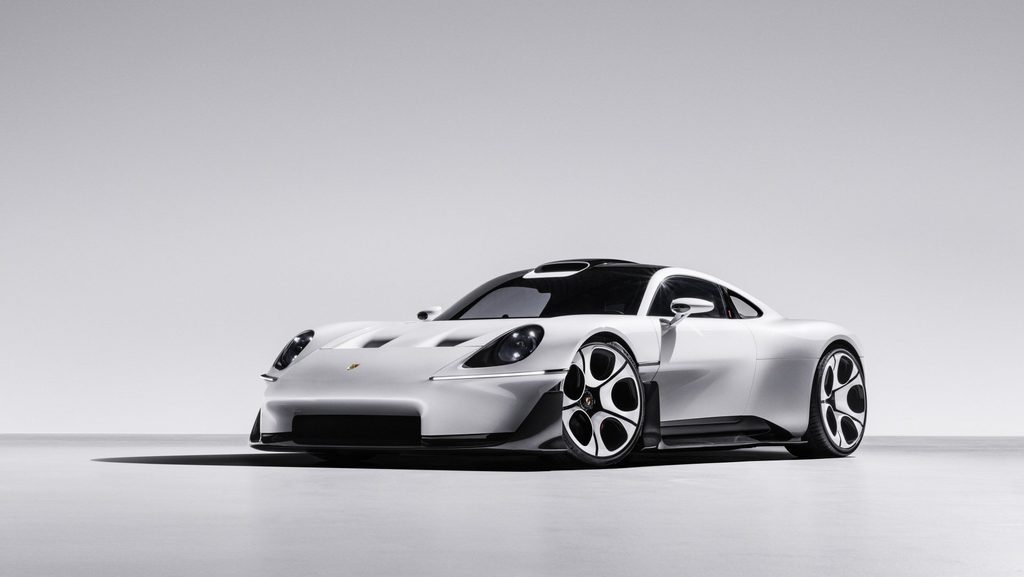
The Contradiction Inside Porsche's Own Lineup
Here is what does not quite add up. Porsche will electrify the 718 Boxster and Cayman — sports cars aimed at buyers who arguably care as much about driving sensation as any supercar customer — yet it declines to electrify the Mission S on sensation grounds. The 718 buyer spends roughly €70,000 to €90,000. The Mission S buyer will spend multiples of that. If the argument is that high-engagement drivers reject electric powertrains, the 718 conversion should be the harder sell, not the easier one. Porsche has not publicly reconciled this. A request for clarification on the distinction between the 718 customer and the Mission S customer had not been answered by the time of publication. What is confirmed: Zuffenhausen has separately stated there will never be an electric 911. That makes three distinct combustion commitments — 911, Mission S, and the long-term 718 combustion exit — pulling in different directions simultaneously. The logic is not seamless. It is segmented, and the segmentation has not been fully explained.
What the Decision Means for the Mission S Programme
The Mission S platform will need to carry multiple powertrain variants from launch rather than converging on a single architecture. That adds engineering cost. Porsche has not disclosed the development budget, nor a production volume target, nor a confirmed on-sale date beyond broad references to a post-2026 window. Oliver Blume, Porsche AG's supervisory board chairman and Volkswagen Group CEO, will face questions about the Mission S timeline at Volkswagen Group's next investor day, scheduled for Q2 2026 according to VW Group's published financial calendar. The hybrid variant — whichever form it takes, conventional or plug-in — will compete directly against the Ferrari 296 GTB, which uses a 3.0-litre twin-turbo V6 paired with a 122 kW electric motor for a combined 610 kW. Ferrari reported 13,663 total shipments in 2024, per its annual report published February 2025, and the 296 range accounted for a meaningful share of that volume. Porsche's planners know the reference point. The Mission S has to beat it on driver appeal, or the combustion bet looks expensive.
The Mission S concept made its public debut wearing a shade Porsche internally designated Lucid Amber, a colour not yet offered on any production model in the current range. Porsche has confirmed a manual gearbox remains under consideration if customer clinics support it — a detail absent from the CEO's demand-focused statement. The complete Porsche model history and specifications are catalogued in the Global Auto Index manufacturer database.
