

The cabin ditches a centre touchscreen entirely, substituting a retractable Apple MagSafe smartphone holder instead.
Porsche pulled the covers off the Mission S on 15 October. A mid-engined concept. No powertrain specs, no price, no production date — just a declared intent to build a car above the 911. That gap has been empty for two decades.
The Mission S arrives as Porsche's first public step in what the company calls its 'Sportwagenschmiede '35' product programme — a broader push to extend the sports car range upward before 2035. Compared with the 918 Spyder, which occupied a similar flagship space before it sold out in 2015, the new platform is described as non-electric. According to Porsche AG's official concept release, published October 2025, the architecture is intended to spawn a family of high-performance models, not a single halo car.
From Stuttgart to the Show Floor: How the Mission S Took Shape
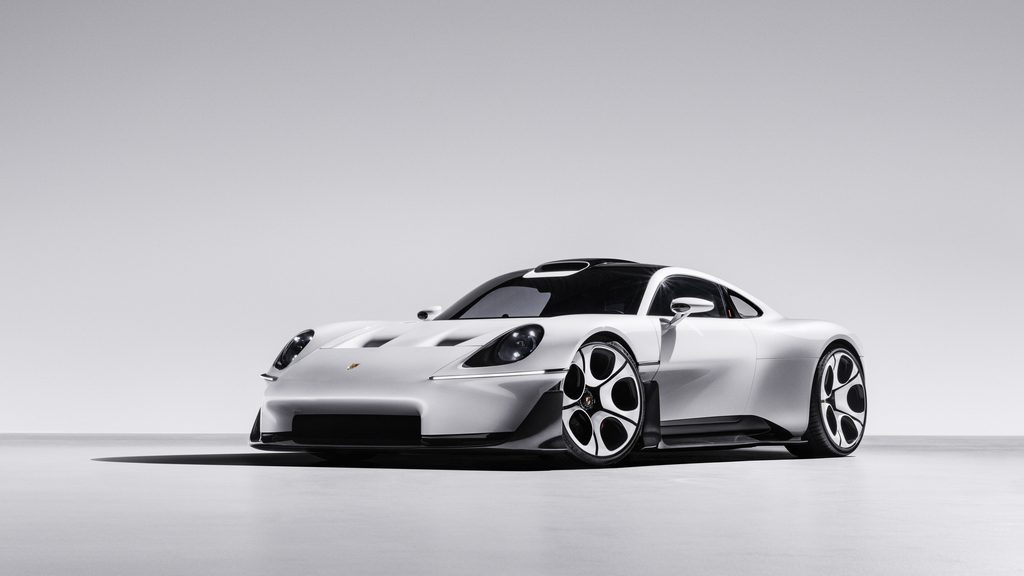
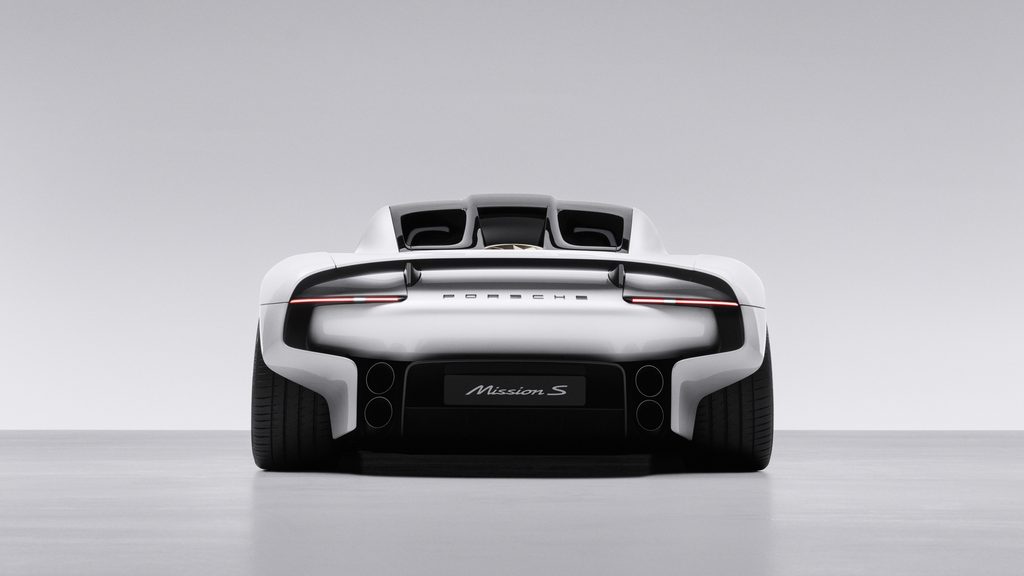
Tobias Sühlmann, Head of Style Porsche, led the exterior programme. His team pulled reference material from four decades of Porsche road and race hardware — the 911, the 959, the 917, and the GT1 — then ran those cues through what the company labels its 'Floating Volumes' design language. Surfaces appear to hover above the bodywork rather than sit flush to it. The rear section applies what Porsche calls the 'car-in-car concept': a structural shell wraps around the engine bay, a direct reference to the GT1 Le Mans racer's rear architecture. Fan-shaped cooling elements visible through the engine cover quote the 917's cooling layout. Wheel designs reference the 928. The front lighting strip runs as a single unbroken line to the tail lamps, tying the silhouette together. An active rear wing retracts into the bodywork when not deployed. This article is filed in our auto show concepts and debut coverage index for full context on the reveal.
No Screen, No Specs, No Timeline — So What Exactly Did Porsche Confirm?
Here is what Porsche did not announce at the Mission S reveal: zero performance figures, zero battery or engine specifications, zero pricing indication, and zero production timeline. That is an unusual information blackout for a concept this far along visually. The cabin, which Porsche presented in finished white, grey, and red racing livery-inspired trim, features five round analogue gauges behind the wheel, a reworked Sport Chrono clock blending analogue and digital hands, and push-pull physical switches for driving functions. What it does not have is a centre touchscreen. The only concession to connected technology is a retractable holder with Apple MagSafe alignment. Porsche has confirmed the models emerging from this platform will not be battery-electric — a direct statement, given that every other new Porsche programme announced since 2021 has carried an electrification component. Whether 'not electric' means hybrid, internal combustion only, or something else was left unanswered at time of publication.
Leiters Sets the Bar: 'Recognisable as a Porsche at First Glance'
Dr Michael Leiters, Chief Executive Officer of Porsche AG, framed the entire concept exercise in a single stated objective. The Mission S, he said, had to be "recognizable as a Porsche at first glance." That is a tighter brief than it sounds. Porsche's design heritage is anchored in the 911's rear-engined silhouette — a shape produced continuously since 1963. A mid-engined car breaks that proportion entirely. The long rear deck disappears. The cabin shifts forward. Leiters and Sühlmann are therefore asking the 'Floating Volumes' language and the lighting continuity line to carry the brand identity that the 911's shape once handled structurally. Whether a production version sustains that recognition at speed, in traffic, or in a car park alongside a 911 GT3 is the question the concept cannot yet answer. Porsche AG's concept release notes the design direction will carry over into future production vehicles, but stops short of naming which models.
Flagship Gap: Measuring the Space the Mission S Is Meant to Fill
The 918 Spyder, Porsche's last confirmed car above the 911, carried a list price of €768,026 at German launch in 2013 and produced 652 kW (875 hp) from a 4.6-litre V8 hybrid system. Porsche built exactly 918 units — all sold before production ended in June 2015. That means the flagship slot above the 911 has been unoccupied for roughly ten years. The 911 GT2 RS, currently the most powerful 911 variant, produces 515 kW (700 hp) and retails from approximately €294,551 in Germany — a gap of roughly €473,000 below the 918's original price point. 515 kW subtracted from 652 kW leaves 137 kW of power headroom that any Mission S production derivative would logically need to exceed to justify positioning above the GT2 RS. Porsche has confirmed zero of these numbers for the Mission S platform. The 918's ten-year absence, combined with the 'Sportwagenschmiede '35' programme window, implies a production decision is needed before 2030 to allow adequate development time.
What the Platform Decision Means for Porsche Motorsport
A confirmed mid-engined supercar platform has direct consequences for Porsche Motorsport GmbH, the racing subsidiary that develops and homologates competition machinery from road car architectures. Porsche Motorsport's current top-tier road-derived programme traces to the 911 RSR and 911 GT3 R, both rear-engined. A production mid-engined flagship above the 911 would give Porsche Motorsport a new homologation base for GT endurance racing — a segment where mid-engined architecture from Ferrari (296 GT3) and McLaren (720S GT3 Evo) now dominates the grid. According to the SRO Motorsports Group's 2025 GT World Challenge entry list, published January 2025, Porsche's customer racing teams ran the 911 GT3 R exclusively in the GT3 class. A Mission S-derived GT3 car would not arrive before the earliest plausible production date, but the platform decision made in Stuttgart now determines whether that option exists at all after 2030.
The Mission S made its public debut alongside Porsche's 75th anniversary product communications cycle — the brand was founded on 8 June 1948 in Gmünd, Austria. Porsche has registered 'Mission S' as a trademark in 47 jurisdictions, according to the European Union Intellectual Property Office trademark database, filing reference EM018982341, submitted September 2025. Production intent remains unconfirmed. The complete Porsche model history and specifications are catalogued in the Global Auto Index manufacturer database.
