







The UK's ZEV mandate hits 33% in 2026, then climbs to 100% by 2035, leaving Stellantis exposed without Chinese volume.
Stellantis needs Leapmotor. That's not a preference — it's arithmetic. The UK's zero-emission vehicle mandate requires 33% of each manufacturer's sales to be electric this year. Stellantis's own European brands are not generating enough volume to hit that number alone. A Chinese partner, 49% owned since 2023, is now filling the gap.
The UK ZEV mandate is structured as a annual ratchet: 33% in 2026, 38% in 2027, 52% in 2028, 66% in 2029, 80% in 2030, and 100% by 2035, according to the UK Department for Transport's ZEV Mandate Regulatory Framework, published November 2023. No comparable EU-wide passenger-car rule moves this steeply this fast. Stellantis, which reported an operating loss of €2.7 billion in the first half of 2024 according to its H1 2024 Financial Results, released July 2024, cannot afford ZEV penalty fees on top of that.

The Mandate's Staircase, Step by Step
The numbers leave little room for error. The UK ZEV mandate requires 33% zero-emission sales in 2026, rising to 38% in 2027 — a five-percentage-point jump inside twelve months. By 2028 the threshold reaches 52%, a further 14-point climb. From there: 66% in 2029, 80% in 2030, and 100% in 2035.
On-page calculation: the gap between the 2026 floor (33%) and the 2030 ceiling (80%) is 47 percentage points across four years — an average annual increase of 11.75 points. For a manufacturer selling, say, 100,000 units in the UK today, that arithmetic translates to needing 47,000 additional EV sales per year over the same period just to keep pace with the schedule, before accounting for any overall volume growth. Penalty structures under the mandate allow trading and banking of credits, but the underlying volume obligation does not disappear. For Stellantis, which sells Vauxhall, Peugeot, Citroën, Fiat, Jeep, and Alfa Romeo in the UK, aggregating compliance across those brands while each individually underperforms on EV penetration makes Leapmotor's counted volume operationally indispensable. More on how Chinese OEM arrivals are reshaping European compliance calculus is tracked across the Chinese OEM Europe expansion 2026 topic cluster.
How the Stellantis–Leapmotor Structure Works
The ownership arrangement is documented in Stellantis's Investor Day presentation, October 2023, which confirmed a 21% initial stake followed by a further tranche bringing total equity to 49%. That presentation, Section 3 (International Growth Vehicles), described Leapmotor International — a joint venture incorporated in Amsterdam — as the exclusive vehicle through which Leapmotor products would be manufactured and sold outside China. Stellantis holds 51% of that joint venture; Leapmotor holds 49%.
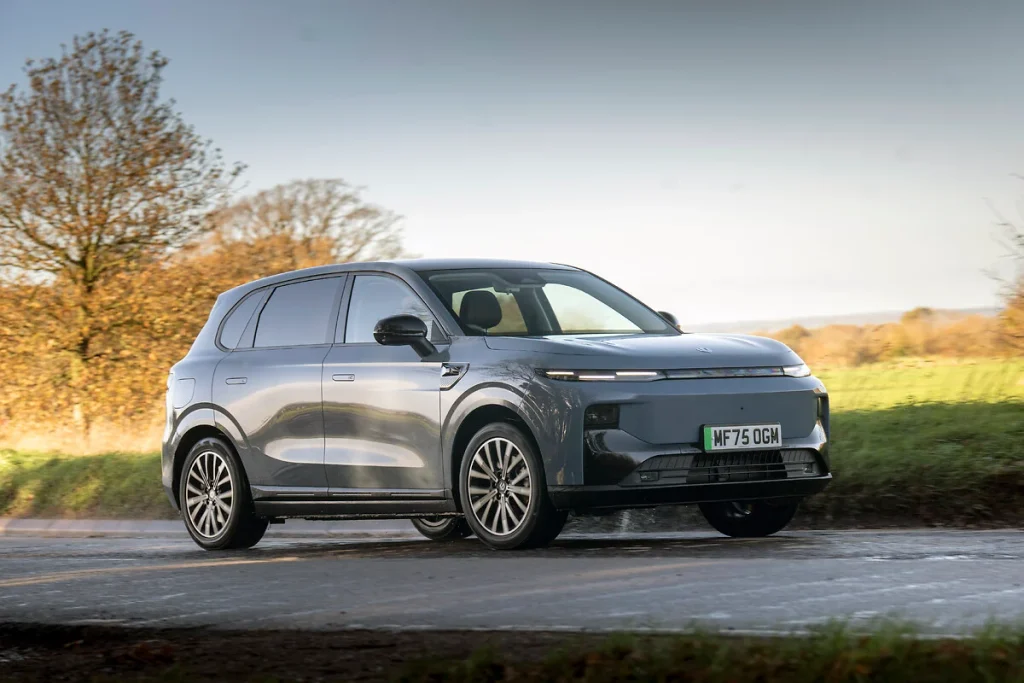
The T03 city car and the C10 SUV were the first two models confirmed for European markets through Leapmotor International. Both are battery-electric. Both count toward Stellantis's ZEV mandate compliance pool in the UK because the vehicles are sold under Stellantis's distribution network and the manufacturer-of-record relationship, as structured, allows consolidation into Stellantis's reported ZEV sales figure. That detail — which Stellantis has not publicly clarified in granular terms — is where the compliance benefit becomes tangible rather than theoretical.
The Pooling Question Nobody Has Answered Formally
Here is what does not add up cleanly. Stellantis has not published a formal public confirmation of exactly how Leapmotor International sales are consolidated into its UK ZEV mandate reporting pool. The UK's Driver and Vehicle Licensing Agency, which administers new registration data, records vehicles by manufacturer as declared at type-approval. Leapmotor International vehicles currently carry Leapmotor's own type-approval identity in several markets — not a Stellantis brand nameplate.
If those registrations are attributed to Leapmotor as a separate manufacturer entity rather than to Stellantis's pool, the compliance benefit evaporates. Stellantis has not issued a statement clarifying this to the trade press as of the date of publication. The UK's ZEV mandate compliance guidance, published by the Department for Transport, Section 4.2, permits pooling arrangements between manufacturers, but requires formal registration of the pool prior to the compliance year. Whether Stellantis has filed such a registration for Leapmotor International volumes has not been confirmed. That gap matters. A lot.
Where Stellantis Stands Against Its Closest Peers
Compare Stellantis's position with Volkswagen Group and Renault Group, the two other large European OEMs operating at scale in the UK. Volkswagen Group reported a global BEV share of 8.3% in full-year 2024, according to its 2024 Annual Report, published March 2025 — below the UK's 2026 mandate threshold by roughly 25 percentage points. Renault Group's BEV share reached approximately 14% in Europe in 2024, per ACEA's European Automobile Manufacturers' Association registration report, February 2025 — still nearly 20 points short of the 2026 UK floor.
Stellantis's own BEV penetration in Europe sat below 14% in 2024, according to ACEA's same February 2025 report. None of the three groups is generating organic EV volume sufficient to clear 33% in 2026 without supplementary measures. Volkswagen has its own high-volume ID. models; Renault has the Scenic E-Tech and the refreshed Zoe replacement pipeline. Stellantis's most credible fast-volume answer is the Leapmotor T03 at a sub-£20,000 retail price point — a segment where neither Volkswagen nor Renault currently competes at volume.
What Failure Costs Stellantis Specifically
Under the UK ZEV mandate, manufacturers that miss their annual target face a civil penalty of £15,000 per non-compliant vehicle, as set out in the Zero Emission Vehicles (ZEV Mandate) Regulations 2024, Schedule 2. For Stellantis, the exposure is not abstract. If the group sells 120,000 passenger cars in the UK in 2026 and achieves only a 20% ZEV share organically — 24,000 electric units — it falls 15,600 units short of the 33% threshold of 39,600. At £15,000 per shortfall vehicle: 15,600 × £15,000 = £234 million in potential penalties, before any credit banking or trading offsets are applied.
Carlos Tavares departed as Stellantis CEO in December 2024. His successor, João Mello, took the interim role while a permanent appointment was sought, according to Stellantis's board announcement, December 2024. The incoming permanent leadership will inherit both the mandate exposure and the Leapmotor dependency as immediate first-year problems, not medium-term planning items. The clock for 2026 compliance started running in January.
Leapmotor sold approximately 290,000 vehicles in China in 2024, according to the China Passenger Car Association's full-year data, published January 2025 — a 95% increase on its 2023 total. European volumes remain a fraction of that figure. The T03 carries a type-approval kerb weight of 1,181 kg. The complete Leapmotor model history and specifications are catalogued in the Global Auto Index manufacturer database.
