







Detroit complains about European import restrictions despite America’s 60-year chicken tax blocking foreign trucks.
American automakers are criticizing European proposals to tighten truck import rules. The complaints target Individual Vehicle Approval changes. Europe processes 7,000 American trucks annually through this system. Less than 0.1% of total sales.
The dispute centers on Europe’s Individual Vehicle Approval system, which allows limited imports of non-compliant vehicles, according to Transport & Environment data published in 2024. This mirrors trade protection patterns seen in Japan’s 1980s automotive restrictions and Canada’s own truck import limitations through NAFTA exemptions. — European trade barriers affecting automotive manufacturing.
Scale of Impact
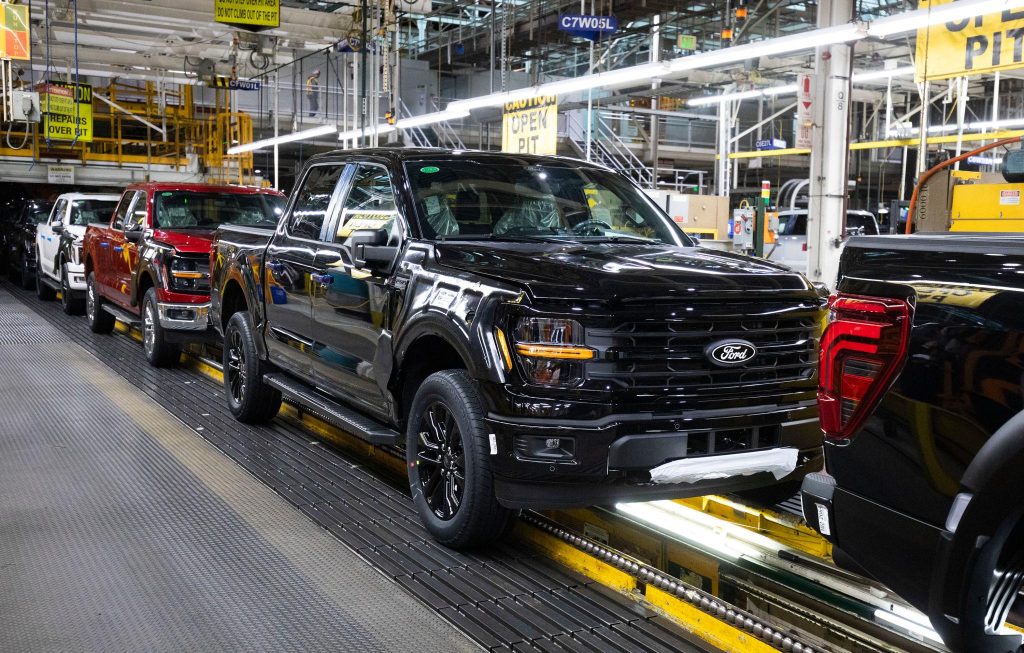
Transport & Environment recorded 7,000 American trucks sold through Individual Vehicle Approval in 2024. Nearly 5,200 were Ram models. Compare this to U.S. domestic sales: Ford moved 801,525 F-Series trucks domestically, roughly 2,196 per day. Ram recorded 374,059 sales, about 1,025 daily. At those rates, Ford reaches Europe’s annual IVA volume in three days. Ram takes one week. The European scheme affects 0.1% of continental truck sales. Minimal numbers. The proposed 2027 changes would tighten safety compliance requirements rather than impose outright bans on American manufacturers.
America’s Own Barriers
The United States imposed a 25% tariff on imported light trucks in 1964. Still active. The chicken tax has shaped American truck markets for six decades, making foreign imports prohibitively expensive for most buyers. Toyota, Nissan, Honda, and Mercedes built North American plants rather than pay the levy. Ford once imported Transit Connect vans as passenger vehicles, then removed rear seats after arrival to avoid truck classification. That workaround saved thousands per unit. Europe’s Individual Vehicle Approval tightening affects 7,000 vehicles annually, while America’s chicken tax blocks entire market segments through price manipulation. — 25% tariff impacts on American truck production.
Detroit’s Position
An unnamed Detroit automaker executive told the Financial Times that Europe is ‘dragging its feet on trade agreements while restricting U.S. products.’ Ambassador Andrew Puzder argued against ‘massive non-tariff trade barriers’ in transatlantic commerce. The American Automotive Policy Council, representing Ford, General Motors, and Stellantis, sent formal complaints to Brussels regarding Individual Vehicle Approval changes. None of the three manufacturers issued public statements. Ford, General Motors, and Ram declined to comment when contacted directly. Official silence. The complaints focus on 2027 implementation dates for stricter safety compliance under the revised Individual Vehicle Approval system. — Chinese manufacturers' European production strategies.
Safety Questions
Transport & Environment claims Ram 1500 hoods stand tall enough that children directly in front remain invisible to drivers. Visibility concerns. European safety advocates argue American trucks pose greater pedestrian and cyclist risks due to size and sight-line limitations compared to continental commercial vehicles. The Individual Vehicle Approval changes target these safety gaps rather than trade protection, according to European Commission statements. Current IVA rules allow vehicles built for other markets to bypass full EU regulatory compliance. The 2027 revisions would close safety loopholes while maintaining the low-volume import pathway for specialized or unusual vehicles meeting basic European safety standards.
The chicken tax generated approximately $2.8 billion in tariff revenue between 2010 and 2020, while Europe’s Individual Vehicle Approval program costs the Commission roughly €400,000 annually in administrative processing. America’s protection runs deeper than Europe’s proposed changes. The complete Ford, General Motors, and Stellantis model histories and specifications are catalogued in the Global Auto Index manufacturer database.
