A new production hall, twice the size of the existing main building, is designed to eventually turn out one million units annually.
Tesla confirmed €3 billion for Giga Berlin on November 16. The money funds a new hall built around the two-seat, steering-wheel-free Cybercab robotaxi. Construction starts in early 2027. First cars off the line: 2029.
The announcement lands as Germany's auto sector cuts headcount across multiple sites. Brandenburg's investment compares directly with Volkswagen's concurrent rounds of capacity reductions in the same federal state, according to Germany's Federal Labour Agency workforce monitoring report, published October 2025. Tesla's move does not, , give the Cybercab any European regulatory approval for fare-paying driverless rides — a distinction Brandenburg officials have not foregrounded in their public welcome.
Scale of the Expansion in Numbers
The figures Tesla has attached to this project are worth laying out in sequence. The core commitment is €3 billion (approximately $3.3 billion at mid-November 2025 exchange rates). The new production hall is described by Tesla as roughly twice the floor area of the existing main hall at the Grünheide site. Target annual output for the new building: one million Cybercabs. Current weekly Model Y output is ramping toward 7,500 units — that is 7,500 × 52 = 390,000 vehicles per year, slightly above the 375,000 figure Tesla cites, reflecting rounding on the weekly target. Existing headcount sits at approximately 12,600 after roughly 2,000 workers joined recently. A separate 4680 battery-cell production programme, valued at close to €1 billion, is projected to add more than 1,500 further positions by mid-2027. Add those to current rolls and the site workforce could approach 16,000 before Cybercab production begins. Tracking this investment sits within our ongoing industry restructuring coverage for 2026.
The Permit Timeline and Its Foundation Document
Tesla's building permit application for the new Cybercab hall is due before the end of 2026 — the company has not given a specific filing month. That application draws on a broader expansion submission lodged in 2023 with the State Environment Agency of Brandenburg (Landesamt für Umwelt Brandenburg), a document that already contemplated total annual output of one million vehicles across the whole Grünheide site. Construction is then scheduled for the first half of 2027, with Cybercab production targeted from 2029. That is a three-year gap between permit filing and first production, a runway that reflects both the scale of civil works required and the complexity of certifying an autonomous-vehicle manufacturing line under German industrial permitting rules. Tesla has not published which specific sections of the 2023 application cover the new building footprint, and the Landesamt für Umwelt Brandenburg had not issued a public amendment notice as of the November 16 announcement date.
Battery Cell Programme Tied to Same Site
André Thierig, plant manager at Gigafactory Berlin-Brandenburg, stated on November 11, 2025 that "full 4680-format battery cell production at Grünheide is on track for mid-2027." That statement, made at a site briefing reported by Reuters, links the cell programme directly to the Cybercab expansion timeline rather than treating it as a separate project. The 4680 format — Tesla's large-format cylindrical cell — is the intended power source for the Cybercab. Getting cell production running at the Berlin site roughly two years before Cybercab lines start would give Tesla time to validate yield and supply chain before the robotaxi ramps. Thierig did not specify what weekly cell output the mid-2027 milestone represents, and Tesla has not published a cell gigawatt-hour target for the Grünheide facility.
Regulatory Gap the Investment Does Not Close
Nowhere in Tesla's November 16 announcement, nor in Brandenburg's official welcome, is there any mention of a European regulatory route for autonomous passenger operation. Driverless ride services currently operate in a small number of US markets only — Austin, Texas, being the only active Cybercab deployment as of November 2025. Germany's Road Traffic Act was amended in 2021 to permit Level 4 autonomous vehicles in defined operational zones, but the Federal Motor Transport Authority (Kraftfahrt-Bundesamt) has not issued any type approval for the Cybercab on German roads as of this writing. That matters because Tesla is projecting a 2029 production start. If European type approval for a vehicle with no steering wheel or pedals is not in place before or alongside that date, Grünheide could be manufacturing cars that cannot legally carry passengers on public roads anywhere in the European Union. Tesla has not publicly addressed this sequencing question.
Brandenburg Wins While the Rest of Germany Cuts
The timing makes the Grünheide announcement read differently depending on who is looking at it. Volkswagen AG confirmed in October 2025 that it was planning to close at least three German plants and cut tens of thousands of positions, according to Germany's IG Metall union statements from that month. Ford's Cologne assembly operation announced a reduction of approximately 800 jobs in the same quarter. Against that backdrop, Tesla's recruitment of several hundred additional workers for construction and production planning at Grünheide represents a movement in the opposite direction. Brandenburg's economics ministry noted the investment would strengthen the region's manufacturing employment base — the state has an unemployment rate of approximately 7.1 percent, compared with a national average of 5.5 percent, according to the Federal Labour Agency's October 2025 regional report. For the state government, any inward investment at this scale is not a complicated political calculation.
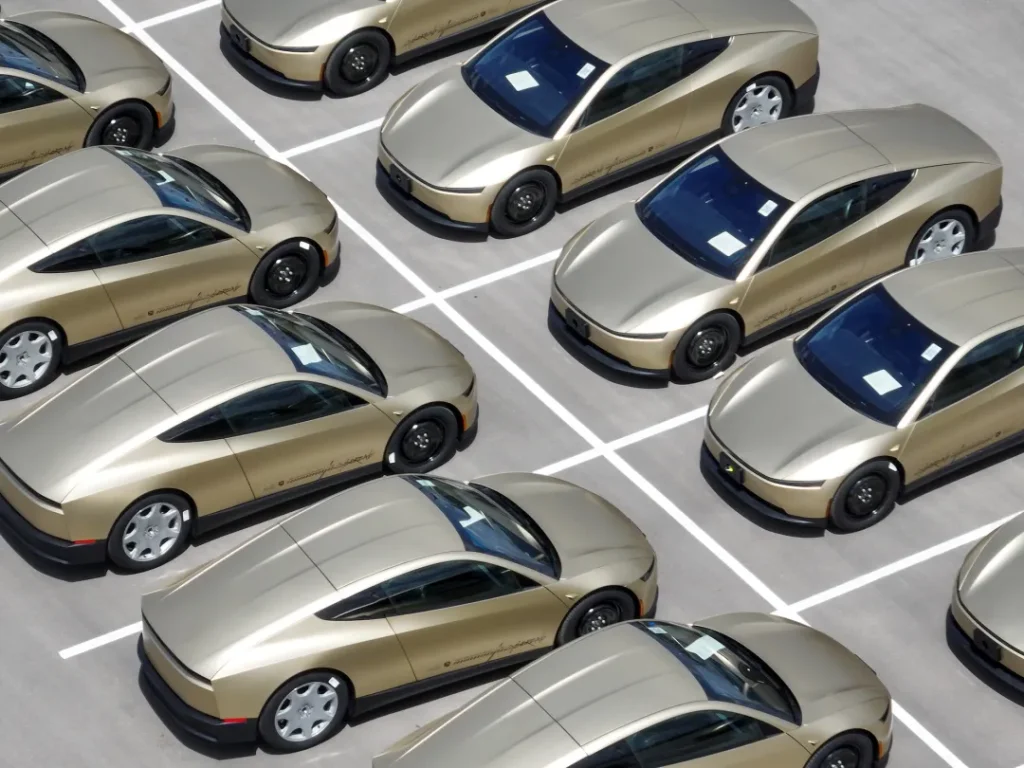
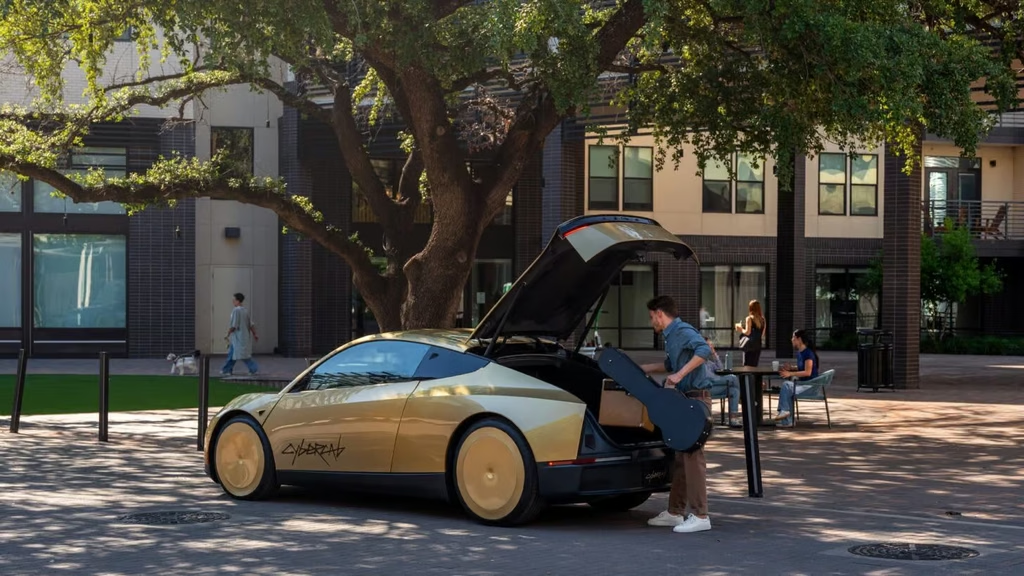
Tesla opened Cybercab orders in the United States at $29,990, with a mandatory subscription attached — a pricing structure that has no confirmed European equivalent yet. The Cybercab carries two passengers, has no steering wheel, no pedals, and a cargo area behind the rear seats. Production at Gigafactory Texas in Austin remains the vehicle's only active manufacturing site. The complete Tesla model history and specifications are catalogued in the Global Auto Index manufacturer database.
