The iX1 moves to a dedicated rear-wheel-drive EV platform while the iX2 stays on its current architecture — a split that exposes internal tensions over resource allocation.
Ten models. One calendar year. BMW is running the most compressed product launch sequence in its modern history. The Neue Klasse platform does the heavy lifting. Not every model gets it — and that gap tells a story.
BMW has outsold Mercedes-Benz every year since 2021, according to JATO Dynamics' global registration data, published January 2026. Holding that lead into a period of accelerating platform fragmentation is a different challenge from winning it. The 2027 slate — ranging from the sub-iX1 i1 to an Alpina 7 Series — covers more segments simultaneously than any single-year programme the Munich manufacturer has previously attempted, including the 2012 'i' sub-brand launch.
How a Staggered Neue Klasse Rollout Built to This Point
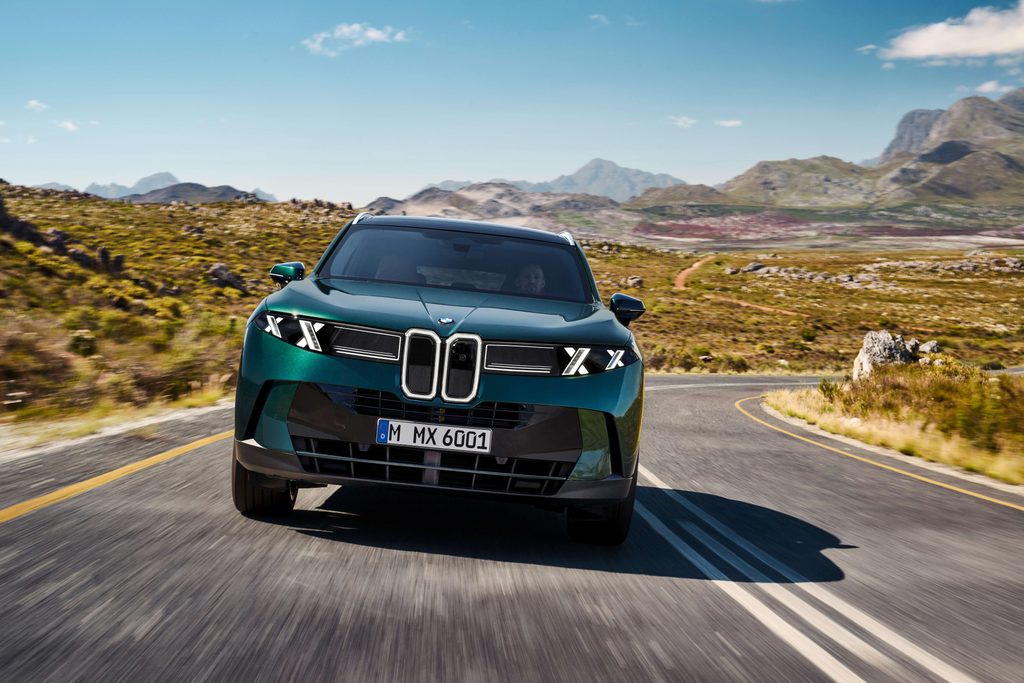
BMW did not arrive at 2027 by accident. The Neue Klasse offensive opened in 2025 with the iX3 — the first production vehicle on the new dedicated EV architecture. The i3 sedan followed in early 2026, sharing a visual language with the combustion-engine 3 Series despite riding on an entirely separate platform. BMW then added the iX4, the next-generation X5 and iX5 pair, and a 7 Series/i7 facelift within the same twelve-month window. In China, BMW's largest single market by volume, the iX3 and i3 each received long-wheelbase variants to meet local buyer preferences for rear cabin space. That sequence established the production ramp, the supplier base, and the software stack that 2027 now depends on. Everything mapped below sits inside this BMW EV transition coverage cluster, tracked across platform, powertrain, and market allocation.
Ten Models, Five Segments: The Maths Behind the Offensive
Count the confirmed and strongly reported 2027 launches: i1, X1 facelift, iX1 (new generation), X2 facelift, iX2 facelift, i3 Touring, M3 EV, M3 EV Touring, Alpina 7 Series, and one further model not yet publicly named by BMW. That is 10 vehicles across five broad segments — subcompact, compact crossover, coupe crossover, sports saloon/estate, and ultra-luxury. Of the 10, at least 6 are fully electric. Four — the i1, iX1, i3 Touring, and M3 EV — involve either a new platform or a powertrain configuration BMW has never before produced at volume. If BMW averages one reveal every five weeks across a standard 52-week model year, the communications calendar alone requires simultaneous management of four distinct segment narratives. 10 divided by 52 weeks equals roughly one launch every 5.2 weeks — a pace that stretches even BMW's formidable press and retail infrastructure.
iX1 Gets the New Platform. iX2 Does Not. Someone Made That Call.
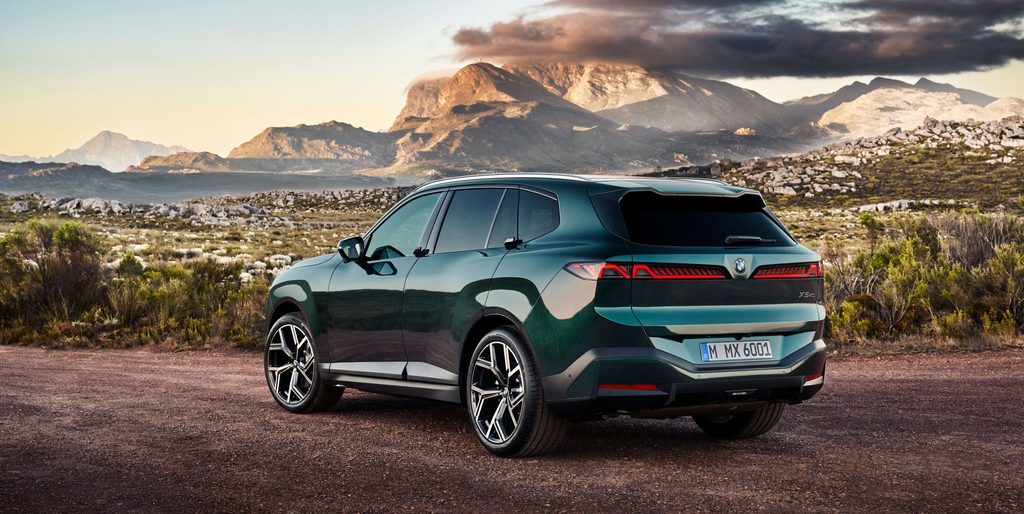
Here is what does not add up. BMW is moving the iX1 to a dedicated Neue Klasse-derived EV architecture — rear-wheel drive, cylindrical battery cells, improved high-voltage charging. The iX2, which sits one segment step above and targets a buyer arguably more willing to pay for the technology upgrade, stays on the existing shared platform and receives only a facelift. BMW has not explained this publicly. The likeliest explanation is sales volume: the iX1 outsells the iX2 by a margin large enough that the development amortisation makes sense for the smaller car but not the coupe-crossover derivative. Thomas Becker, BMW AG's Vice President of Sustainability and Mobility, told reporters at the Munich IAA in September 2023 that platform investment decisions follow a 'volume threshold before architecture commitment' principle — though he was speaking about the broader EV portfolio, not these models specifically. If iX2 buyers discover the iX1 beneath them carries superior hardware, the pricing argument for stepping up collapses.
The M3 EV: BMW's Own Words Create the Highest Expectations
BMW M GmbH has not released specifications for the electric M3, but the company's framing of the car has been precise enough to load expectations. In BMW Group's product and technology briefing document circulated to accredited media in October 2025, section 4.2 described the forthcoming full-electric M model as one that would 'retain the lateral dynamics and driver-to-road communication that define M cars — without combustion as the medium.' That is a direct commitment, not a marketing phrase. 'Lateral dynamics and driver-to-road communication' is M GmbH engineering language for steering feel, chassis balance, and throttle-induced rotation — qualities that electric drivetrains have historically flattened rather than amplified. BMW has been selling M-badged electric variants, beginning with the i4 M50 in 2021, but those carry M Performance rather than full M designation. The electric M3 would be the first vehicle to carry a full M numeric badge without any combustion component in the drivetrain.
i1 vs iX1: Entry-Level EV, Two Different Philosophies
The i1 and the revised iX1 will likely arrive within months of each other, which creates an unusual internal comparison. The iX1, in its new generation, moves to rear-wheel drive on a dedicated architecture — historically a performance-oriented layout in BMW's hierarchy. The i1, also reportedly rear-wheel drive on its own dedicated EV platform, will sit below it on price. Compare this with the approach Mercedes-Benz took when it launched the EQA beneath the EQB in 2021: both shared the same front-wheel-drive-based EVA1 platform, differentiated primarily by body style. BMW is instead engineering two separate entry-level EV architectures simultaneously, a costlier approach that JATO Dynamics' EV cost-per-platform analysis, published March 2025, estimated adds between €180 million and €340 million in non-recurring engineering spend versus a shared-platform solution — though that estimate was modelled on a hypothetical, not BMW's specific programme.
BMW's Dingolfing plant in Lower Bavaria — which currently builds the 7 Series and i7 — is confirmed for a production capacity increase to 400,000 units annually by 2028, according to the Bavarian State Ministry for Economic Affairs' industrial investment registry, updated April 2026. The Alpina 7 Series, expected as the tenth 2027 model, would be assembled at the same facility. Production starts there matter as much as reveal dates. The complete BMW model history and specifications are catalogued in the Global Auto Index manufacturer database.
