The Horse W40 engine weighs just 200 kg and pairs with an eight-speed wet dual-clutch rated to 1,050 Nm.
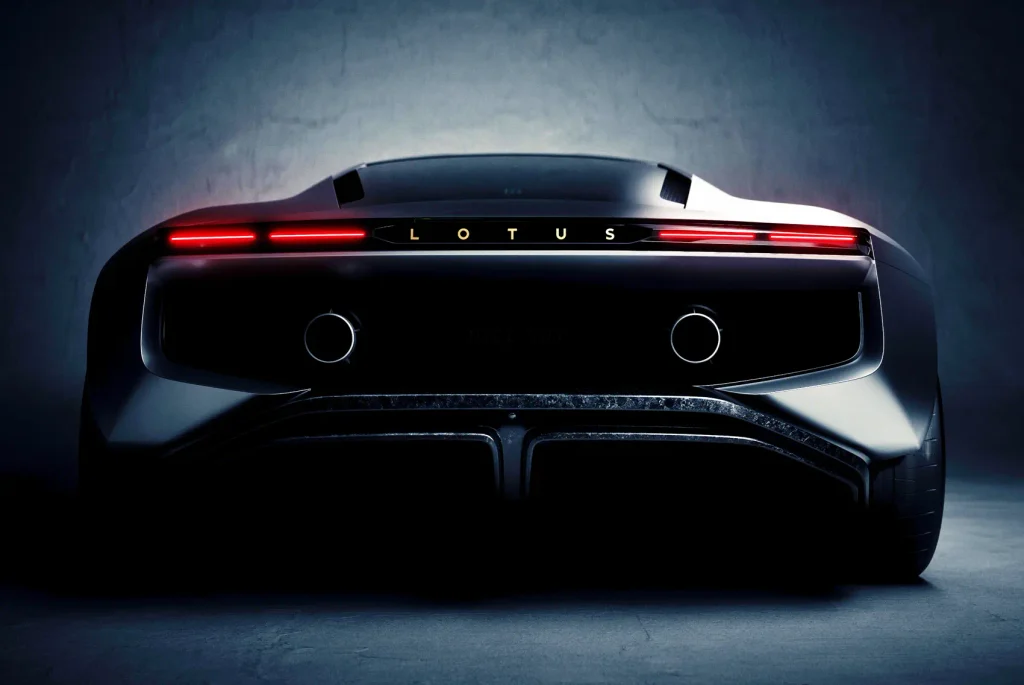
Horse Powertrain has confirmed the W40 engine for the Lotus Type 135. The 4.0-litre twin-turbo V8 produces 671 hp and 800 Nm. Standalone. That figure rises sharply once electric motors join the picture. Lotus targets a 2028 debut and more than 1,000 hp combined.
The announcement matters because new V8 programmes have become rare enough to treat as news in themselves. Ferrari, Lamborghini, and Aston Martin all launched their current V8 architectures before 2016; a clean-sheet V8 designed from day one around hybrid assistance is a different animal. According to Horse Powertrain's technical release, published November 2024, the W40 was engineered as a 'hybrid-first' unit — not a retro-fitted combustion engine adapted for electrification.
What the W40 Numbers Actually Mean
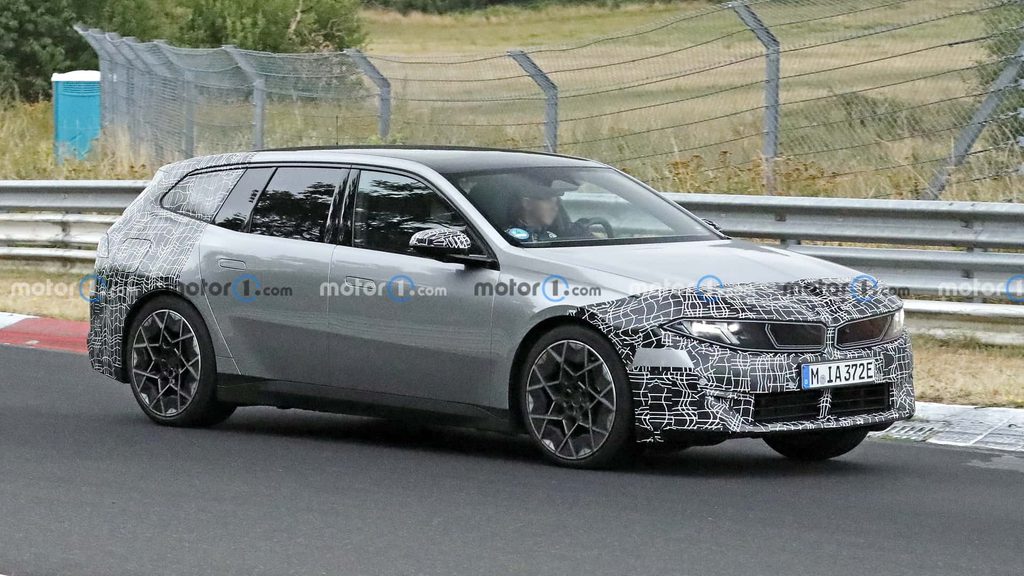
Four figures define the W40's character. Displacement: 4.0 litres. Peak power: 671 hp (500 kW). Peak torque: 800 Nm. Engine mass: approximately 200 kg. That last number deserves attention. A BMW S63 V8 — the 4.4-litre twin-turbo unit used across the M5, M8, and X5 M — weighs roughly 230 kg without ancillaries, according to BMW Group's published engine data. The W40 therefore claims a 30 kg advantage over that benchmark before the aluminium block design is even factored in. Lotus has separately stated a target kerb weight of approximately 1,500 kg for the production Esprit. If the brand holds that figure, the power-to-weight ratio at the combustion engine alone reaches 447 hp per tonne (671 ÷ 1.5). Add the electric motors and the combined output exceeds 1,000 hp; at 1,500 kg that projects to more than 667 hp per tonne — a figure that sits above the Lamborghini Revuelto's 631 hp per tonne, itself considered extreme. For context on how European performance brands are recalibrating output targets through the 2020s, the structural shift toward hybrid supercar architecture is worth tracking across multiple manufacturers simultaneously.
Horse Powertrain's Technical Release: The DCT Details
According to Horse Powertrain's powertrain specification sheet, released November 2024, the eight-speed wet dual-clutch transmission developed alongside the W40 is rated to handle 1,050 Nm of input torque — 31 percent more than the engine produces on its own, leaving headroom for electric motor torque stacking. The document lists two figures that define the gearbox's character in use. Gear-change time: under 20 milliseconds. Pre-fill time — the interval between a shift command and clutch preparation — under 50 milliseconds. Horse Powertrain describes the wet-clutch architecture as specifically chosen to manage the sustained thermal loads that arise when high-torque hybrid powertrains operate in repeated performance conditions, as opposed to the lighter-duty dry-clutch units common in lower-output applications. The transmission is designed to work in both the Type 135 Esprit and, Horse Powertrain states, potential future applications in performance SUVs and pick-up trucks. The company did not name any specific vehicle programme beyond the Lotus application.
A Brand-New V8 and a Partner That Has Never Built One
Here is where the programme gets harder to read. Renault is a co-developer of the W40 through the Horse Powertrain joint venture — a 50/50 arrangement between Geely and Renault formalised in 2023. Renault has never produced a V8 passenger car engine. The closest the French manufacturer came was a 3.5-litre V8 developed in the late 1960s for the ill-fated Projet H luxury saloon, a joint study with Peugeot that never reached production, according to Renault Heritage's published model archive. Earlier Renault V8 and V12 units were aircraft powerplants, not road-car architecture. The practical question this raises is straightforward: how much of the W40's development cost and intellectual property sits on Renault's side of the ledger, and does that give the French group an internal path to deploying the engine in a vehicle wearing its own badge? Horse Powertrain has not addressed this. Neither Renault Sport Cars nor Alpine's communications office had commented on record as of the Horse Powertrain release date.
Weight Obsession, F1 Tech, and What Lotus Did Not Confirm
Lotus Engineering has previously discussed applying Formula 1 motor-winding techniques to reduce a 150 kW electric motor from a typical 75–95 kg down to 20 kg — a mass reduction of between 55 kg and 75 kg from that single component. At 20 kg, that motor weighs less than a full fuel tank on many sports cars. The contrast with standard EV motor practice is stark: the front axle motor in a Porsche Taycan Turbo S, for reference, is cited at approximately 60 kg in Porsche's own technical documentation. What Lotus did not confirm in the November 2024 disclosure: battery capacity, the specific output figures for the electric motor or motors, plug-in capability (the brand has indicated a conventional hybrid rather than a PHEV, but no technical specification has been filed with any regulatory body as of publication), or whether a pure rear-wheel-drive combustion-only mode will be offered in production. Those omissions are not incidental. They represent the difference between a powertrain announcement and a complete vehicle specification.
Geely's Engine-Sharing Logic and What It Means for Lotus
Geely Group's portfolio currently spans Volvo Cars, Polestar, Zeekr, Lynk & Co, LEVC, Proton, and several Chinese domestic brands, in addition to its majority stake in Lotus Technology. Sharing W40 development costs across even two additional nameplates changes the financial equation for the programme. If Horse Powertrain places the engine in three distinct vehicle lines — a reasonable assumption given the company's stated intent to pursue SUV and pick-up applications — Lotus effectively obtains access to a bespoke, clean-sheet V8 at a fraction of the solo-development cost. Aston Martin spent approximately £500 million developing its Valhalla hybrid programme, according to the company's 2022 annual report, a figure that covers a narrower technical scope. For Lotus, whose parent Lotus Technology reported operating losses in its most recent filed accounts, arriving at a 1,000 hp flagship without carrying the full V8 development cost alone is not a minor operational detail. It is the reason the programme exists at this price point at all.
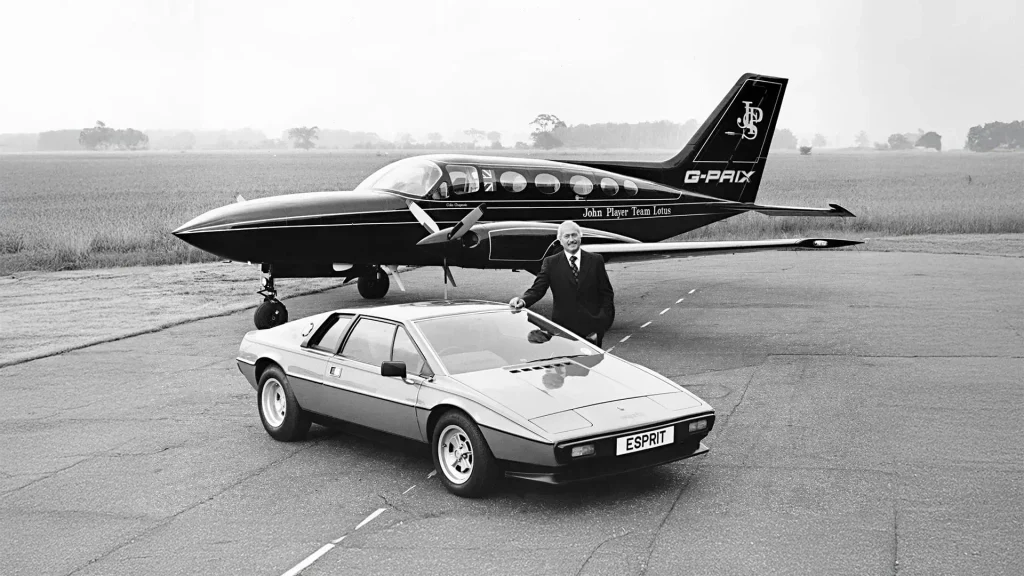
The original Lotus Esprit ran in production from 1976 to 2004 — a 28-year span across five distinct body generations, the last of which used a 3.5-litre twin-turbo V8 producing 350 hp. The revived nameplate's 671 hp combustion unit alone nearly doubles that final-generation figure. Lotus has not published an on-sale date beyond the 2028 debut window. The complete Lotus model history and specifications are catalogued in the Global Auto Index manufacturer database.
