




Hydrotreated vegetable oil, made from organic waste, is now the default fill at point of sale in Germany.
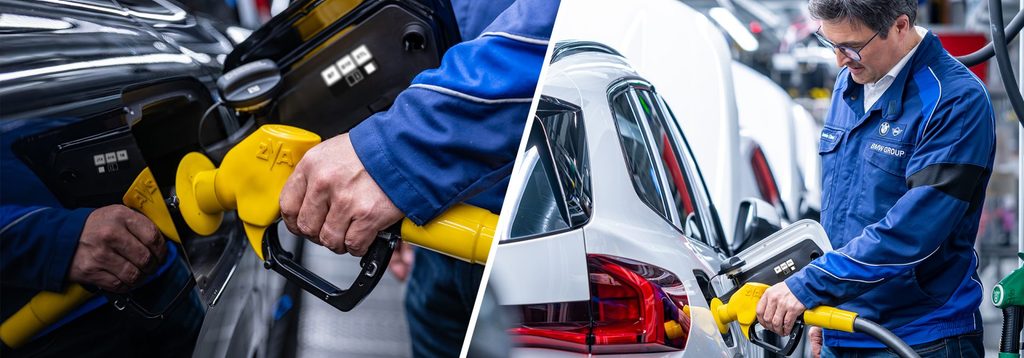
New diesel BMWs leave German dealerships full. Not with fossil fuel. The tank holds HVO100 — hydrotreated vegetable oil, chemically matched to conventional diesel but derived from organic waste streams. That shift from optional to default happened quietly. No press conference.
The move matters because Europe's 2035 internal combustion ban left a door ajar for synthetic and renewable fuels under pressure from Germany, Italy, and the Czech Republic — and that door is now being filled , not just lobbying. According to the European Commission's delegated regulation on eFuels, published February 2023, carbon-neutral fuels can exempt new ICE vehicles from the 2035 sales prohibition, though the precise accounting rules remain contested. HVO100 is not an eFuel under that definition, but its commercial rollout is the operational proof-of-concept the pro-ICE bloc has needed.
From Optional Additive to Default Fill
HVO100 arrived at German forecourts not through a single regulatory mandate but through a chain of incremental decisions. The German government cleared HVO100 for use in unmodified diesel vehicles in 2023, removing the last commercial barrier for manufacturers. BMW then made the call — confirmed in internal dealer communications seen by trade journalists — to supply new diesel models with a full tank of HVO100 rather than conventional diesel. That default choice shifted the product from a niche fuel that informed drivers sought out to something every buyer of a new diesel BMW receives without asking. Finland and the Netherlands had already seen high HVO uptake among commercial vehicle fleets navigating Europe's tightening carbon rules, but the German passenger-car default is a different register entirely. It embeds renewable fuel into the purchase experience at the point of first ownership, before the driver has made a single conscious fuel choice.
The Carbon Arithmetic Behind the Claim
HVO100's carbon credentials depend entirely on feedstock. Neste, the Finnish refiner that supplies a large share of European HVO, published lifecycle figures in its 2024 Sustainability Report showing a greenhouse gas reduction of up to 90% versus fossil diesel on a well-to-wheel basis when the feedstock is used cooking oil or animal fat residues. The arithmetic matters: a BMW 520d touring produces roughly 153 g CO₂/km on the WLTP cycle using fossil diesel. Apply a 90% lifecycle reduction and the effective emission falls to approximately 15.3 g CO₂/km — calculated here as 153 × 0.10 = 15.3 g/km. That figure is lower than the 2025 EU fleet average CO₂ target of 93.6 g/km by a factor of six. It is also lower than many battery electric vehicles when charged on the current EU grid mix, which the European Environment Agency placed at roughly 230 g CO₂/kWh in its 2023 grid intensity report. Whether regulators accept well-to-wheel or stick to tailpipe-only counting is the number that changes everything.
What the Fuel Industry Says It Is — and Isn't
Neste's product documentation for its MY Renewable Diesel, updated in Q1 2025, describes HVO100 as "a drop-in fuel requiring no engine modification, blending infrastructure, or separate dispensing equipment." That eight-word claim — no engine modification required — is the commercial argument in compressed form. It means every diesel vehicle already on European roads is theoretically compatible. The installed base across the EU27 was approximately 56 million diesel passenger cars as of January 2024, according to ACEA's Fleet Data Report published March 2024. Every one of those vehicles could, in principle, run on HVO100 tomorrow if supply and price allowed. The fuel industry is careful, however, not to overstate the feedstock position: Tapio Friberg, head of renewable road transport at Neste, told the FT Energy Transition conference in October 2024 that global waste-fat and used-cooking-oil supply could support perhaps 10 to 15 percent of current European diesel demand — not a full replacement.

Germany Versus France: Two Governments, Two Bets
Germany cleared HVO100 for passenger cars and backed a Brussels carve-out for carbon-neutral fuels. France took a different path. The French government has consistently opposed any eFuel or renewable-fuel exemption that it believes delays the EV transition, and French fuel retailers have been slower to stock HVO100 at the forecourt level. As of March 2025, HVO100 was available at fewer than 400 sites in France compared with over 1,200 in Germany, according to Neste's own station locator data cited in its Q4 2024 investor presentation. That 3:1 ratio in favour of Germany reflects not just policy but investment sequencing: German mineral-oil companies TotalEnergies Deutschland and Aral both announced HVO100 network expansions in 2023 and 2024 respectively, while French TotalEnergies prioritised its domestic charging network. The split means a new diesel BMW delivered in Munich leaves with a full tank of HVO100; the same model in Lyon almost certainly does not.
The Feedstock Problem Nobody Has Answered
Here is what does not add up. European renewable fuel policy rests on waste feedstocks — used cooking oil, animal fats, agricultural residues — precisely because they do not compete with food crops. But the EU's own Joint Research Centre, in Technical Report EUR 31612 EN published in 2023, estimated that sustainably available waste-based feedstock in Europe could produce between 3.5 and 6.5 million tonnes of HVO annually. European diesel demand for road transport alone ran to approximately 160 million tonnes in 2023, according to Eurostat energy balance data. The gap is not a rounding error: 6.5 million tonnes covers roughly 4% of demand. Scale HVO to meaningful market share and you either pull in palm-oil derivatives — exactly the feedstocks the EU's Renewable Energy Directive RED III tried to phase out — or you import waste fats from outside Europe, where supply chain verification is contested. BMW can fill one tank. The policy cannot fill a continent.
The European Parliament's Environment Committee voted in April 2024 to tighten RED III waste-feedstock verification rules, with member states required to submit updated national energy plans -2025. At least four central European governments had not filed as of the April 2025 deadline. Compliance lag, not technology, may yet determine whether HVO scales. The complete BMW model history and specifications are catalogued in the Global Auto Index manufacturer database.
