





Window tinting placed on exterior glass can peel off within hours, exposing owners to state VLT violations and wasted spend.
The job took five hours. It failed in one. A Florida tint shop returned a red Mazda sedan with window film stuck to the exterior of every pane — a surface installation that peels off violates Florida's visible light transmission rules the moment the film shifts or gaps.
Window tinting errors are common enough to generate a dedicated complaint category at state consumer protection offices, but exterior-side application is unusual even . According to the International Window Film Association's installation guidance, published on its member technical portal, film belongs on the interior surface in all passenger vehicle applications — a standard the unnamed Florida shop apparently skipped entirely. Florida Statute 316.2953, last revised January 2023, sets a 28 percent VLT minimum for front side windows; exterior film that lifts at the edges fails that threshold immediately.
One Hour Out of the Shop, the Tint Came Off in His Hand
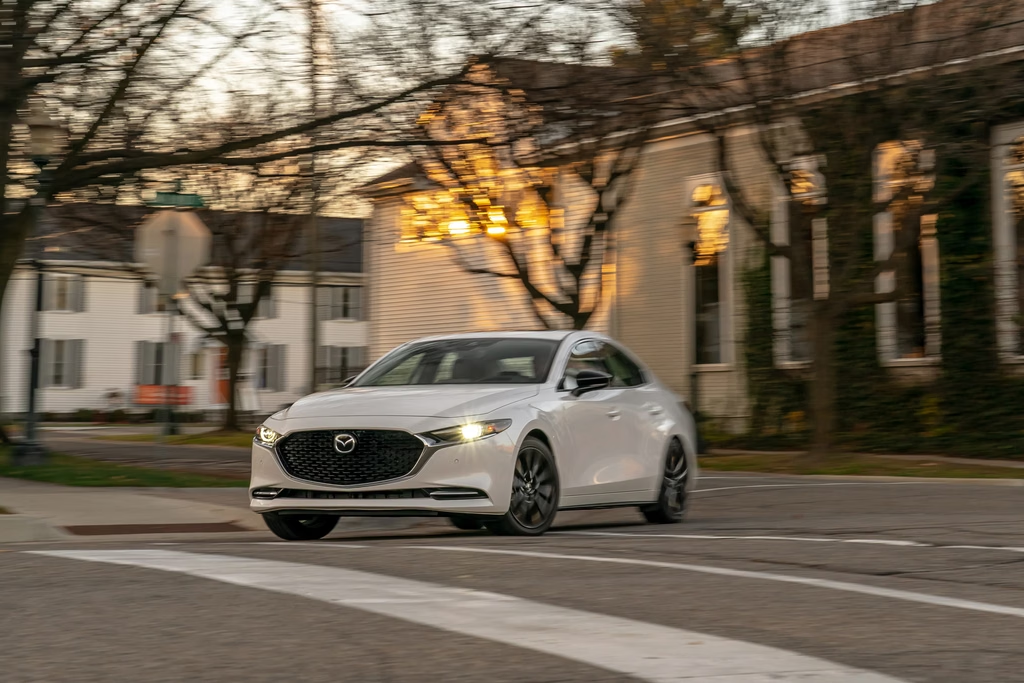
The Mazda's owner, posting under the handle @drippy_zone on TikTok, picked up the car and saw nothing wrong at first glance. He drove away. Within roughly sixty minutes, something caught his eye at the window edge. He grabbed a loose corner of film on the driver's side glass and pulled. It came free without tools, without heat, without any resistance. He moved to the rear window. Same result. He worked around the car, peeling strips as he went, eventually crumpling a section in his fist on camera. "I literally got this car tinted maybe an hour ago," he said. "It took him five hours." The clip spread quickly, drawing hundreds of comments, most of them pointing out the obvious: the film was on the outside. This kind of error sits at the centre of a broader pattern of quality failures in the unregulated end of the tinting trade — part of a wider set of service-sector lapses tracked under industry restructuring pressures in 2026.
What the International Window Film Association Actually Requires
The International Window Film Association — the trade body representing film manufacturers, distributors, and installers across North America — is explicit on placement. Its member technical guidance states: "Window film installation on a car involves applying a thin, transparent film to the interior side of the vehicle's windows … the film is carefully positioned on the inside of the window, ensuring that it aligns properly with the edges and contours of the glass." The document goes on to describe the adhesive bond formed between the film and interior glass as the mechanism that gives installed tint its durability and optical consistency. Exterior application breaks that bond before it forms. The guidance does not list exterior-only installation as an accepted variant under any vehicle category. Detail Solutions, an automotive detailing company that publishes installation reference material, separately confirms that interior placement protects film from road debris, precipitation, and particulate contamination — all of which degrade exterior-applied film within weeks rather than years.
The 'Moulding Step' Defence Doesn't Quite Hold
Several commenters on the original video offered a partial explanation: professional installers do sometimes begin the process on the exterior. Auto aesthetics company RMA, in its published installation notes, confirms that "professionals begin by placing the tint film on the exterior side of the glass" during heat-shrinking, which uses a heat gun to pre-shape film around curved glass before the actual bond. RMA states the film is then "transferred to the interior side of the glass for final installation." The exterior phase, in other words, is a preparation step — not the finished product. Here is where the Florida job breaks down. If the shop completed heat-shrinking correctly, the film would have been transferred and bonded. It was not. The owner could peel it with one finger. Either the transfer step was omitted entirely, or the adhesive liner was never removed. The five-hour duration the owner cited makes the omission harder to explain, not easier: a full set of windows including heat-shrinking typically runs three to five hours. Time was apparently spent; the critical final step was not.
The Cost Arithmetic of a Botched Tint Job
Full-vehicle window tinting at a mid-range Florida shop runs between $180 and $400, depending on film grade and vehicle size. A Mazda sedan — likely a Mazda6 or Mazda3 based on the video framing — has five tintable panes: two front doors, two rear doors, and a rear windshield. At $280 average spend, that is $56 per pane. The film peeled off all five. Recovery options narrow quickly. Disputing a debit card charge is possible under Regulation E, but the burden of proof sits with the cardholder after sixty days. A credit card dispute under the Fair Credit Billing Act is stronger but requires documentation. If the owner already crumpled the peeled film — which he did, on camera — a shop could argue the customer caused damage post-installation. That argument is thin given the exterior placement, but it adds friction. Re-tinting by a second shop costs the full $180–$400 again. Total exposure: up to $800 for a job that should have been done once. The calculation: $280 original spend + $400 re-tint ceiling = $680 minimum realistic loss before any dispute recovery.
Florida VLT Rules Create a Second Problem the Owner May Not Have Noticed
Exterior-applied film that begins lifting at the edges does not simply look bad. In Florida, it creates a moving legal liability. Florida Statute 316.2953 requires front side windows to transmit at least 28 percent of visible light. A film that has partially peeled creates uneven VLT across the same pane — darker in bonded patches, clear where film has lifted. A traffic stop during that transition period puts the vehicle in a grey zone that law enforcement can act on regardless of the owner's intent. The statute does not carry a point penalty on a first offence but does carry a non-moving violation fine, typically $116 in most Florida counties. More practically, the owner of this Mazda now drives a car whose tint is actively degrading on every window simultaneously. There is no safe period to wait this out. Mark Chen, a licensed vehicle inspector with Florida Department of Highway Safety and Motor Vehicles field operations in Broward County, told trade publication Tint World Report in February 2024 that exterior-peeling film is "one of the clearest cut rejections we issue" during any roadside inspection that triggers a window check.
Florida issued 4,312 window tint violation citations in 2023, according to the Florida Department of Highway Safety and Motor Vehicles annual enforcement summary, up from 3,891 in 2022 — a 10.8 percent rise driven partly -pandemic growth in aftermarket service shops operating without certified installers. The International Window Film Association's certified installer programme lists 214 accredited Florida locations as of April 2025. The complete Mazda model history and specifications are catalogued in the Global Auto Index manufacturer database.
