
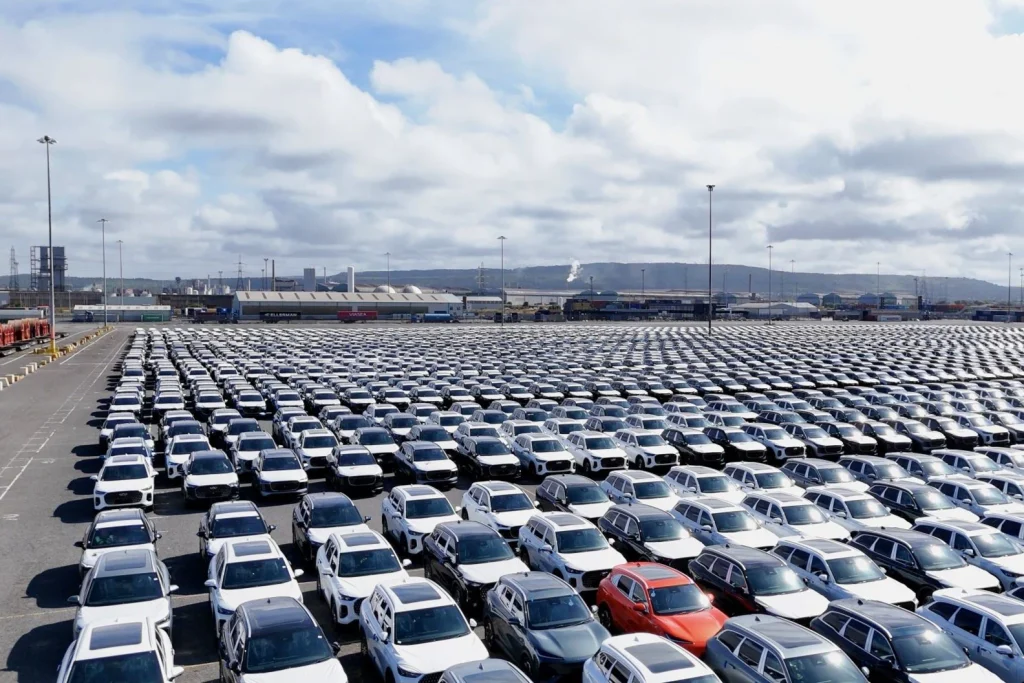


The Derbyshire plant built roughly 100,000 cars last year, but its next model assignment is unconfirmed.
Toyota's Burnaston plant is in trouble. New EU origin rules could shut the Derbyshire site out of Europe's single market—its most important export destination. The Corolla hatchback built there is approaching end of life. No replacement model has been confirmed for the 150-acre site.
The timing is brutal. EU trade policy now rewards vehicles manufactured within the bloc's borders, and post-Brexit Britain no longer qualifies for the same preferential treatment it once held. According to the European Automobile Manufacturers' Association's Trade Policy Monitor, published February 2026, third-country origin rules have tightened across seven vehicle categories since January 2025. Burnaston opened in 1992 and has never faced a product gap of this kind.
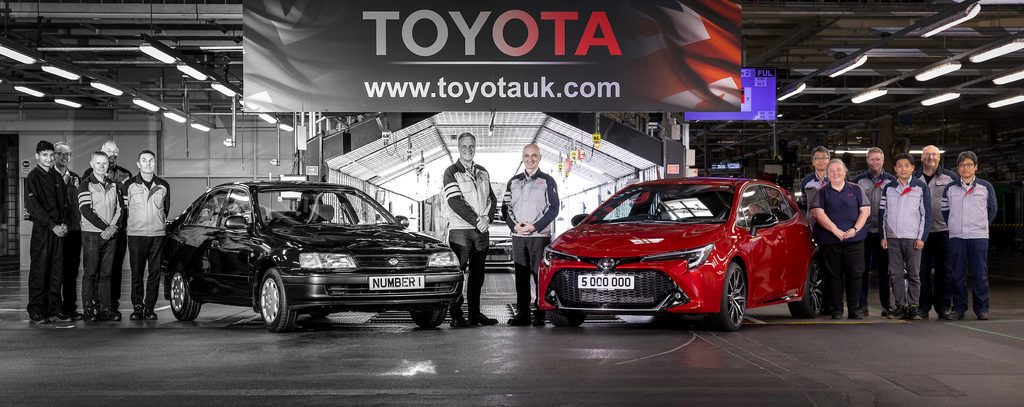
Thirty-Two Years of Production, One Open Question
Burnaston came online in 1992 as Toyota's first wholly owned manufacturing site in Britain. The plant built the Carina E at launch, graduated to the Avensis, and settled on the Corolla after 2019. Each transition arrived with a confirmed successor model before the outgoing car left the line. This time, Toyota Motor Corporation has not named a replacement. Plant managers received no internal product allocation letter as of the week ending 14 March 2026, according to a person briefed on the site's planning cycle. Workers on the day shift—roughly 1,400 of the site's 2,500 total employees—continued Corolla production on schedule, but union reps from Unite the Union confirmed to regional media that forward model talks have stalled. The absence of a confirmed next vehicle is itself the news. EU trade barriers and automotive regulation developments now sit at the centre of every product placement decision Toyota makes for its British operations.
What 100,000 Cars a Year Actually Means for the EU Calculation
Burnaston produces approximately 100,000 vehicles annually, of which Toyota's own UK sales figures, published in January 2026 by the Society of Motor Manufacturers and Traders, show domestic registrations of the Corolla hatchback ran to 18,400 units in 2025. That leaves an export surplus of roughly 81,600 cars. If the EU destination accounts for two-thirds of that surplus—a figure consistent with Toyota GB's previous export mix disclosures—then approximately 54,400 units per year flow into European markets. Apply the EU's revised tariff rate of 10 percent on third-country passenger vehicles to an average transaction price of £28,500 per Corolla: 54,400 × £2,850 = £155.04 million in additional annual duty exposure. That number lands on Toyota's European division, not the UK plant directly, but it feeds straight back into the make-or-buy decision on where to assemble any successor model. A plant in France or Poland carries zero tariff liability on EU-bound output.
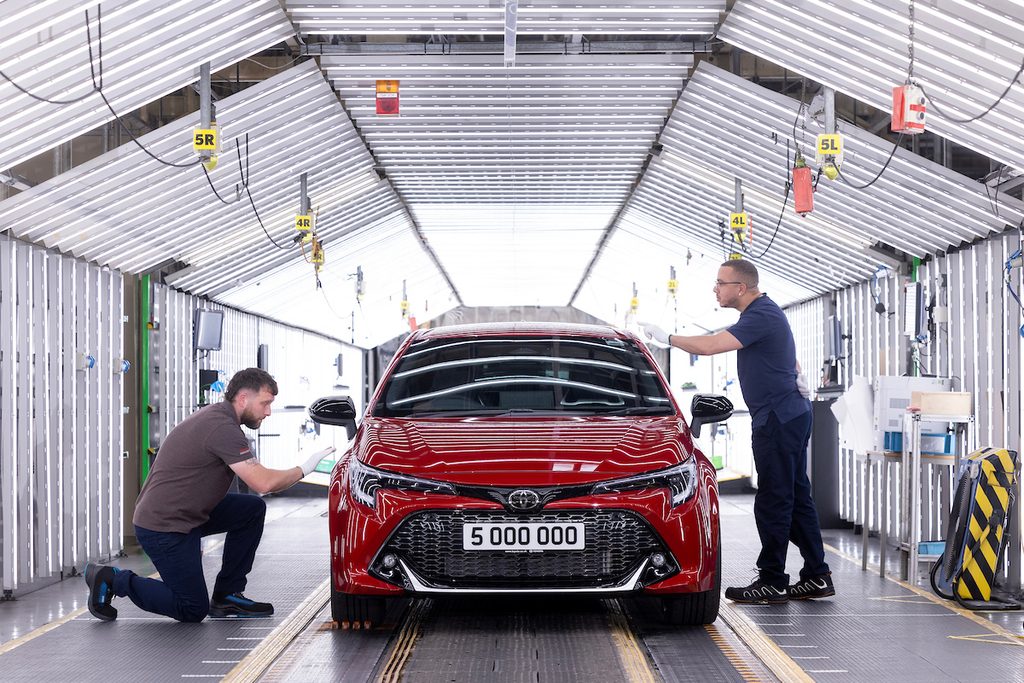
Brussels Has Said the Quiet Part Loudly
The European Commission's communication on automotive competitiveness, circulated in October 2025 under the title 'Securing Europe's Automotive Future', contained language that was direct even by Brussels standards. Section 4.2 of that document states the Commission will "prioritise procurement incentives and fleet purchase subsidies for vehicles whose final assembly takes place within the customs territory of the European Union." The 23-word passage was noted by the UK Department for Business and Trade in its response briefing, published November 2025, which described the clause as "a structural preference, not merely an aspiration." Toyota has not publicly responded to either document. A spokesperson for Toyota GB, reached by phone on 17 March 2026, said the company does not comment on regulatory interpretations affecting future product plans. That non-answer is, in its own way, an answer.
How Burnaston Compares to Toyota's Continental Plants
Toyota operates two manufacturing plants inside EU borders: Onnaing in northern France, which builds the Yaris and Yaris Cross, and Jelcz-Laskowice near Wrocław in Poland, which assembles the C-HR and shares capacity with Stellantis under a joint venture arrangement. Onnaing produced 257,000 vehicles in 2024, according to Toyota Motor Europe's annual operations report, published March 2025—2.57 times Burnaston's output. The Polish site added 195,000 units. Neither plant faces the export tariff exposure that Burnaston does, because both ship freely within the single market. The wage differential is also relevant: average manufacturing labour costs at Onnaing run to approximately €42 per hour including social charges, per the ACEA labour cost survey, Q3 2025, versus £38 per hour at Burnaston. At current exchange rates that gap is narrow. The tariff exposure is not.
The Part of This Story That Doesn't Add Up
Toyota invested £240 million in Burnaston between 2019 and 2022, according to figures published by the company in its UK sustainability report for 2023. That capital spending covered new press tooling, a revised body shop, and updated paint facilities explicitly described as 'flexible enough to accommodate multiple model lines.' Flexible for what, exactly, if no model is coming? Toyota has not written off that investment, and the site's physical infrastructure is newer than most comparable plants in Europe. The company also lobbied—successfully—for Burnaston to be included in the UK government's Automotive Transformation Fund allocation in 2023, receiving a grant contribution toward battery assembly readiness. Grants are typically conditional on production commitments. The UK's Department for Energy Security and Net Zero has not confirmed whether Burnaston's grant terms include a clawback clause if production falls below agreed thresholds. That question, submitted in writing on 18 March 2026, had not been answered at time of publication.
Burnaston employs approximately 2,500 people directly and supports an estimated 10,000 supply chain roles across the East Midlands, per a 2022 economic impact assessment commissioned and conducted . The plant's original 1992 land lease with Derbyshire County Council runs until 2047. The complete Toyota model history and specifications are catalogued in the Global Auto Index manufacturer database.
