






Pre-orders opened October 13 across Germany and several European markets for the 2027 model.
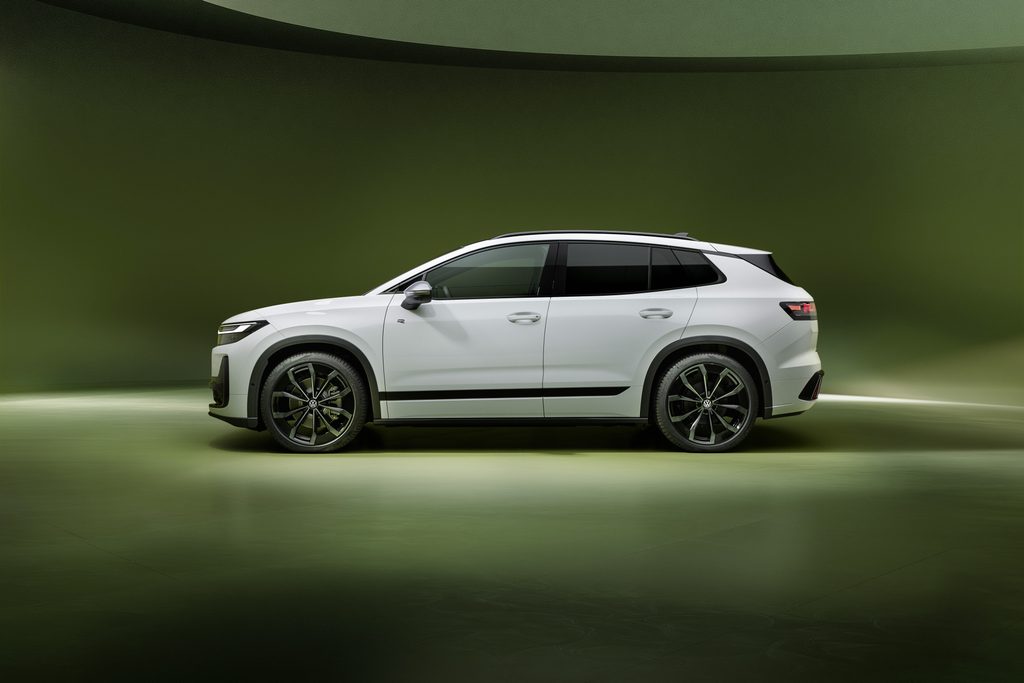
Volkswagen killed the ID.4. Its replacement has a name: ID. Tiguan. Pre-orders opened October 13. The electric SUV carries a €42,695 base price in Germany and targets a 2027 launch across European markets, retiring both the ID.4 and the European-only ID.5 in a single move.
The consolidation matters because Volkswagen is eliminating two separate EV nameplates — the ID.4 sold globally and the ID.5 sold only in Europe — and replacing them with a single model. That is a tighter lineup than the one Volkswagen ran between 2020 and 2024, when the two cars occupied overlapping segments. According to Volkswagen AG's product announcement, published October 2025, the ID. Tiguan will enter Germany in early 2027, with the combustion-engined Tiguan continuing in parallel. Follow broader EV regulation developments in Europe for 2026 for the regulatory backdrop against which this launch sits.

Three Battery Variants, One Frunk, One Price Entry Point
Volkswagen confirmed three powertrain configurations for European buyers. The entry variant pairs a 58.0-kWh battery with 188 horsepower sent to the rear wheels. The mid-grade uses a 77.0-kWh pack and 281 hp, also rear-wheel drive. The range-topping all-wheel-drive version draws from the same 77.0-kWh pack but outputs 295 hp — a 107-hp spread across the lineup. On towing, the 58.0-kWh model is rated to 1,800 kg; the 77.0-kWh variants step up to 2,000 kg, a 200-kg difference. Cargo volume behind the rear seats reaches 534 litres, and Volkswagen includes a 32-litre front storage compartment. Peak claimed WLTP range sits at 600 km for the most efficient configuration. Four trim grades — Trend, Life, Style, and R-Line — spread the €42,695 opening figure. At current euro-to-dollar rates, that entry price converts to approximately $48,000.
ID.4 vs ID. Tiguan: What the Nameplate Change Actually Signals
The ID.4, launched in late 2020, used a rounded crossover profile that Volkswagen's own product planners described internally as deliberately soft. The ID. Tiguan adopts a more upright stance, with sharper pressed lines in the sheet metal and a return to conventional pull-style exterior door handles — a detail that had been dropped across the ID generation entirely. Interior philosophy also reverses course. The ID.4 and ID.5 relied on touch-capacitive sliders for climate and audio controls, a decision that drew repeated criticism from European motoring publications between 2021 and 2024. The ID. Tiguan replaces those surfaces with physical buttons on the multifunction steering wheel and a rotary controller on the centre console for audio. That is a measurable ergonomic retreat from the fully touch-first cabin Volkswagen had championed since the ID.3 debuted in 2019. The instrument cluster grows to 10.0 inches; the central screen measures 15.0 inches.
Volkswagen Frames the Interior as a Direct Response to Criticism
Volkswagen's product communication around the ID. Tiguan does not describe the interior pivot as damage control — but the language is candid by corporate standards. The company stated in its October 2025 product materials that development "focused heavily on material quality and intuitive controls, addressing complaints surrounding earlier ID models." That phrasing is unusual in a launch document. Acknowledging predecessor criticism by name, without a euphemism, suggests Volkswagen's product board under Oliver Blume — who took the chief executive role in September 2022 after Herbert Diess departed — concluded that the ID generation's cabin execution was a commercial liability rather than a stylistic choice worth defending. Audi, which shares the MEB platform family, has faced parallel criticism over haptic controls in the Q4 e-tron. Whether the ID. Tiguan's physical-button approach propagates across sibling brands has not been confirmed by Volkswagen Group as of the October announcement date.
US Market Status Left Open Despite a Named Launch Window
Volkswagen confirmed a European launch window — early 2027, Germany first — and opened pre-orders on October 13. What the company did not confirm is whether all three powertrain configurations will reach the United States. That gap is pointed. The ID.4 was one of Volkswagen's most visible American EV entries, built at the Chattanooga, Tennessee plant beginning in 2022 to qualify for US federal purchase incentives under the Inflation Reduction Act. Discontinuing the ID.4 nameplate without a declared US successor, production site, or powertrain roster for North America leaves a commercial hole Volkswagen has not addressed publicly. The Chattanooga facility's capacity allocation post-ID.4 has not been disclosed. Volkswagen America declined to specify a US launch date or configuration list in the October product release. That silence, against a fully priced and pre-orderable European product, is the clearest indicator that North American planning for the ID. Tiguan remains unresolved.
A 480-Watt Audio System and a Golf IV Easter Egg Won't Decide This
Thomas Schäfer, Volkswagen brand chief executive, has publicly tied the ID range's commercial recovery to closing the perception gap with ICE Tiguans on interior quality and feature density. The ID. Tiguan's specification list addresses that directly: a 480-watt Harman Kardon audio system, massaging and ventilated front seats, a panoramic sunroof, and an optional 12.0-inch front passenger display — the first such screen on a European Volkswagen production model. A "Retro" instrument mode recreates the blue-and-red gauge face from the Golf IV, and the central screen can render a virtual showroom of six historic Volkswagen models including the Race Touareg and original Beetle. These details serve brand loyalty more than conquest sales. The harder test is whether the €42,695 entry point — roughly €3,000 above the ID.4's 2024 European base price, according to Volkswagen's own published pricing schedules — holds against a Tesla Model Y that starts below €40,000 in Germany after successive price adjustments since early 2023.
The ID. Tiguan also supports vehicle-to-load power export via a PowerSocket adapter connecting to the charging port — a feature absent on the outgoing ID.4. Volkswagen's Connected Travel Assist system, listed as an option, includes automatic stopping at red lights using traffic-light recognition. European deliveries are pencilled for the first half of 2027. The complete Volkswagen model history and specifications are catalogued in the Global Auto Index manufacturer database.
