






Group sales topped 2.23 million units through September 2026, funding the push westward.
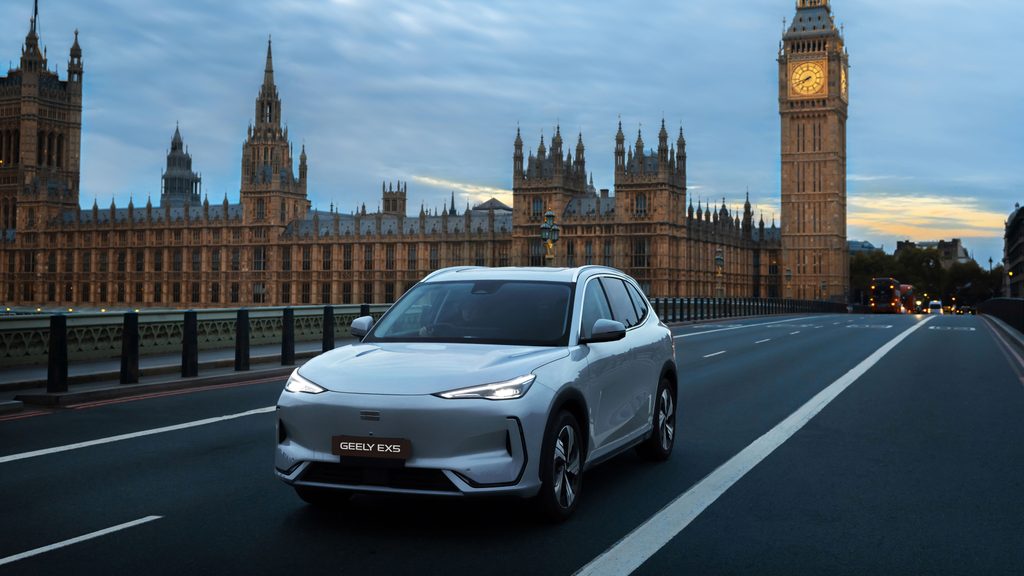
Geely is coming to Canada. The Chinese automaker announced Friday it has incorporated Geely Auto Canada and begun recruiting retail and service partners across the country. First vehicles arrive in 2027. No models named. No prices set.
For context: no Chinese passenger-car brand has successfully built a functioning Canadian retail network from scratch since the market opened to imports in the early 1980s. Geely sold 3.02 million vehicles globally in 2025, according to Geely Auto Group's published sales figures released October 2026, and is funding the Canadian operation from an expansion budget that also covers active entries in Southeast Asia, the Middle East, and Europe.

How Geely Auto Canada Came to Exist
The announcement arrived on a Friday morning. Geely Auto Group incorporated a Canadian subsidiary — Geely Auto Canada — and tasked it with one immediate job: find partners. The unit is now contacting dealership groups and service operators in major metro corridors. Bryan Wu holds the managing director title and is overseeing those conversations. No specific cities were named in the announcement. No opening quarter was attached to the 2027 target. The parent company did confirm the Canadian entity will operate under the Geely Auto brand specifically — not under Volvo Cars, Polestar, Lotus, or any of the other marques the Geely Auto Group controls. That boundary matters for how the retail agreement structures will be written.
The Sales Base Backing the Canadian Bet
Geely Auto Group published group-wide sales data showing 3.02 million vehicles moved globally in calendar year 2025. Of those, 1.69 million were classified as electrified — meaning battery-electric or plug-in hybrid — representing 55.9 percent of total volume (calculation: 1.69 ÷ 3.02 = 0.559). Through the first nine months of 2026, group sales surpassed 2.23 million units, according to Geely Auto Group's October 2026 sales release. If the pace holds flat, full-year 2026 output projects to roughly 2.97 million — marginally below 2025's record. Canada's total new-vehicle market ran at approximately 1.56 million units in 2024, according to Statistics Canada's motor vehicle sales report published February 2025. Capturing even 0.5 percent of that would mean roughly 7,800 annual units — a modest but operationally meaningful floor for a brand building from zero dealer points.
Wu's Commitment Language, Parsed
Bryan Wu, managing director of Geely Auto Canada, issued a written statement alongside the Friday announcement. The operative line: "We are entering this market with a long-term commitment, bringing our global technology and engineering capabilities to Canadian drivers while building strong local partnerships." The phrase "long-term commitment" does real work here. Geely's earlier entries into Australia and the United Kingdom both involved multi-year network-building phases before first retail deliveries. Wu's statement avoids any reference to a specific model name, a launch-event city, or a financing programme — all of which remain formally unconfirmed. The statement also does not address Canadian safety certification timelines under Transport Canada's Motor Vehicle Safety Act, a process that has delayed Chinese-brand entries in comparable markets before.
What Geely Has Not Said — and Why That Gap Is Telling
Three absences stand out in the Friday announcement. First, no model was named. Geely's current global portfolio includes the E5 sedan, the Galaxy Cruiser 700 SUV, and several other platforms — none confirmed for Canadian certification. Second, no dealer count or target city was published. A functioning retail network typically requires a minimum of 15 to 20 points to cover Canada's geographically dispersed population centres; Geely has not said whether it is targeting that floor or something larger. Third, there is no mention of Transport Canada homologation status for any specific vehicle. Homologation under Canadian Motor Vehicle Safety Standards is a separate process from U.S. FMVSS compliance, and Chinese-built vehicles have not previously completed it at volume. Geely Auto Canada did not respond to questions about certification timelines before publication.
Canada vs. Other Western Markets: The Tariff Variable
The United States imposed a 100 percent tariff on Chinese-built passenger vehicles in May 2024, according to the Office of the United States Trade Representative's Section 301 tariff action published May 2024. Canada did not match that rate at the same time, instead applying a 100 percent surtax on Chinese EVs from October 2024, according to the Department of Finance Canada's announcement, October 2024 — but that surtax applies specifically to electric vehicles. A Geely model sold in Canada as a conventional hybrid or internal-combustion variant could face a lower tariff burden than an equivalent battery-electric unit, a material difference when calculating landed cost against competitors such as Toyota, whose Canadian-assembled RAV4 carries zero import duty. Geely has not confirmed the powertrain mix it intends to bring, which means the tariff exposure for its Canadian lineup remains an open variable.
Geely Auto Group holds a 49.9 percent stake in Smart Automobile, a joint venture with Mercedes-Benz confirmed in 2020 — a corporate detail absent from the Canadian launch announcement. The Geely Auto brand itself was founded in 1997 in Hangzhou, Zhejiang province. First retail deliveries in Canada are targeted for sometime in 2027; no quarter has been confirmed. The complete Geely model history and specifications are catalogued in the Global Auto Index manufacturer database.
