

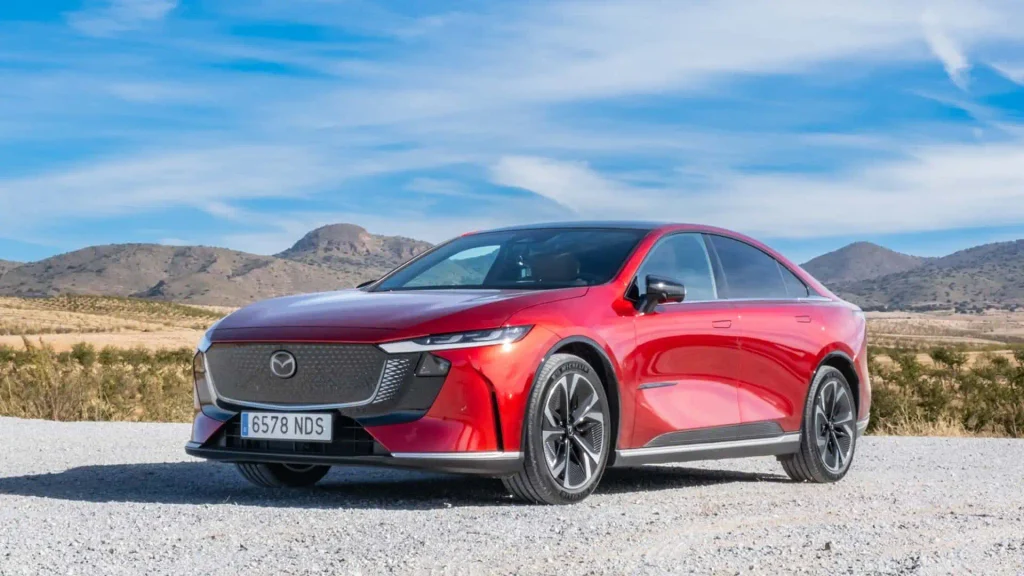
Without Leapmotor's UK electric volumes, Stellantis's European brands would face compliance shortfalls against a 33% ZEV floor set for 2026.
The numbers tell the story bluntly. Stellantis is counting on a Chinese partner — Leapmotor — to keep its UK ZEV mandate score above the regulatory floor. That floor sits at 33% of total sales for 2026. Its own European marques are not getting there alone.
The UK's ZEV mandate, administered and Vehicle Licensing Agency under the Zero Emission Vehicles Mandate Order 2024, requires each manufacturer group's new-car sales to include a rising share of battery electrics: 33% in 2026, climbing to 80% by 2030 and 100% by 2035. Stellantis trails peers on electrification of its core European lines. In 2024, Leapmotor sold fewer than 5,000 units across Europe — but targeted volume in compliance-critical markets can move a group-level percentage point faster than any internal model launch. According to SMMT registration data published February 2025, Stellantis brands collectively underperformed the 22% ZEV interim threshold that applied to calendar year 2024.
The Mandate Maths Stellantis Cannot Ignore
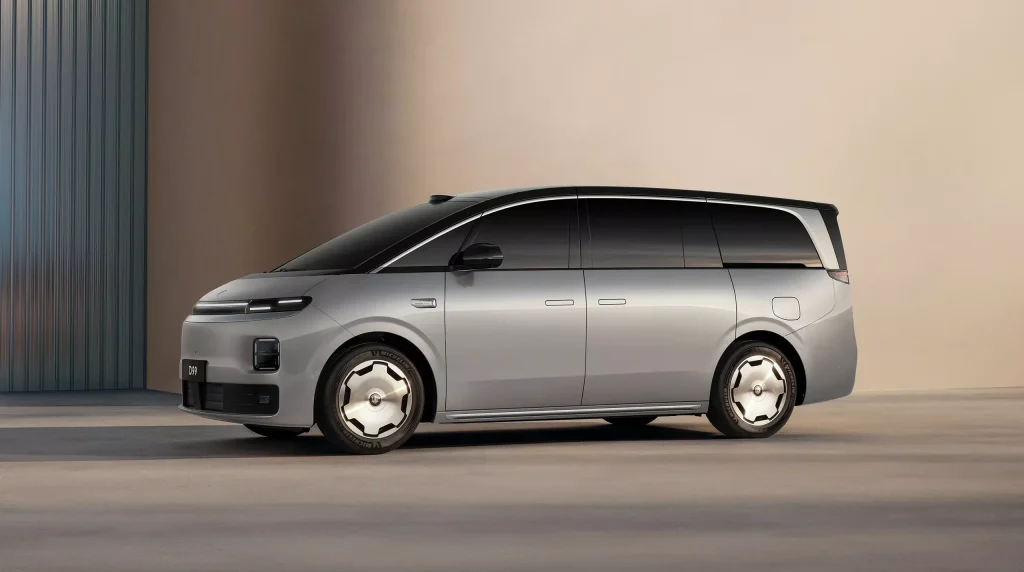
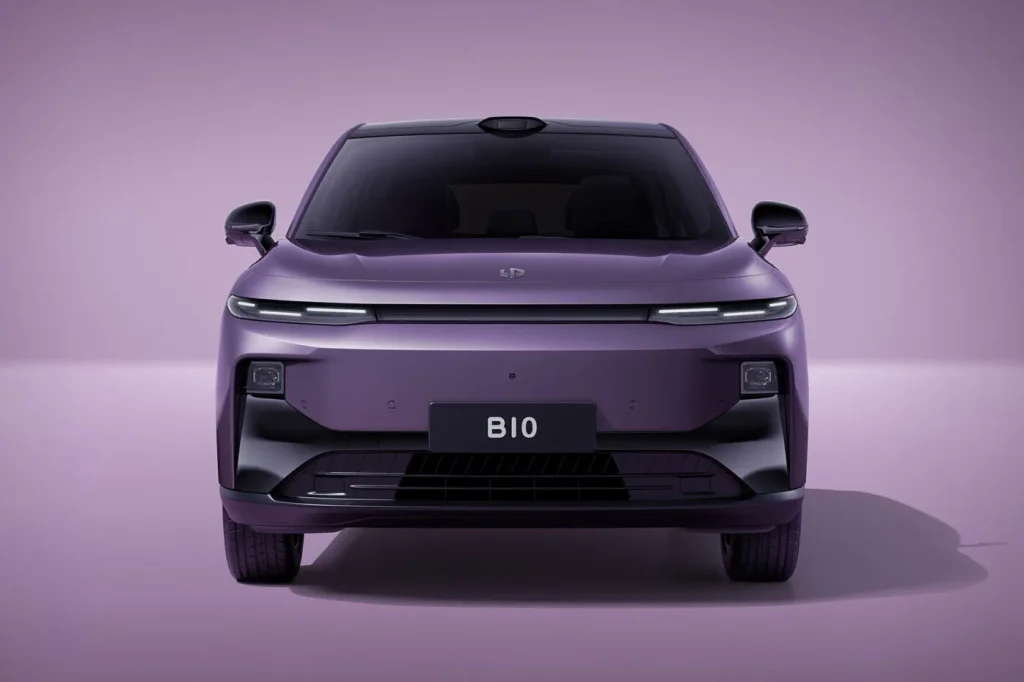
Work the numbers forward. The UK mandate steps are fixed in statute: 33% in 2026, 38% in 2027, 52% in 2028, 66% in 2029, 80% in 2030. The gap between 2026 and 2030 is 47 percentage points across four years — an average annual increase of 11.75 points per year. Stellantis's UK brand portfolio — Vauxhall, Peugeot, Citroën, Fiat, Jeep, DS — reported a blended ZEV share of approximately 18% in 2024, according to SMMT monthly registration data. To meet the 33% target in 2026, the group needs to lift that share by roughly 15 points in two model years. At 2024 UK total Stellantis volumes of around 180,000 units, 15 additional percentage points equals approximately 27,000 extra ZEV registrations. Leapmotor's T03 city car and C10 SUV, both sold under Stellantis distribution in the UK from late 2024, feed directly into that group tally. Each Leapmotor unit registered counts toward Stellantis's compliance denominator on the same basis as a Vauxhall Astra Electric. Reported UK pricing for the T03 opened below £17,000. Volume at that price point can move fast. For broader context on the European EV regulatory compliance picture across manufacturers, the divergence between brand-level and group-level ZEV scoring is now the defining variable.
How Leapmotor Compares to Stellantis's Internal EV Pipeline
Stellantis's own European electric launches between 2023 and 2025 — the Peugeot E-308, Citroën ë-C3, Fiat Grande Panda Electric — are each priced above £22,000 in the UK at entry trim. The Leapmotor T03 undercuts all of them. That price gap matters for mandate compliance because the mandate counts units, not revenue. One T03 at £16,995 contributes identically to ZEV score as one E-308 at £32,000. Kia, by contrast, has built ZEV headroom through the EV3 and EV6 range — Kia UK crossed 100,000 cumulative EV registrations while simultaneously calling the mandate pace unrealistic, a position that suggests even compliant brands view the 2028-to-2030 ramp as the true stress test. Stellantis does not have Kia's luxury of surplus. Its internal EV mix leans toward the A and B segments where margins are thin and volume is price-elastic. Leapmotor fills precisely that segment. Chinese-built, low-cost, already homologated for right-hand-drive markets — it arrived at the right moment for the wrong reasons from a European industrial standpoint.
What Stellantis's Own Filings Signal
Stellantis's 2024 full-year results presentation, published 26 February 2025, stated that the Leapmotor International joint venture — in which Stellantis holds a 51% stake — recorded "accelerating European registration growth" in Q4 2024. The presentation did not quantify Leapmotor's precise contribution to individual market ZEV compliance ratios, but it described the partnership as "integral to affordable electrification access across regulated markets". That phrase — "regulated markets" — is doing considerable work. It is not a description of consumer preference. It is compliance language. Carlos Tavares, who served as Stellantis CEO until his resignation in December 2024, had previously described the Leapmotor deal in a September 2023 briefing as a way to "access competitive electric architecture without the full capital cycle of in-house development". The 51% stake cost Stellantis €1.5 billion. Amortised against the fines that European OEMs risk for missing ZEV targets — which under UK rules can reach £15,000 per non-compliant vehicle — the investment calculus is not complicated.
The Compliance Dependency That Nobody Is Advertising
Here is what does not quite add up. Stellantis has 14 brands. It operates manufacturing plants in Ellesmere Port, Poissy, Sochaux, Melfi, Mirafiori, Tychy and Zaragoza, among others. It employs approximately 250,000 people in Europe. And its ZEV compliance arithmetic for the UK market in 2026 may hinge materially on a brand incorporated in Jinhua, Zhejiang Province, that had no European sales presence before October 2024. That is not a criticism of the Leapmotor partnership — it is a structural observation about how quickly the mandate has outrun internal product cadence at legacy OEMs. The anomaly extends further: Stellantis has not publicly disclosed what Leapmotor's minimum volume contribution needs to be for group-level compliance in any given year. That figure — call it the compliance floor volume — has not appeared in any investor filing reviewed for this article. The absence of that disclosure matters. Changan's rejection of shared European production arrangements shows that Chinese OEMs are not uniformly accommodating to Western compliance needs. Leapmotor's continued cooperation with Stellantis is not guaranteed beyond the current joint-venture term, and the EU's tariff environment adds friction to the model.
What Happens If Leapmotor Volume Disappoints
If Leapmotor UK registrations fall short of Stellantis's internal targets in 2026, the group faces three options: purchase ZEV credits from over-compliant manufacturers, accelerate internal EV registrations through heavy retail support — read: discounts — or absorb the statutory fine. Under the Zero Emission Vehicles Mandate Order 2024, the non-compliance penalty is £15,000 per vehicle shortfall against the annual target. On a 180,000-unit portfolio, a five-percentage-point miss versus the 33% target equals 9,000 vehicles short. At £15,000 each, that is £135,000,000 in potential fines — before any credit-trading offset. The credit market for ZEV overcompliance is nascent and thinly traded in the UK. Tesla is the obvious surplus holder; Tesla and Stellantis are not natural commercial partners. The EU Industrial Accelerator Act, which targets UK EV manufacturing access, adds another layer of uncertainty for Stellantis's medium-term supply chain planning across both markets. Leapmotor is not a rounding error for Stellantis in 2026. It may be the difference between compliance and a nine-figure fine.
Leapmotor's parent company, Zhejiang Leapmotor Technology, listed on the Hong Kong Stock Exchange in September 2022 at HK$48 per share; 2025 the stock had recovered from a 2023 low of HK$19.38 following confirmation of the Stellantis distribution deal. The joint venture covers 13 markets outside Greater China. Stellantis holds board majority. Volume targets through 2027 have not been disclosed. The complete Leapmotor model history and specifications are catalogued in the Global Auto Index manufacturer database.
