An internal codename, a boxer engine that has never reached production, and a Capital Markets Day on October 7.
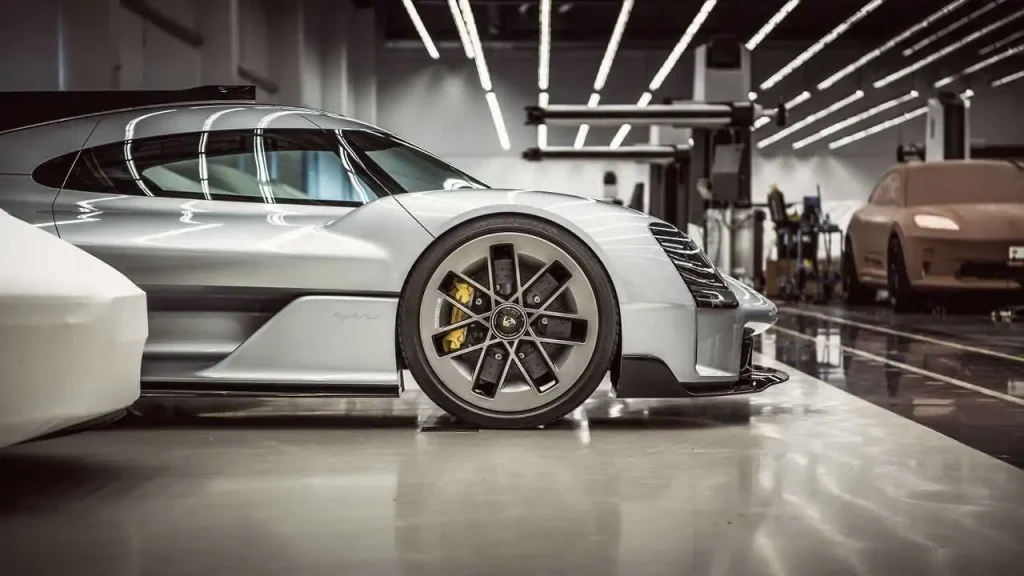
A half-million-euro Porsche. That figure is not a typo. German business newspaper Handelsblatt reported the model, known internally as the S1, would carry a flat-eight boxer engine and an asking price of roughly €500,000. No official confirmation exists. The name, the price, and the engine specification remain unverified .
The last Porsche supercar — the 918 Spyder — ended production in June 2015 after 918 units. A decade without a flagship is an unusual gap for a manufacturer that competes directly with Ferrari and Lamborghini at the top of the European performance segment. Porsche chief executive Michael Leiters told Frankfurter Allgemeine Zeitung earlier in 2025 that the company "has to make money even with fewer cars" — a line that makes a €500,000 halo model commercially coherent, whatever its powertrain turns out to be.
From a Clay Model to a Codename
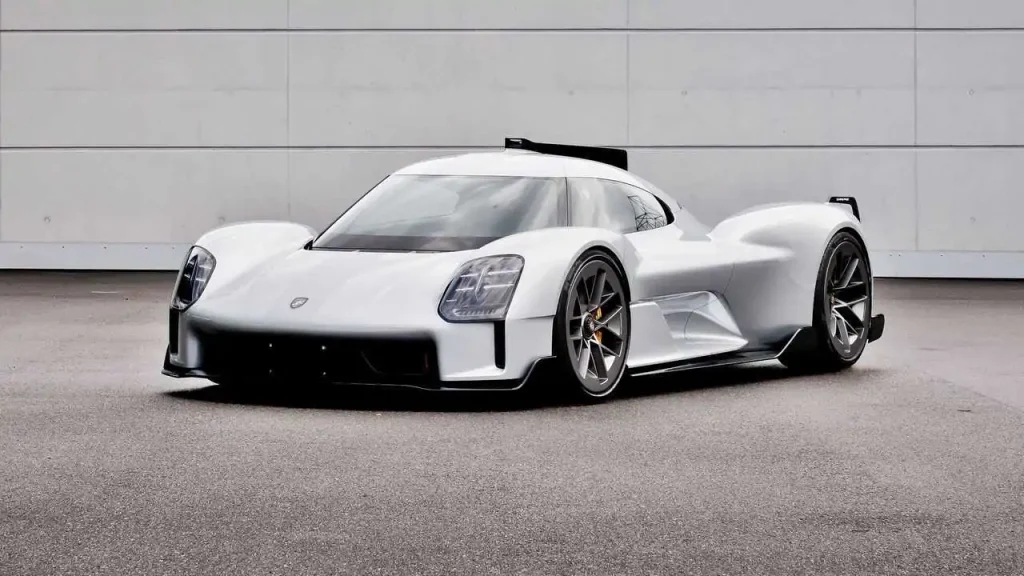
Porsche's appetite for a true flagship resurfaced publicly in early March 2025, when a company spokesperson used the word "hypercar" in a statement to Motor1 — the first time the brand had applied that term to a future model. Handelsblatt then reported the internal designation S1 and placed the base price at approximately €500,000. The project did not appear from nowhere. In 2017, Porsche completed a clay model of the 919 Street, a road-going interpretation of its LMP1 race car. That programme was cancelled before a single running prototype turned a wheel in anger on a public road. The S1, if the reporting is accurate, represents a second attempt to fill the space above the 911 that Porsche has left open for over ten years. Coverage of the broader European premium segment expansion shows how persistently manufacturers in this class have chased ultra-high-margin flagships since the early 2000s, and Porsche's gap looks increasingly conspicuous against that backdrop.
The Numbers Behind the Price Tag
At €500,000, the S1 would sit at approximately twice the German list price of a 911 GT3 RS, which retails at around €250,000 in Porsche's domestic market. German pricing includes 19 percent value-added tax; stripping that out places the net manufacturer revenue per unit at roughly €420,168 — meaningfully higher than the gross sticker price an American buyer would see after currency conversion. At a USD/EUR rate of approximately 1.148 (current at time of writing), the dollar equivalent lands near $574,000 before any local taxes. The flat-eight engine reported by Handelsblatt previously appeared in prototype form on a Cayman chassis: a twin-turbocharged 5.0-litre unit producing 750 horsepower and 1,000 Newton-metres of torque, with a 9,000 rpm redline. Porsche specialist Ruf has already unveiled a running flat-eight prototype — a twin-turbo 4.4-litre producing more than 1,000 hp and 1,000 Nm, paired with a six-speed manual gearbox. Ruf's displacement is 0.6 litres smaller; the output figure already exceeds Porsche's reported prototype benchmark by at least 250 hp.
The Engine That Was Tested and Then Shelved
Here is where the story gets harder to read cleanly. Marcos Marques, Project Manager eFuels at Porsche, confirmed publicly that a flat-eight Cayman prototype ran on roads near the Weissach development centre for over a year. The car existed. It ran. Engineers drove it. Yet Porsche's own assessment at the time was that "it wasn't the right car for that moment." What changed between then and 2025 is not self-evident. Porsche is simultaneously expanding its EV lineup — the Macan EV is in production, the 718 EV twins are confirmed — while the S1 report describes a combustion-only powertrain with no hybrid assist mentioned. That sits awkwardly against segment norms: Ferrari's SF90 Stradale and Lamborghini's Revuelto both deploy hybrid systems at comparable price points. A pure-combustion €500,000 car launching in 2027 would be an outlier. What Porsche has not confirmed: whether the S1 carries any electrification, its Euro 7 compliance path, or its production volume ceiling. Compare that silence with BMW's explicit 1,300 hp figure for its four-motor M3, announced with a firm 2027 date — a level of specificity Porsche has not matched on any aspect of the S1.
Fewer Cars, Higher Margins
The commercial logic for a €500,000 model is not complicated, but Porsche's chief executive spelled it out anyway. In an interview with Frankfurter Allgemeine Zeitung published earlier in 2025, Michael Leiters stated the company "has to make money even with fewer cars." Eleven words. The sentence captures a shift that analysts at Bernstein Research described in their European premium sector note, published February 2025, as a "volume-to-value rotation" across the German luxury segment — a move driven partly by slowing EV demand and partly by margin pressure on mid-range models. Porsche sold 310,718 vehicles globally in 2024, according to Porsche AG's annual results published March 2025 — a 3 percent decline on the prior year. A supercar priced at €500,000 and built in limited numbers contributes disproportionately to average transaction value without requiring factory expansion. McLaren has followed a comparable path; the British manufacturer's product plan for 2025 onward, which includes both an SUV and new sports cars, was outlined publicly in summer 2025 — details covered in McLaren's mid-year product announcement.
October 7 and What Investors May See
Porsche's Capital Markets Day is scheduled for October 7, 2025 — a date the company announced in its standard investor calendar. Handelsblatt reported that the S1 could be previewed to investors at that event. If accurate, a showing on October 7 would represent the first official acknowledgement of the project by Porsche AG in any forum. The consequences for the product lineup extend beyond one car. Porsche has confirmed the Boxster and Cayman will return with combustion engines. The 911 GT2 RS — widely expected to crown the 992.2 generation — is reported for 2027. A new three-row SUV above the Cayenne is teased. The S1 would sit above all of them in price and, presumably, performance. For Porsche Automobil Holding SE, the parent entity that also controls Volkswagen Group voting shares, a credible flagship announcement could matter at a time when the group's valuation has been under pressure from EV transition costs and softer Chinese demand. What it will not resolve: whether Porsche can sell a €500,000 combustion car in jurisdictions where ICE restrictions are tightening — a regulatory environment tracked in the ongoing coverage of U.S. and European trade and tax tightening.
Porsche has produced flat-eight engines before — most visibly in racing applications — but has never offered one in a road car sold to the public. The 918 Spyder, its last supercar, used a 4.6-litre V8 paired with two electric motors. If the S1 arrives with a naturally aspirated or turbocharged boxer-eight and no hybrid system, it will be the first pure flat-eight road car in the brand's 76-year production history. That alone makes October 7 worth watching. The complete Porsche model history and specifications are catalogued in the Global Auto Index manufacturer database.
