


Midtronics data links daily 100% charging to accelerated lithium-ion capacity loss and, in extreme cases, thermal runaway.
Thirty-three minutes. Five dollars. Eighty-three percent. Those three numbers from a single EVgo session in Raleigh, North Carolina, did more to spread battery-charging guidance than most manufacturer manuals have managed. The clip went wide on TikTok. Then the comment threads got complicated.
The exchange matters because it collides two things EV adoption needs to resolve: accessible charging literacy and model-specific battery management. Midtronics, whose battery diagnostics research is cited , published guidance stating that routine 100% charges degrade lithium-ion cells over time — an outcome far milder than the worst case of thermal runaway, but a real cost-of-ownership issue. Ford's Mustang Mach-E owner manual, for instance, caps the recommended daily state of charge at 90%, not 80% — a figure that surfaced in a r/cars Reddit thread and contradicts the flat '80% rule' circulating on social platforms.
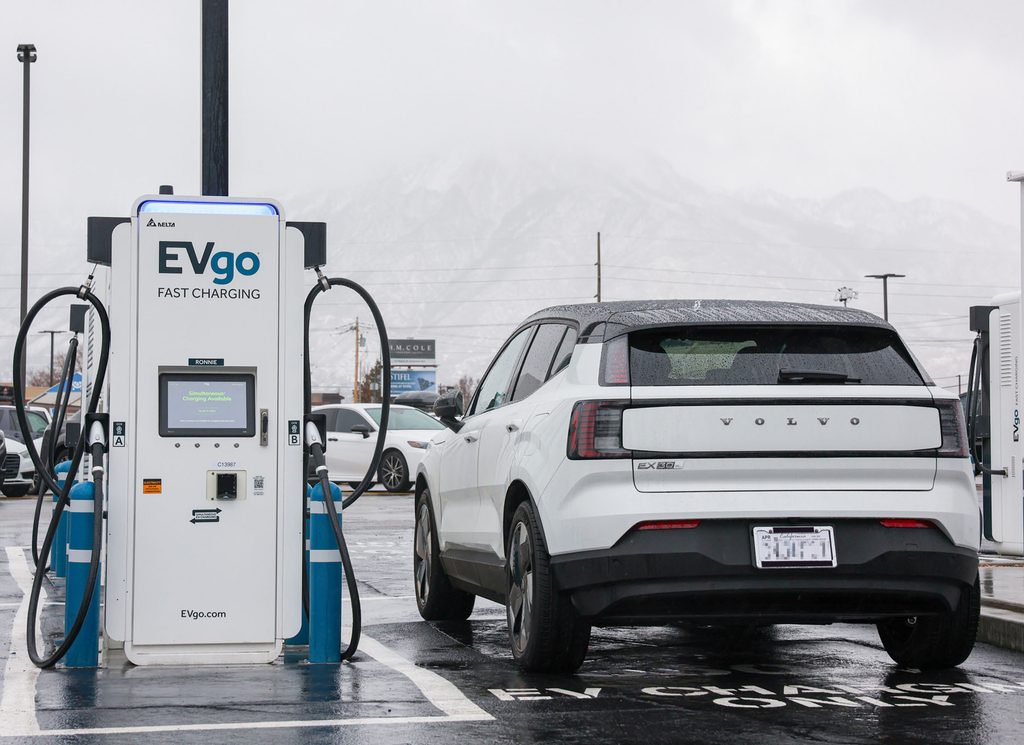
What Actually Happened at the Raleigh EVgo Station
A TikTok creator posting under the handle @lovelytitihere pulled into an EVgo DC fast-charging bay at a Raleigh, North Carolina location and recorded the session start to finish. She connected at 45% state of charge. Thirty-three minutes later, the display read 83%. The session cost $5. She told her viewers she planned to return in roughly 150 miles. At no point did she push toward 100%. The video's central claim — that 80% functions as the practical 'full' for daily use — reached an audience well beyond EV enthusiasts. One commenter stated they were now committed to buying an electric vehicle the following year. The session is a live example of how peer-to-peer charging education is outpacing formal dealer handover training. For broader context on how industry restructuring in 2026 is reshaping the information gap between OEMs and new EV owners, the pattern here is not isolated.
The Numbers Behind the 80% Ceiling
Run the arithmetic on the Raleigh session: 83% minus 45% equals a 38-percentage-point charge gain in 33 minutes, or roughly 1.15 percentage points per minute — consistent with mid-session DC fast-charging rates before the taper that begins above 80% on most lithium-ion packs. That taper is not incidental. Charging from 80% to 100% on a typical 75 kWh battery pack adds 15 kWh of stored energy but does so at progressively lower acceptance rates, meaning the charger holds the session open longer for diminishing throughput. Midtronics' published research indicates that cells held at or near 100% state of charge experience elevated internal stress: lithium plating on the anode accelerates at full charge, which reduces usable capacity over hundreds of cycles. A pack losing 1% of usable capacity per year due to daily 100% charges loses roughly 10% across a standard finance term of 48 months — a measurable residual-value exposure. None of that appeared in the TikTok video. The $5 cost figure did.
What Ford's Own Manual Says — and Why It Differs
The r/cars Reddit thread that circulated alongside the TikTok video produced one exchange worth extracting directly. A Mustang Mach-E owner wrote: "Read the manual to see what the recommended max state of charge for daily use [is]. For example, my Mustang Mach-E says 90% for daily to maintain max battery life." The same poster added that 100% is acceptable "as long as you don't stay there for very long" and described charging to full the night before a long trip. That 90% figure matters because it sits ten percentage points above the informal 80% guidance spreading through social platforms — a gap that produces real-world range differences. On a 91 kWh extended-range Mach-E pack, 90% versus 80% represents roughly 9.1 kWh, or approximately 35–40 additional miles of EPA-rated range per charge. Kia UK's experience reaching 100,000 EVs sold while flagging mandate pace as unrealistic underlines how charging behaviour — not just hardware — shapes real-world EV adoption curves.
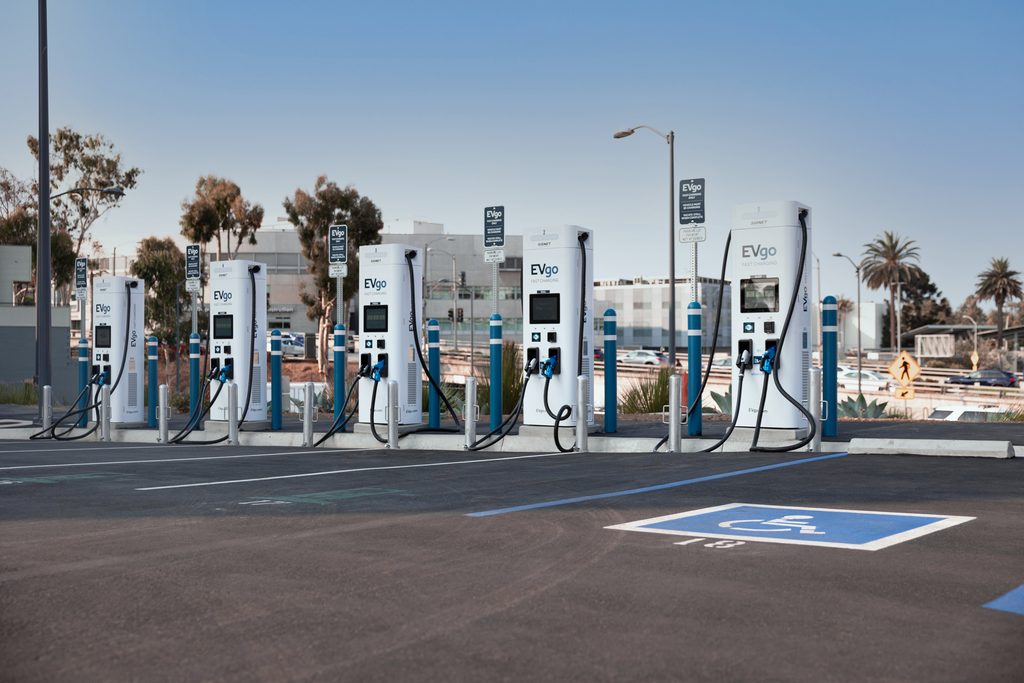
The Guidance Gap Nobody Has Officially Closed
Here is what does not add up. Midtronics, EVgo, and every major OEM have published some form of battery-care guidance. Ford embeds a specific daily charge limit in its Mach-E manual. Midtronics explicitly notes that occasional 100% charges are not prohibited. Yet the dominant message reaching new EV owners via TikTok — and reinforced by the Raleigh session — is a flat '80% always' rule that no manufacturer actually mandates. EVgo had not responded to a request for comment at the time the source material was compiled. The charging network's own station displays show state of charge in real time but offer no on-screen guidance about recommended daily limits. That is a gap. A driver with a Hyundai IONIQ 6, whose battery management system automatically slows charging above 80% on DC fast chargers, gets implicit hardware coaching. A driver with an older Nissan Leaf gets neither the hardware buffer nor the screen prompt. Changan's reluctance to share European production infrastructure is a different kind of information asymmetry, but the underlying problem — fragmented guidance reaching end users unevenly — runs through both stories.
What Inconsistent Charging Habits Cost Owners Long-Term
The consequence falls unevenly across the EV owner base. A Tesla Model 3 Long Range owner running the default charge limit of 80% set in the vehicle's own software loses nothing — the car enforces the guidance automatically. A first-time EV owner who watched the Raleigh TikTok and now stops at 80% regardless of vehicle is following advice that is broadly sound but not calibrated to their specific pack chemistry. Midtronics' battery diagnostic research, cited in its publicly available technical documentation, distinguishes between nickel manganese cobalt cells — where the 80–90% daily ceiling is well-supported — and lithium iron phosphate packs, where charging to 100% daily carries meaningfully lower degradation risk. BYD's LFP-equipped vehicles, now entering European markets in volume, carry a different set of manufacturer recommendations. Owners following social-media charging rules on LFP cars may unnecessarily limit usable range. The cost is not catastrophic. But across a five-year ownership period it compounds. EU Industrial Accelerator Act provisions targeting UK EV manufacturing access will not resolve the literacy gap at the charger bay.
EVgo operated approximately 1,000 DC fast-charging locations across the United States as of its most recent network status report, with average session durations published at under 30 minutes for 80% charge completion. No federal standard currently requires charging-network displays to show model-specific battery guidance. That regulatory gap remains open. The complete EVgo network history and specifications are catalogued in the Global Auto Index manufacturer database.
