


Dealers viewed clay models of three new McLarens, including a five-seat SUV codenamed P47 arriving in 2028.
McLaren showed its dealers the future. Three models. One per year, minimum, through 2028. The British supercar firm has spent decades refusing to build anything with more than two seats — that position is now formally abandoned, according to Automotive News reporting published September 2025.
The briefing matters because McLaren has watched Ferrari, Lamborghini, Aston Martin, and Porsche collect revenue from high-riding performance vehicles for years while its own annual volume has stayed below 5,000 units. The Woking firm sold roughly 1,400 cars in 2023, according to figures cited in McLaren Automotive's published annual returns. One new model per year changes that arithmetic fast — if the money holds.
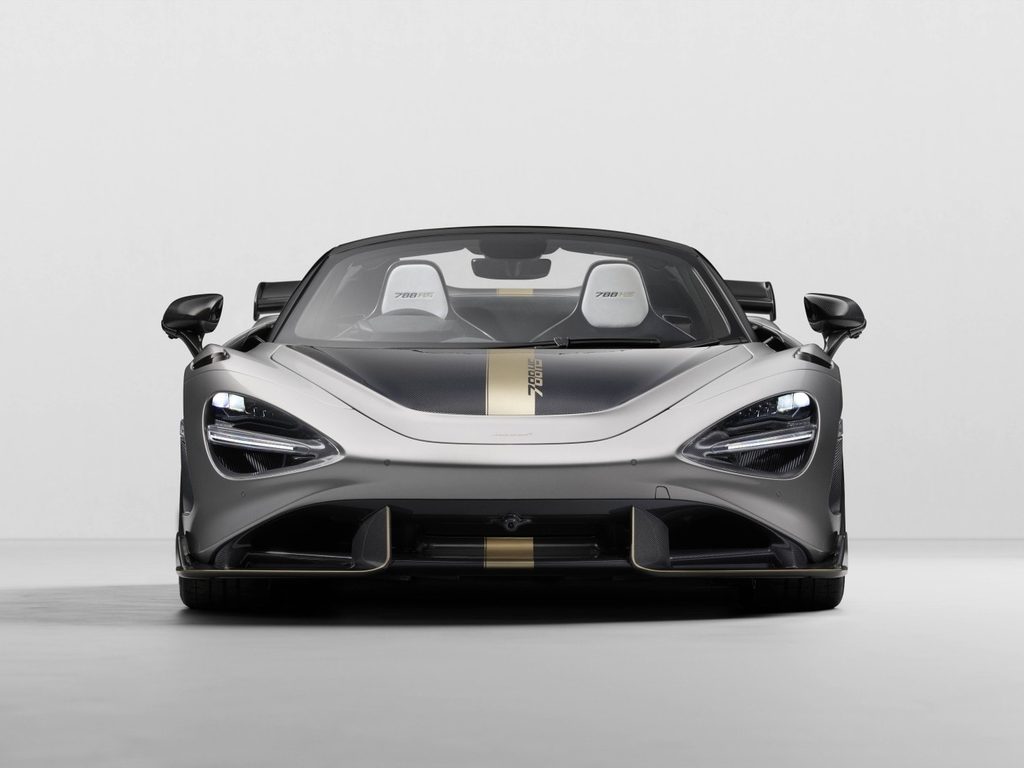
P34: The Numbers Behind the Replacement Supercar
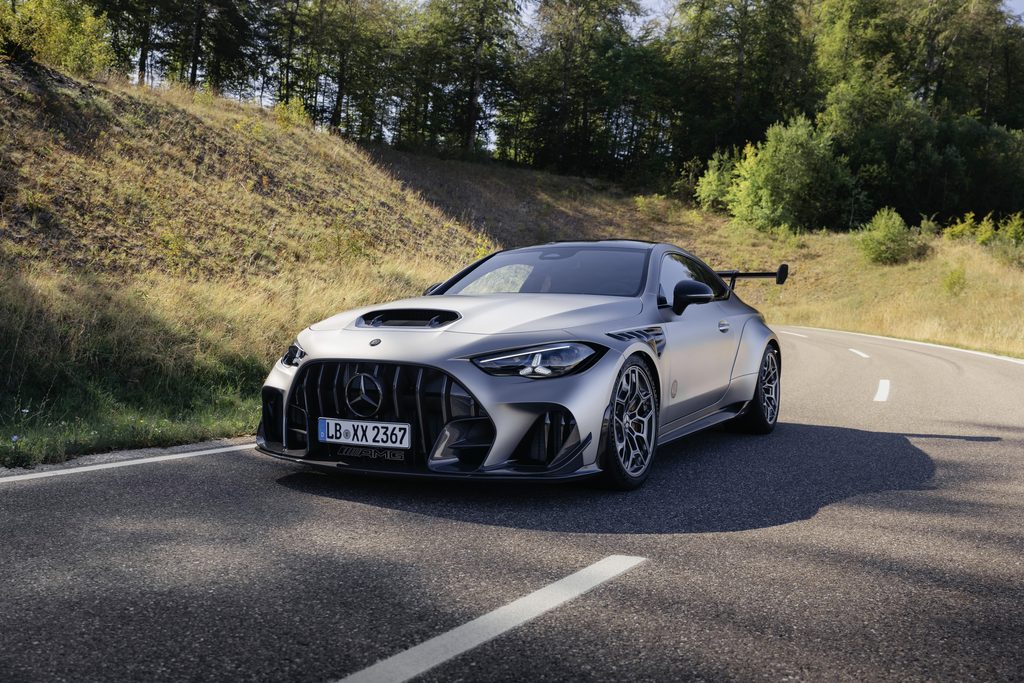
McLaren's next core supercar, internally coded P34, is a mid-engined machine built around a twin-turbocharged V6 developed in-house — a first for the company, which previously sourced its V8 from Ricardo. The combined hybrid output is reported at 810 hp, with torque from the electrified system reaching approximately 800 lb-ft (1,085 Nm). Starting price is $313,000. McLaren wants to sell 1,000 units in year one. At that volume and price, gross revenue from the P34 alone approaches $313 million before options — calculated as 1,000 × $313,000. The Artura, which the P34 will sit above rather than replace, listed from around $237,000 at launch; the price gap is $76,000, or roughly 32 percent. A tempered-glass engine cover over the V6 and a McLaren F1-inspired exterior silhouette are among the design details dealers described after the closed briefing.
What the Dealer Briefing Actually Confirmed
The product presentation to McLaren's retail network was reported by Automotive News in September 2025, citing multiple dealers who attended the session. According to that report, attendees were shown physical clay models rather than digital renders — a detail that separates this briefing from the concept-stage previews other manufacturers use. The document confirms three distinct products: the P34 supercar, the P47 SUV, and a front-engined gran tourer described as sedan-like. Specific on-sale dates were given only for the P34 — 2027 — while the SUV and GT carry no announced timing beyond a broad reference to the post-2027 window. Section-level pricing, powertrain specs for the GT, and any electrification detail for the P47 were not disclosed to dealers, or were not reported. That gap is not minor. This coverage sits within our broader European performance brand expansion analysis, which tracks how low-volume manufacturers are widening their model ranges in response to shifting demand.
SUV Rivals Already Generating Billions McLaren Has Not Touched
The P47 SUV will arrive into a market that McLaren's competitors have been mining since 2002, when Porsche launched the first Cayenne. Lamborghini's Urus reached 60 percent of total brand volume within three years of its 2018 launch, according to Automobili Lamborghini's published sales data. Ferrari's Purosangue, which started above €390,000 in Europe, was immediately capacity-constrained. Aston Martin's DBX707 lists from £185,000 in the UK. The P47 is described by attending dealers as larger than the Porsche Cayenne Turbo GT — a vehicle that measures 4,918 mm in length — with 24-inch wheels and a heavily sculpted body. McLaren has not confirmed a price. If it enters below the Urus Performante's roughly $280,000 starting point it competes on value; above it, the brand is asking customers to pay a rarity premium. BMW's confirmed 1,300 hp M3, due in 2027, shows that performance-first brands are accelerating output rather than retreating to niche volumes.
The Grand Tourer Nobody Has Explained Yet
The third model — a front-engined, sedan-like gran tourer — is the one that raises questions dealers have not answered publicly. McLaren has built its entire road-car identity on mid-engined architecture since the MP4-12C in 2011. A front-engined layout is not an incremental step; it is a structural departure. Sources cited by Automotive News describe a 2+2 configuration, which would make it the most practical McLaren road car since the company relaunched. The GTS, which it may notionally succeed, is a 2-seater. What the GT's powertrain will be — combustion, hybrid, or fully electric — was not confirmed to dealers, or those details were withheld from the briefing summary. Ferrari's Luce grand tourer is fully electric, Lamborghini's Lanzador concept is electric, and Aston Martin's DB12 retains a twin-turbo V8. McLaren has not indicated which path it will take. That is not a small omission for a vehicle reportedly slated within a four-year window. Chevrolet's recent C8 Corvette sales halt is a reminder that rushed launch timelines carry real commercial risk.

What Expansion Means for McLaren's Production Capacity
Michael Leiters, McLaren Automotive's chief executive since 2022, has not publicly confirmed any of the models described in the dealer briefing. That restraint is deliberate — McLaren's communications team declined to comment on the Automotive News report when contacted. But the pipeline, if accurate, has direct consequences for the company's Woking facility and its supply chain. The plant currently produces all McLaren road cars by hand in relatively low volumes. Scaling to multiple simultaneous model lines — including a large SUV — without a second facility or a contract manufacturing arrangement would require substantial capital investment McLaren has not announced. The company's shareholder, the Mumtalakat sovereign wealth fund of Bahrain, took full ownership in 2023 after buying out minority investors. Mumtalakat has not disclosed a capital allocation figure for the expansion. What dealers saw in clay does not automatically become what dealers sell. Earlier reporting on McLaren's summer 2025 product disclosures flagged similar gaps between briefed intentions and confirmed commitments.
McLaren's last attempt to move beyond two-seat supercars produced the 2012 McLaren X-1 bespoke one-off, a four-seat concept that never entered production. The company's road-car division turns 15 years old in 2026 — still younger than the Urus. The complete McLaren model history and specifications are catalogued in the Global Auto Index manufacturer database.
