← Chinese Oem Europe Expansion
Homologation was already complete when the duty threshold made the business case collapse.
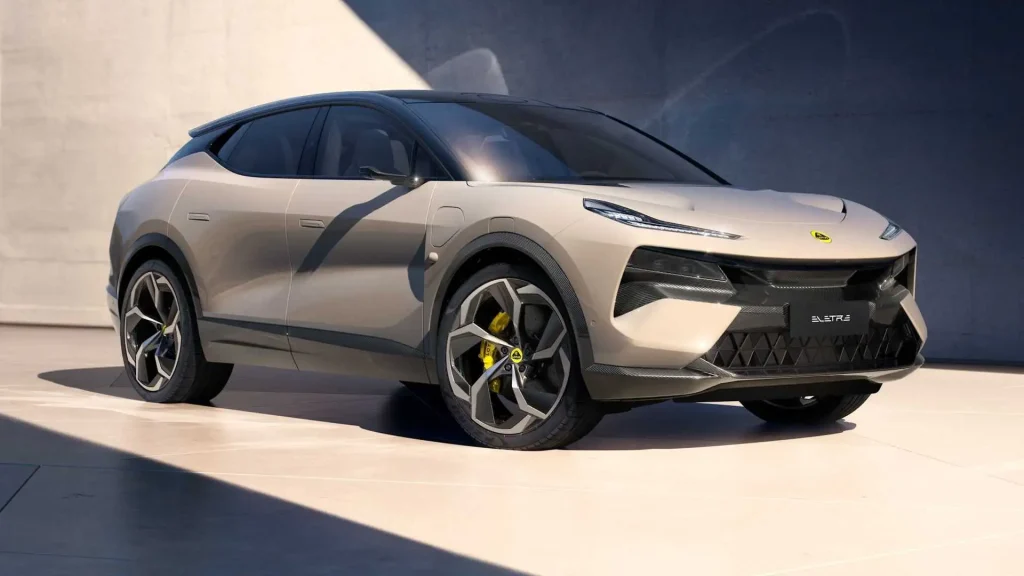
Lotus finished the paperwork. Paid for homologation. Then the tariff hit 150 percent and the Eletre never shipped. Massimiliano Trantini, President and CEO of Lotus Americas, confirmed the sequence in a statement to MotorTrend, published August 2025. The 2025 Carbon edition — priced at $230,000 — was the last Eletre sold in the United States.
No other volume EV from a Chinese-assembled brand has cleared full US homologation and then been pulled on tariff grounds at this duty level. According to the United States Trade Representative's Section 301 tariff schedule, revised May 2024, Chinese-origin electric vehicles face a 100 percent base rate, with additional proposed measures targeting Geely-affiliated marques. Polestar faced comparable exposure but never completed the homologation step Lotus had already absorbed.
What the arithmetic looked like at each tariff tier
The Eletre Carbon carried a US sticker of $230,000 in the 2025 model year. At a 100 percent tariff on a Chinese-manufactured vehicle, Lotus was absorbing an effective duty load roughly equal to the wholesale cost of the car. If that wholesale figure sat near $115,000 — a standard 50 percent dealer-cost assumption — the 100 percent rate added approximately $115,000 per unit in import duty alone. When the rate rose to 150 percent, that same unit would attract around $172,500 in duty, pushing total landed cost past $287,500 before dealer margin. Trantini's statement confirmed the tipping point: the 100 percent rate was survivable on the high-margin Carbon trim; 150 percent was not. The Eletre R, which starts below $200,000 in markets where it does sell, would face an even sharper squeeze. Lotus could not build a retail price that recovered the duty without pricing itself out of any realistic transaction. Three numbers tell the story: $230,000 list, $172,500 duty at 150 percent, zero US units sold after model year 2025.
Trantini's own words on where the line fell
Massimiliano Trantini, President and CEO of Lotus Americas, did not soften the conclusion. Speaking to MotorTrend in a statement published August 2025, he said: 'At this level of duty, the business case no longer works; not for Lotus, not for our dealers.' The full quote continued: 'That is why the Eletre is not offered beyond the 2025 model year. We want to give the right value for money to our customers.' The word 'dealers' carries weight. Lotus's US retail network invested in Eletre training, tooling allocations, and floor-plan commitments for a car that will not arrive. Trantini's framing — casting the withdrawal as a customer-value decision rather than a corporate retreat — also glosses over the sunk homologation cost, which Lotus has not disclosed publicly. The wider pattern of Chinese OEM expansion challenges suggests Lotus is not alone in absorbing those write-offs quietly.
The homologation spend nobody is talking about
Here is what does not add up. Lotus completed the full US homologation process for the Eletre before withdrawing the model. Federal Motor Vehicle Safety Standards testing, EPA emissions certification, and NHTSA crash compliance together typically cost a manufacturer between $3 million and $8 million per model, according to cost estimates published in the Alliance for Automotive Innovation's 2023 regulatory burden report. Lotus spent that money. Then it walked. The company has not disclosed the exact figure, and Trantini's MotorTrend interview did not address the write-off directly. If the tariff decision was foreseeable — the 100 percent rate on Chinese EVs was announced in May 2024, well before most homologation timelines would have concluded — the question is why Lotus continued through the process. One reading: the company was lobbying internally for a US manufacturing commitment that never materialised. Another: it needed the homologation data for other regulatory jurisdictions. Neither has been confirmed. The gap between the completion of compliance work and the tariff calculation suggests the two teams were not talking to each other.
Geely ownership adds a second, harder wall
Tariffs are measurable. The ownership problem is harder to price. Proposed US legislation — referenced in Motor1's reporting from August 2025 — would ban the sale of vehicles from companies with more than 15 percent Chinese ownership. Lotus is majority-owned by Geely, which also controls Volvo Cars, Polestar, and Zeekr, whose EX30-rivalling X recently outscored the Volvo sibling in Euro NCAP testing. If the ownership threshold legislation passes, the Emira — built in Hethel, Norfolk, England — could still be blocked because Lotus Cars Limited is a Geely subsidiary, not merely a supplier. That would end the brand's US presence entirely. Compare that with BMW, which assembles vehicles in Spartanburg, South Carolina, and faces no ownership threshold risk. Or with Changan, which has rejected shared European production arrangements despite facing analogous access barriers, betting instead on direct tariff negotiation. Lotus has no such leverage. The Emira is the last model standing, and its survival depends on a legal definition of beneficial ownership that has not yet been finalised.
What the US absence costs Lotus Americas concretely
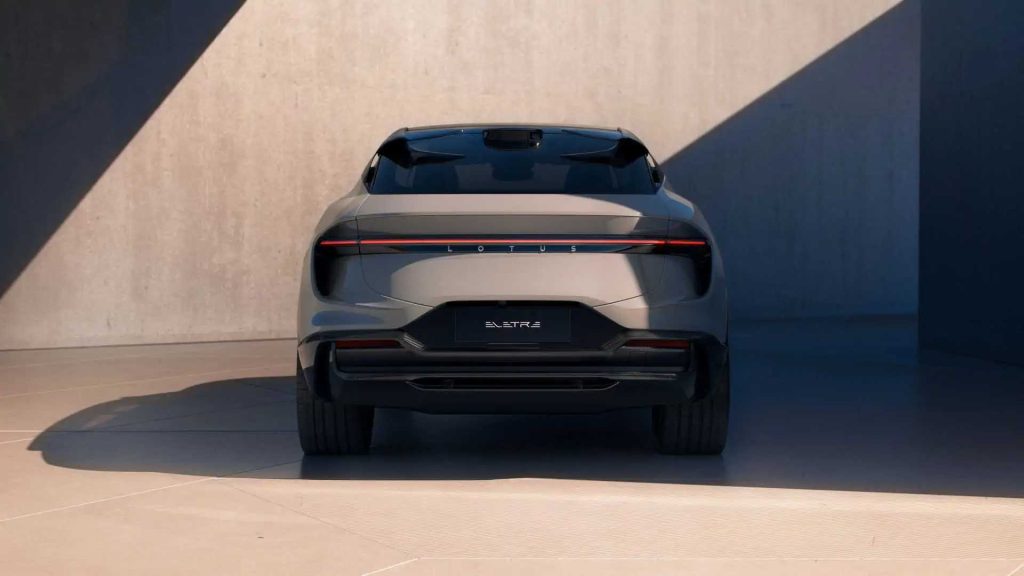
Lotus Americas operated with one product — the Emira — confirmed for the 2027 model year. The Eletre would have added an electric SUV in the segment where US transaction prices are highest and where Lotus's Geely-funded product breadth could have competed directly against Porsche Cayenne EV derivatives and the BMW iX. The Emeya electric grand tourer, which Lotus sells in Europe and China, is also absent from the US roster. That leaves Trantini's organisation running a single-model, internal-combustion lineup in the world's second-largest car market, at a moment when the brand is positioning itself globally as an EV-first manufacturer. US dealer network expansion stalls with one car. Brand visibility in the SUV-dominant American market is effectively zero for the Eletre nameplate. The sunk homologation cost — unquantified publicly — sits on the books. The company said it wants to return with the right product at the right price. It has not named a model, a year, or a manufacturing location that would clear the ownership threshold. None of those details have been confirmed.
The Eletre's 905 hp top variant, the R, runs a tri-motor setup producing 0–62 mph in 2.95 seconds — performance figures Lotus certified for markets it does reach, including the UK, Germany, and Australia, where no ownership-threshold law applies. Lotus first showed the Eletre concept in March 2022 at an event in London. The complete Lotus model history and specifications are catalogued in the Global Auto Index manufacturer database.
