







Chinese production triggers 100% import duty that would double $200,000 base price for American buyers.
Polestar's 6 convertible sits production-ready in Chinese factories. US tariffs would double the planned $200,000 price. Development is complete.
The bonded-aluminum convertible shares componentry with the delayed Polestar 5 sedan, both built in China where 100% US import duties apply. Polestar 5 pricing at €120,000 becomes $140,000 before tariffs, according to Edmunds interview with Polestar Global Head of Product Communications Graeme Lambert, published May 2024.
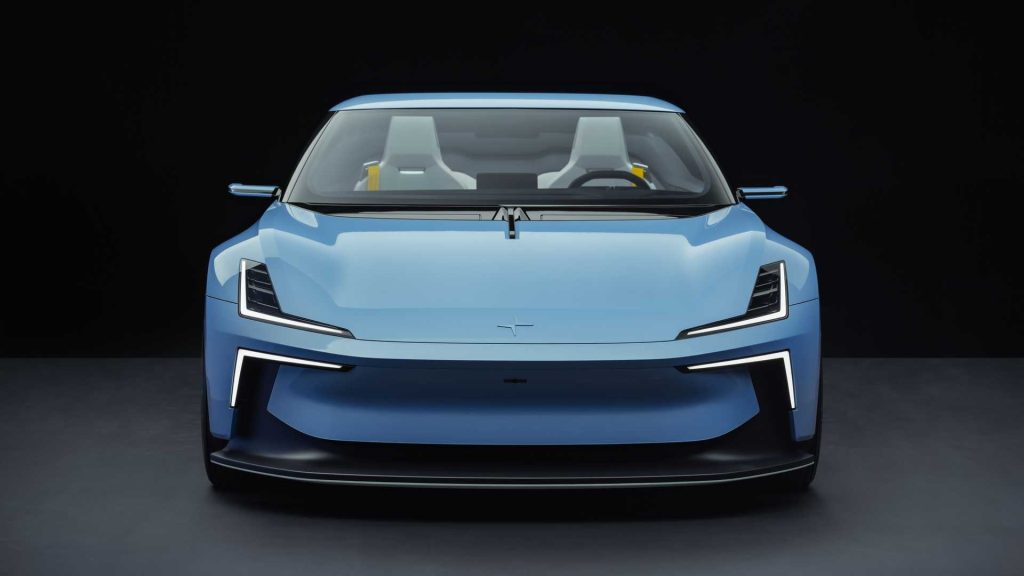
Platform sharing accelerates readiness
Lambert confirmed the convertible's development status in stark terms. "It is so closely related to the Polestar 5," he told Edmunds. "If you view the 6 as the two-door Polestar 5, essentially the componentry is already there." The scalable bonded-aluminum architecture underpins both models. Production tooling exists. Component suppliers are contracted. Only the tariff mathematics prevent US market entry. Polestar originally planned 500 limited-edition units for 2026 launch. Demand exceeded supply within weeks. The company shifted to on-demand production to meet buyer interest. Chinese manufacturing capacity supports both strategies.
Tariff arithmetic creates $400k sticker shock
European Polestar 5 pricing starts at €120,000, converting to $140,000 at current exchange rates. Add 100% Chinese import tariffs: $140,000 becomes $280,000. Apply the same calculation to Polestar 6's projected $200,000 base price. Result: $400,000 US retail price before dealer markup. The tariff doubles cost basis. European buyers face no such penalty. Chinese-built Volvo EX30 and Zeekr models navigate similar pricing pressures. Polestar's parent Geely operates factories in Luqiao and Taizhou. Both facilities carry tariff exposure for US-bound vehicles.
Ready product sits in regulatory limbo
The convertible exists in complete technical form while remaining commercially impossible. Polestar developed full specifications. Suppliers committed production slots. Marketing teams prepared launch campaigns. No manufacturing bottlenecks exist. Yet US customers cannot purchase the vehicle at viable prices. This creates unusual industry dynamics where European production alternatives remain unexplored. Polestar operates Swedish engineering centers but builds vehicles in China. The company has not announced European manufacturing for either model. Trade policy rather than technical capability determines market availability. Previous automotive trade disputes resolved through negotiation or production relocation.
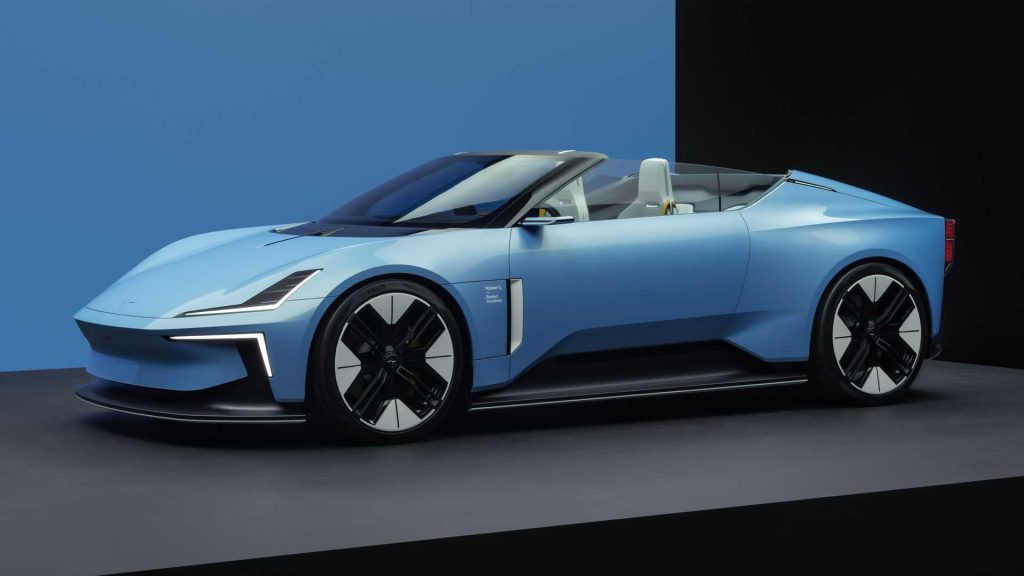
Luxury EV market narrows for US buyers
American buyers lose access to the 6's projected 800-horsepower output and 350-mile range. European customers retain normal pricing access to both Polestar 5 sedan and 6 convertible variants. This creates market fragmentation in the $200,000-plus EV segment. BMW i8 departed in 2020. Tesla Roadster remains delayed. Mercedes EQS convertible does not exist. Chinese brands gain European market share while facing US barriers. Domestic alternatives like Cadillac Celestiq start at $340,000. The tariff gap affects consumer choice and brand competition patterns. Polestar's US dealer network prepared for both models but cannot offer competitive pricing.
Polestar sold 500 initial Polestar 6 reservations within weeks of announcement, forcing the switch to on-demand production rather than limited edition. The O2 concept that previewed the 6 first appeared at Geneva Motor Show in March 2022. Production timing depends entirely on trade policy resolution rather than technical readiness. The complete Polestar model history and specifications are catalogued in the Global Auto Index manufacturer database.
