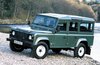
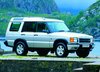
Intro: Having celebrated its fiftieth anniversary in 1998, Land Rover, which is now owned by the Premier Automotive Group of Ford Motor Company, is finally getting into its stride. There is no avoiding the ubiquitous Land Rover, which has as potent a name for off-roading brilliance, as Jeep does in the United States of America. In many respects, the Land Rover badge probably carries more weight in some of the most remote and isolated parts of the world. The company has been based at Solihull, Warwickshire, for all of its history. Yet, when you review the models that have been produced by the company, they are actually few and far between. Apart from a major chassis change to the Defender model, when it adopted a modified version of the coil-sprung Range Rover ladder frame in 1983, the same basic vehicle has been made in both short and long wheelbase forms for all of its 54 years. The Range Rover was a groundbreaker, when it was announced in June 1970. It offered better brakes, better steering, greater suspension travel and an almost unstoppable off-road capability, plus the power of the Rover 3.5-litre V8 engine. That model is now in its third generation, the latest of which can be regarded comfortably as the finest multi-role vehicle in the world. Of course, the Discovery (now in its second generation) continues to satisfy both city and county sets, while the Freelander has provided enough of a response to its competitors to become the market leader, you do not receive a more convincing argument than that. 170,096 vehicles were produced by the company in 2001. |