

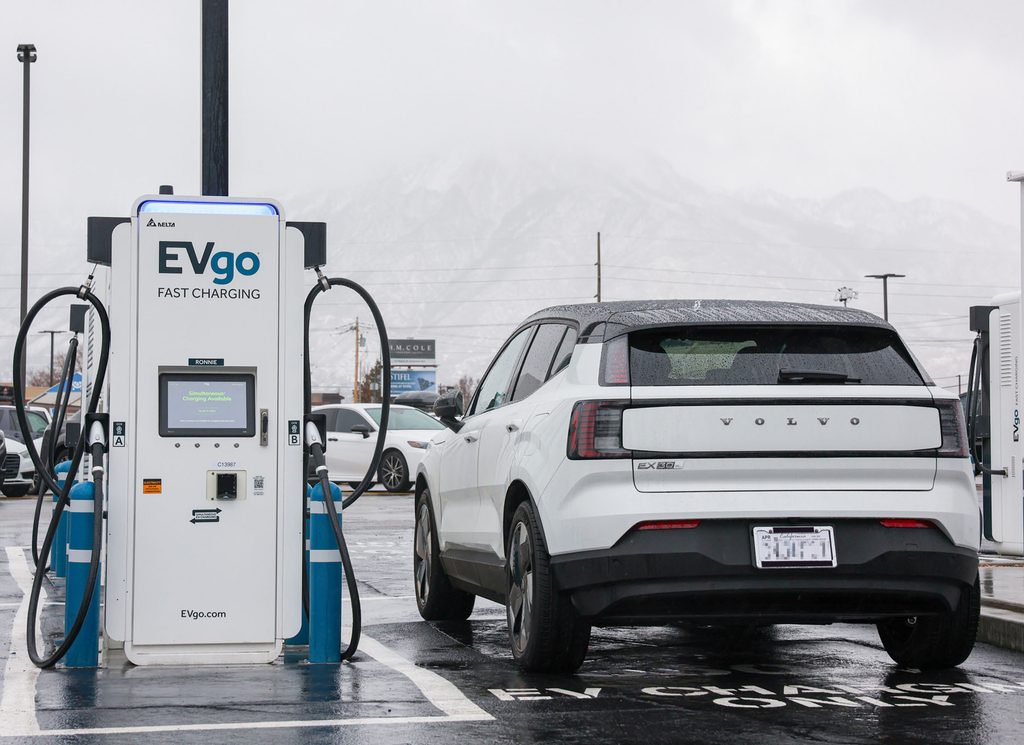
The 5,350mm van runs an 800-volt architecture and accepts up to 350kW DC fast charging.
Kia pulled the covers off the PV7 at IAA Transportation 2026 in Hannover. The van stretches 5,350mm. It carries up to 11 people or 1,200kg of cargo — not both. Production deliveries to Korea and Europe begin in the second half of 2027.
The PV7 arrives as European regulators tighten urban access rules for diesel light-commercial vehicles. The European Automobile Manufacturers' Association (ACEA) Fleet Electrification Monitor, published March 2026, recorded battery-electric vans at 9.3% of total new LCV registrations across the EU27 — up from 5.1% in 2023. Kia's closest immediate comparison is the Stellantis e-Expert/Vivaro/Dispatch triplet and the Mercedes-Benz eSprinter, neither of which offers more than eight factory body variants.
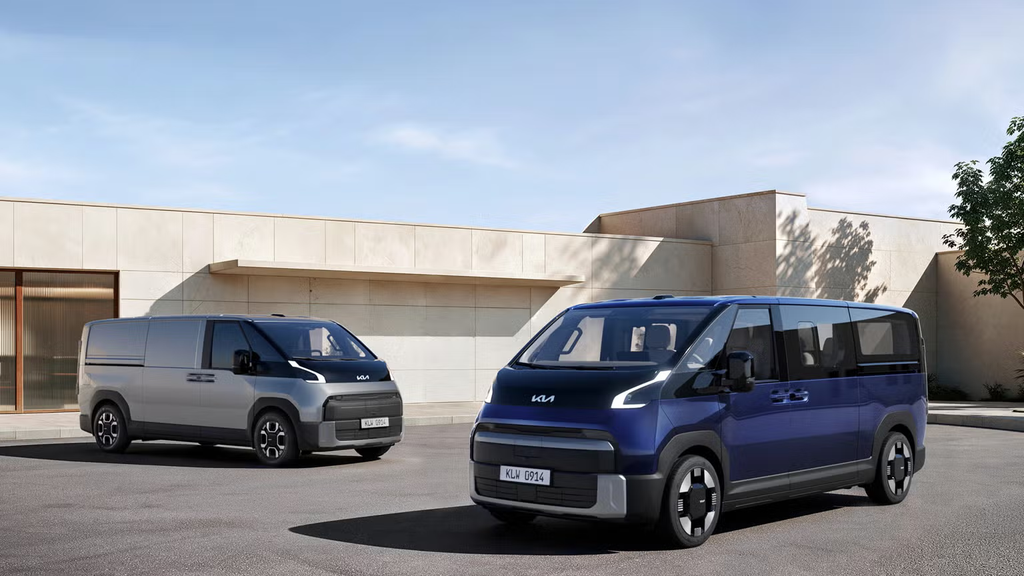
From PV5 to PV7: Kia Scales Its PBV Platform
Kia launched the smaller PV5 in 2025. The PV7 follows as the second model in what the company calls its Platform Beyond Vehicle (PBV) lineup — a dedicated commercial-vehicle architecture separate from its passenger-car EV platform. Both vehicles ride on the E-GMP.S architecture, which uses a flat-floor skateboard layout to free up interior volume. The PV7's wheelbase measures 3,500mm — 500mm longer than a standard Mercedes-Benz Sprinter wheelbase in its base form. Kia chose IAA Transportation 2026 in Hannover for the world debut, the same stage where Volkswagen Commercial Vehicles and Ford Pro have anchored major van announcements in previous cycles. The choice signals that Kia is competing directly for European fleet contracts, not positioning the PV7 as a regional Korean product. For more context on how Korean OEMs have expanded globally across vehicle segments, see the Korean OEM global expansion tracker on this site.
Battery, Range, and Charging: The Numbers That Will Decide Fleet Contracts
Two battery options underpin the PV7. The standard pack carries 71.5kWh of usable capacity; the larger unit holds 96.2kWh — a difference of 24.7kWh, or roughly 35% more energy stored. Kia quotes a WLTP range figure of 460km for the Long Range Cargo variant fitted with the 96.2kWh pack. The 800-volt electrical architecture supports DC fast charging at up to 350kW, which Kia says brings the battery from 10% to 80% state of charge in approximately 25 minutes. Calculation: at 460km of claimed range and an 80%-to-10% usable window of 64.3kWh (96.2kWh × 0.668), the implied consumption rate is 13.98kWh per 100km — competitive with the Renault Master E-Tech, which Renault quotes at 25kWh/100km on its older 87kWh pack. Cargo volume tops out at 8.0 cubic metres in the High Roof version. Payload reaches 1,200kg. Loading height on the Long model is just 550mm — low enough to load standard Euro pallets three-deep without a dock.
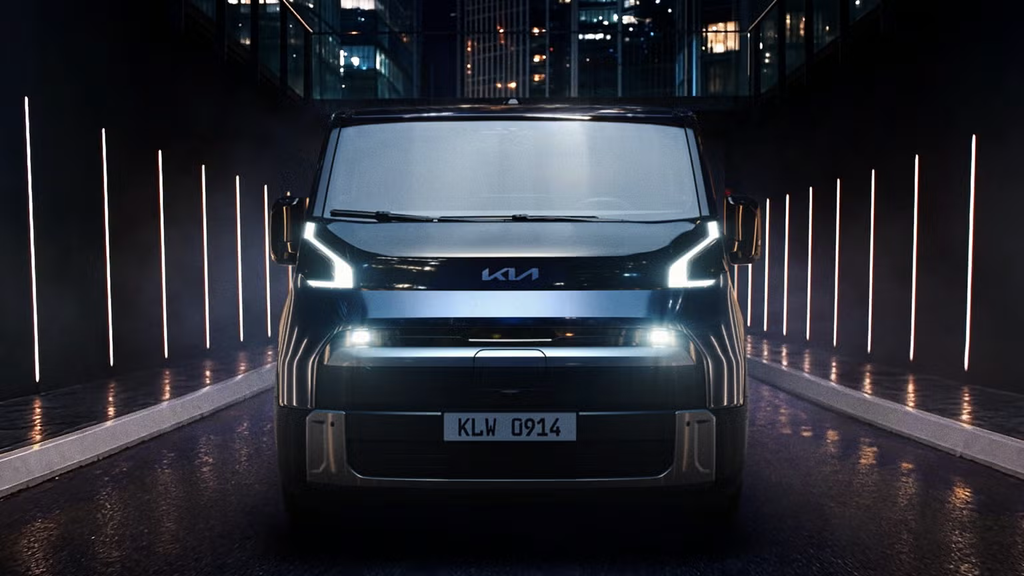
What Kia's Own Documentation Says About Variant Breadth
Kia's official IAA 2026 product brief — a seven-page document distributed to accredited press on 15 September 2026 — describes the PV7 lineup as covering "Cargo Compact, Cargo Long, High Roof, Passenger Compact, Passenger Long, and Chassis Cab configurations, with conversion models extending application further." The phrase "conversion models" is doing significant work in that sentence. It means Kia is explicitly inviting third-party coachbuilders to modify the Chassis Cab variant — a route that Ford Pro has used with the Transit to supply refrigerated-vehicle fleets and mobile medical units. Twenty-three total variants are planned. The document does not specify how many of those 23 variants will be available at the start of sales in H2 2027 and how many will follow later. That gap between announced variant count and confirmed launch-day availability is one Kia's fleet sales teams will need to answer before tender deadlines in early 2027.
How the PV7 Stacks Up Against Established Electric Van Rivals
The Mercedes-Benz eSprinter, in its largest battery configuration, offers 113kWh gross capacity but quotes a WLTP range of around 440km — roughly 20km below the PV7's 460km claim, though on a heavier platform. The Volkswagen ID.Buzz Cargo, which shares the MEB platform, tops out at 82kWh and 462km WLTP, with a single cargo volume of 3.9 cubic metres — less than half the PV7 High Roof's 8.0 cubic metres. On the charging side, both the eSprinter and ID.Buzz Cargo are 400-volt architectures, making the PV7's 800-volt, 350kW capability a structural advantage for operators running high-utilisation urban routes where van downtime directly costs money. Kia's dual charging ports — one front-mounted AC/DC, one optional rear-side AC — have no direct equivalent in the current European electric-van market, according to specifications published by the respective manufacturers as of September 2026. Kia's UK operation recently hit 100,000 EVs sold while simultaneously calling ZEV mandate timelines unrealistic — a tension that the PV7's commercial-vehicle push may partly address.
Twenty-Three Variants, One Launch Date: The Unanswered Questions
Kia has not confirmed which of the 23 planned PV7 variants will arrive in H2 2027 and which will follow in subsequent production years. Nor has the company published pricing for any European market. That matters because tariff and IVA regulatory changes currently under European review could affect the landed cost of Korean-manufactured commercial vehicles sold into EU markets — the PV7's primary target. The all-wheel-drive version, referenced in Kia's product brief as "planned for later," carries no date. For fleet procurement managers running multi-year replacement cycles, an electric van without confirmed AWD availability, confirmed pricing, and a confirmed variant rollout schedule is difficult to write into a forward tender. Kia's PV5, launched in 2025, has not yet published independent real-world range data from organisations such as Emissions Analytics. It is not confirmed whether independent testing of the PV7's 460km WLTP claim has been scheduled ahead of the 2027 sales launch. Those are the numbers that will actually move purchase orders.
The PV7 measures 1,995mm wide — 5mm narrower than the maximum width for unrestricted urban access under several European city low-emission zone frameworks as of January 2026. Kia has not confirmed whether the Chassis Cab variant will carry the same gross vehicle weight rating as the Cargo and Passenger versions. The complete Kia model history and specifications are catalogued in the Global Auto Index manufacturer database.
