Volkswagen stripped the rear doors, pulled the infotainment, and borrowed a motor from the ID.7 to get there.
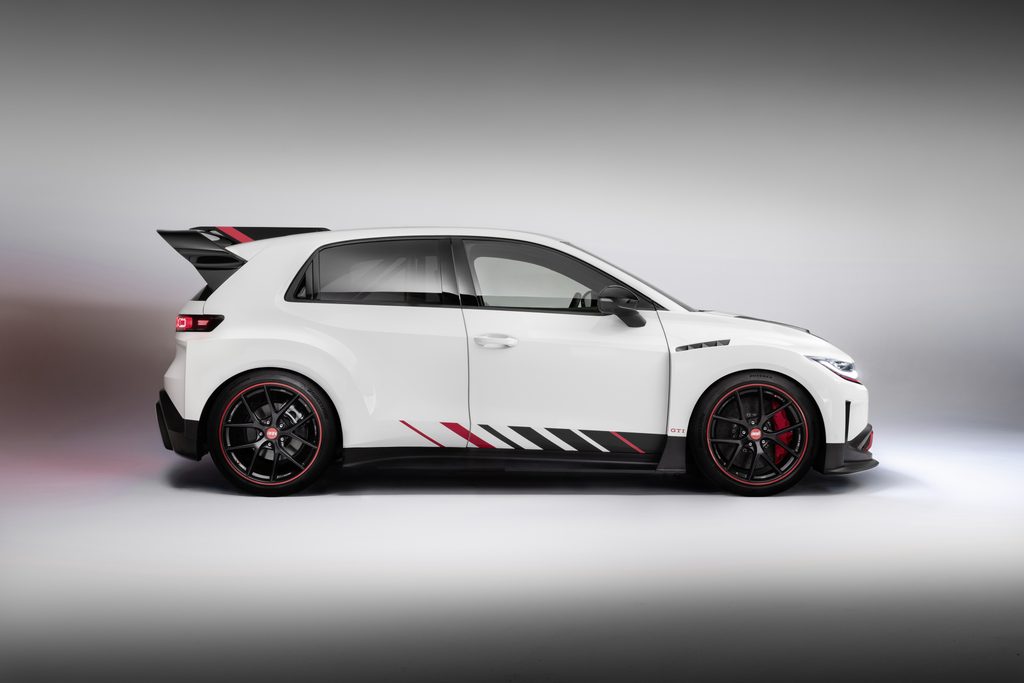
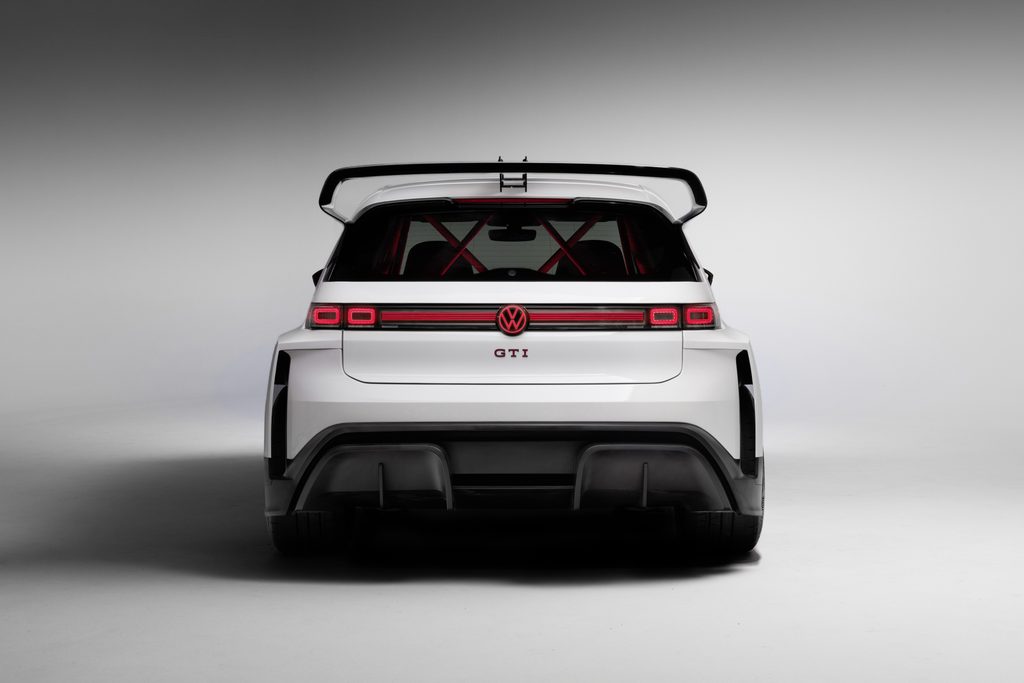
Volkswagen arrived at the Essen Motor Show on 27 November with a two-door, roll-caged Polo that makes 362 hp. No infotainment. No rear bench. No confirmed production date. The concept is a one-off — for now.
The Clubsport sits 139 hp above the road-going ID. Polo GTI, which Volkswagen launched earlier in 2026 as part of its Golf GTI golden-anniversary programme. According to Volkswagen AG's official concept brief, published November 2026, the powertrain was transplanted from rear-wheel-drive platform vehicles in the ID. family, then re-engineered for a front-mounted configuration in a subcompact body — something the company has not done before in this segment.
The Power Gap Between Concept and Production Car, Quantified
Start with the numbers Volkswagen published. The ID. Polo GTI Clubsport produces 362 hp and 550 Nm of torque. The production ID. Polo GTI produces 223 hp and 290 Nm. The delta: 139 hp and 260 Nm — representing a 62.3 percent torque increase over the road car (260 ÷ 290 × 100 = 89.6 percent of the standard car's torque added on top). Sprint time with Launch Control drops to 4.7 seconds to 100 km/h. Top speed rises to 240 km/h. The standard GTI is limited to 175 km/h, making the concept 65 km/h faster at the top end. Battery capacity is unchanged at 52 kWh net NMC chemistry, but the battery management system has been recalibrated to release more peak current, and the charging window has been widened beyond the limits set on the production car. Kerb weight is unconfirmed. The production GTI weighs 1,540 kg; the concept deletes two doors and a rear interior, so the final figure is almost certainly lower — Volkswagen has not said by how much. This article is part of our coverage of auto show concepts and debuts tracked in the Global Auto Index database.
Engineers Borrowed a Motor That Was Never Meant to Fit Here
Volkswagen's powertrain team pulled the electric motor from vehicles designed for rear-wheel-drive duty — specifically the ID. Tiguan and ID.7 — and mounted it at the front axle of a subcompact platform. That required reworking the entire front-end layout to accept hardware built to different spatial assumptions. The body grew 100 mm wider overall, with each fender — front and rear — flared by 50 mm. To clear the wider rear fenders without structural compromise, engineers deleted the rear doors entirely, leaving a two-door shell. Ride height dropped 15 mm against the production GTI and 30 mm against the standard ID. Polo. Volkswagen fitted revised suspension geometry, wider tracks, and bespoke damper components. The rear axle, however, stayed as a torsion beam — the same arrangement used in the production car. Carbon-fibre appeared on the rear wing. Black 19-inch BBS wheels replaced the standard items. Red accent trim ran across the front fascia, a honeycomb lower grille pattern carried over from GTI lineage, and vertical LED daytime running lights stayed in place.
The Torsion Beam That Complicates the Performance Claim
One hardware choice stands out against the concept's performance ambitions. Despite the wider tracks, the revised geometry, and a motor borrowed from a larger rear-drive platform, the ID. Polo GTI Clubsport retains a torsion-beam rear axle. Its closest rival in the electric hot-hatch segment — the Alpine A290, based on the Renault 5 platform — uses independent rear suspension. That is a meaningful engineering difference at the performance level this concept targets. Independent rear suspension allows each wheel to react to road surface changes without influencing the opposite wheel; a torsion beam does not. Volkswagen has not explained publicly why the axle was not upgraded, nor whether a production derivative would address it. The 52-kWh battery also remained untouched in capacity terms, which raises a separate question: at 362 hp and track use, thermal load on that pack would be considerably higher than in road trim. Volkswagen confirmed the battery management system was modified but offered no data on sustained-power duration or thermal limits, according to the November 2026 Volkswagen concept specification sheet.
Wolfsburg Calls a Production Car a 'Theoretical Option'
Volkswagen described the Clubsport in its official November 2026 concept brief as a "one-off" and stopped short of committing to series production. The company's public position, as stated in that document, is that fitting the car with a licence plate is, at this point, a "theoretical option." That phrasing is deliberate. It neither closes the door nor opens one. Thomas Schäfer, CEO of the Volkswagen Passenger Cars brand, has said publicly that the GTI nameplate will anchor Volkswagen's performance identity through the electric transition — a statement made at the brand's 50th GTI anniversary events in 2026, as reported in Volkswagen AG's official communications, published May 2026. The Clubsport concept arrived at Essen on 27 November and runs through 6 December, giving Volkswagen ten days of reaction data from the automotive press and show visitors before any further product decisions are discussed internally. Whether the concept generates enough commercial pressure to shift that "theoretical option" into a confirmed programme is the only question that matters from a product planning perspective.
How the Clubsport Sits Against the Alpine A290 and the Golf GTI Legacy
Alpine's A290, the most direct competitor in electric hot-hatch terms, produces 218 hp in base form and 260 hp in the RS trim announced for 2026 — against the Clubsport's 362 hp. That is a 102 hp gap at the top of the Alpine range. The A290 RS also weighs approximately 1,490 kg, putting it below the production ID. Polo GTI's 1,540 kg. If the Clubsport's weight lands below 1,500 kg after the interior strip — plausible, unconfirmed — the power-to-weight ratios converge differently than the raw horsepower numbers suggest. Historically, the Golf GTI Clubsport S, the petrol benchmark, produced 310 hp from a 2.0-litre EA888 turbocharged unit in its 2016 Nürburgring record run. The concept's 362 hp therefore exceeds every previous GTI Clubsport production figure. It also eclipses the ID.3 GTI, launched in 2026 with 326 hp — meaning Volkswagen's smallest electric platform now, in concept form, outguns its purpose-built electric hot hatch by 36 hp. Whether that arithmetic survives contact with a production programme is another matter entirely.
The Essen Motor Show, running 27 November to 6 December 2026, marks the concept's only confirmed public appearance. Volkswagen has not filed homologation paperwork for any Clubsport derivative, nor named a development timeline. The GTI nameplate first appeared on a production car in 1976. The complete Volkswagen model history and specifications are catalogued in the Global Auto Index manufacturer database.
