Plant Spartanburg produced 412,799 vehicles in 2025, yet BMW still paid over $1 billion in US import duties that same year.
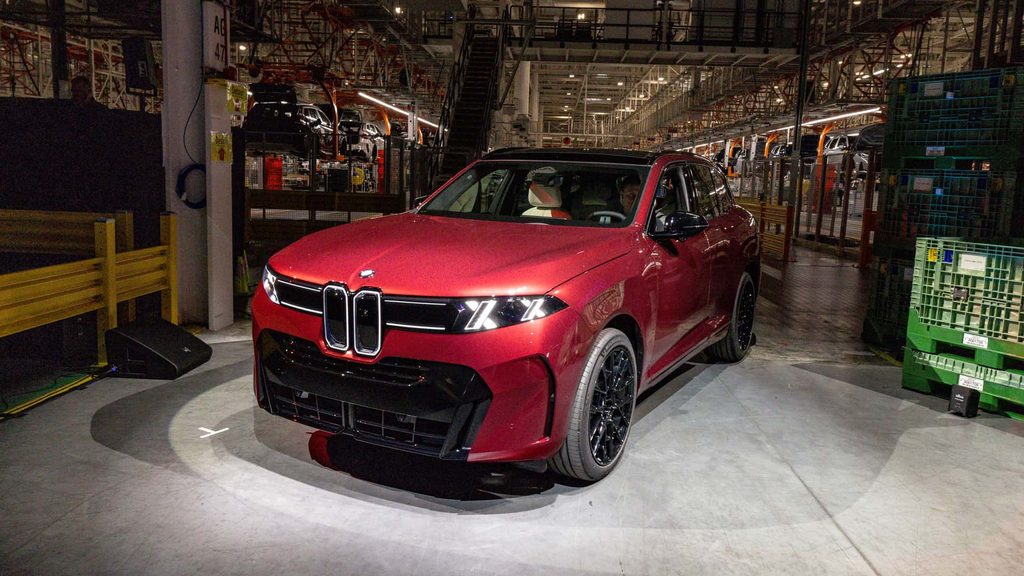
BMW paid more than $1 billion in US import duties last year. It also built 412,799 vehicles on American soil. Those two facts sit in the same quarterly report, and BMW is now using both of them in Washington. The iX5 began rolling off the Spartanburg line in November 2025.
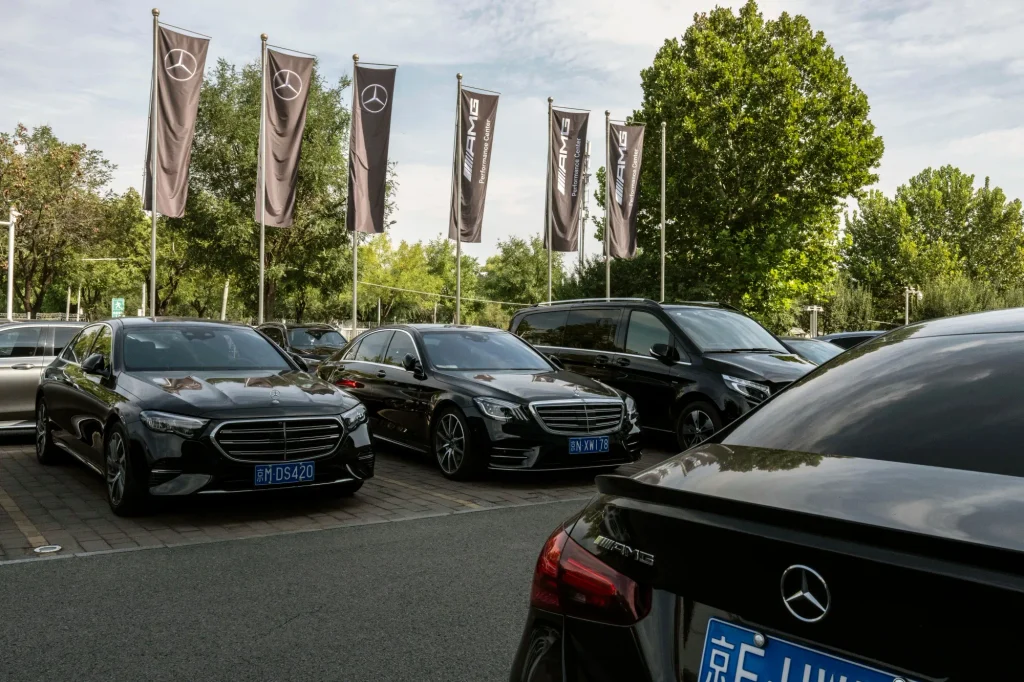
No German automaker has committed more manufacturing capital to a single US facility than BMW has to Spartanburg. The plant is BMW's largest globally, outpacing even Leipzig and Dingolfing . , Mercedes-Benz's Tuscaloosa plant produced roughly 300,000 units in 2024, according to Mercedes-Benz Group AG's Annual Report, published March 2025. BMW's tariff exposure, while running a world-export operation from South Carolina, is the core of its trade argument.
The Investment Breakdown Behind the Lobbying Push
The $1.7 billion figure is not a single cheque. BMW split it across two projects. One billion dollars went toward converting Spartanburg's existing assembly lines for electric vehicle production alongside combustion and plug-in hybrid models. The remaining $700 million funded a new high-voltage battery assembly facility in Woodruff, South Carolina, roughly 12 miles from the main plant. EU and US trade barrier developments in 2026 have added urgency to how OEMs present these numbers to federal officials. At 412,799 vehicles produced in 2025 — a 4.2 percent increase over the prior year — Spartanburg's output per dollar of investment works out to approximately $4,120 per vehicle built, calculated against the full $1.7 billion commitment. Roughly half that output, or around 206,000 units, was exported to approximately 120 markets worldwide. BMW imported roughly 215,000 vehicles into the US last year, primarily 3 Series and 4 Series models not assembled at Spartanburg. At a 25 percent tariff rate on a notional $35,000 average import price, that 215,000-unit volume generates a duty bill of approximately $1.88 billion annually — the gap between what BMW claims it paid ($1 billion-plus) and that ceiling suggests a blended rate well below the headline figure.
Engelhorn and McMaster Both Go on Record
Robert Engelhorn, president and CEO of BMW Manufacturing, did not leave the tariff argument to press releases. Speaking to Automotive News in November 2025, he confirmed the company is in direct contact with federal officials. "Our business model is to export, so for sure we are in close contact with the federal government," Engelhorn said, adding that BMW is "looking towards free trade" as its preferred outcome. South Carolina Governor Henry McMaster amplified the message from the state side. McMaster told Automotive News he has raised the tariff question directly in Washington: "Over time, I've had conversations with the people in Washington about that very thing." McMaster expressed confidence a resolution would eventually materialise, though he offered no timeline. What neither Engelhorn nor McMaster confirmed: any specific relief figure, any proposed tariff percentage reduction, or any target date for a deal. BMW declined to specify what rate it is seeking, according to Automotive News, published November 2025.
The Exporter Paradox That Complicates BMW's Case
Here is what does not quite add up. BMW's argument for tariff relief rests on its domestic manufacturing scale. But the vehicles triggering the duty bill are precisely the ones it does not build in America. The 3 Series and 4 Series — assembled in Munich and San Luis Potosí, Mexico — account for the bulk of BMW's US import volume. Those are not electric vehicles. They are not part of the Spartanburg expansion. BMW is, in effect, asking Washington to reward its EV investment in South Carolina by reducing duties on combustion-engine sedans built in Germany and Mexico. That logical gap has not been publicly addressed by BMW or by federal officials. No White House statement, no USTR filing, and no Commerce Department acknowledgment of BMW's tariff discussions had been published as of late November 2025, leaving the entire negotiation in informal territory. Whether the iX5's launch changes that calculus — or simply gives BMW a timely press hook — remains unanswered.
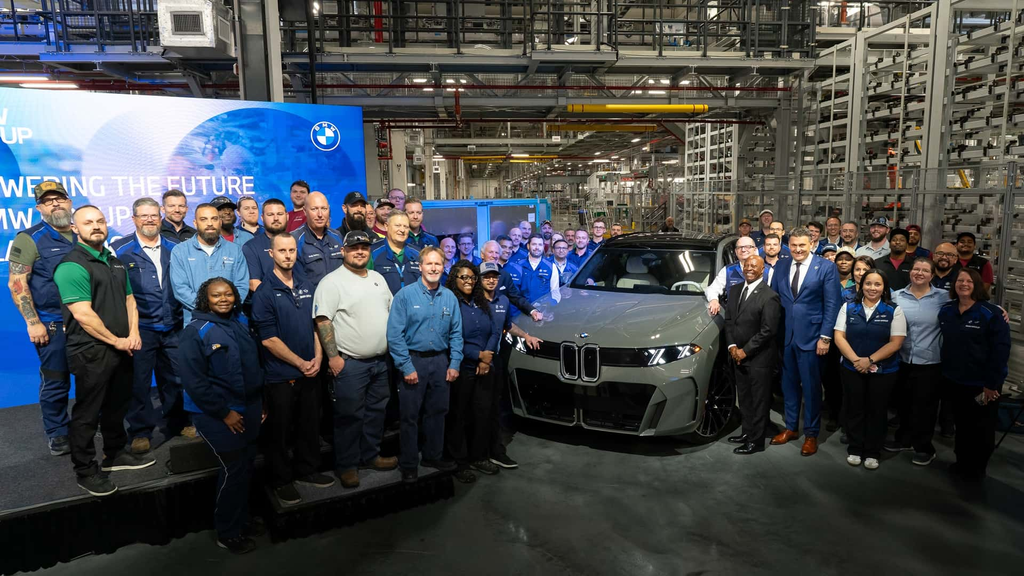
What Six Electric Models by 2030 Actually Commits BMW To
BMW has named a specific buildout schedule at Spartanburg, and walking it back would carry real costs. The iX5 is the first production EV from the South Carolina lines, running on a flexible assembly track shared with combustion X5 and plug-in hybrid variants. Current daily output sits at approximately 70 iX5 units. The model is slated as a 2027 US market entry. Following the iX5, BMW has indicated the iX7 arrives in 2027. An iX6 is expected in 2028. Electric variants of the X5 M and X6 M performance models, plus an Alpina-branded iX7, are reported to follow before 2030, though BMW has not confirmed individual launch dates for those derivatives. For Spartanburg's roughly 11,000 employees, the EV ramp represents a structural commitment to the facility's long-term role. South Carolina's economic development office has cited the BMW plant as the state's single largest goods exporter. Any tariff relief that reduces BMW's $1 billion-plus annual duty burden would, in theory, free capital that could accelerate that six-model timeline — though BMW has made no such direct link in public statements.
Spartanburg vs. the Rest of BMW's Global Production Network
BMW operates plants in 15 countries. Spartanburg still leads by unit volume. The plant's 412,799 vehicles in 2025 exceeded Leipzig's approximately 350,000-unit annual capacity and Dingolfing's mix-dependent output, which BMW's 2024 Annual Report, published March 2025, placed at around 390,000 units. Toyota's Georgetown, Kentucky plant — the closest comparable US-based foreign-brand facility — produced roughly 500,000 vehicles in 2023, according to Toyota Motor North America production data. Georgetown, however, assembles exclusively for the North American market; Spartanburg exports half its output. That export orientation is both BMW's commercial model and its tariff problem. A plant that sells 50 percent of production abroad is exposed to retaliatory duties in export markets even as it pays import duties on vehicles coming the other direction. BMW has not disclosed whether any of its 120 export markets have threatened countermeasures in response to US trade actions, and that question was not answered in Engelhorn's public comments.
Spartanburg opened in 1994 as BMW's first manufacturing facility outside Germany, with an initial annual capacity of 72,000 units — a figure the plant now surpasses every five weeks. The $700 million Woodruff battery facility began construction in 2023. No completion date for tariff negotiations has been publicly stated or the US Trade Representative's office. The complete BMW model history and specifications are catalogued in the Global Auto Index manufacturer database.
