
A removable carbon-fibre hardtop unlocks full speed; the fabric roof caps it at 124 mph.
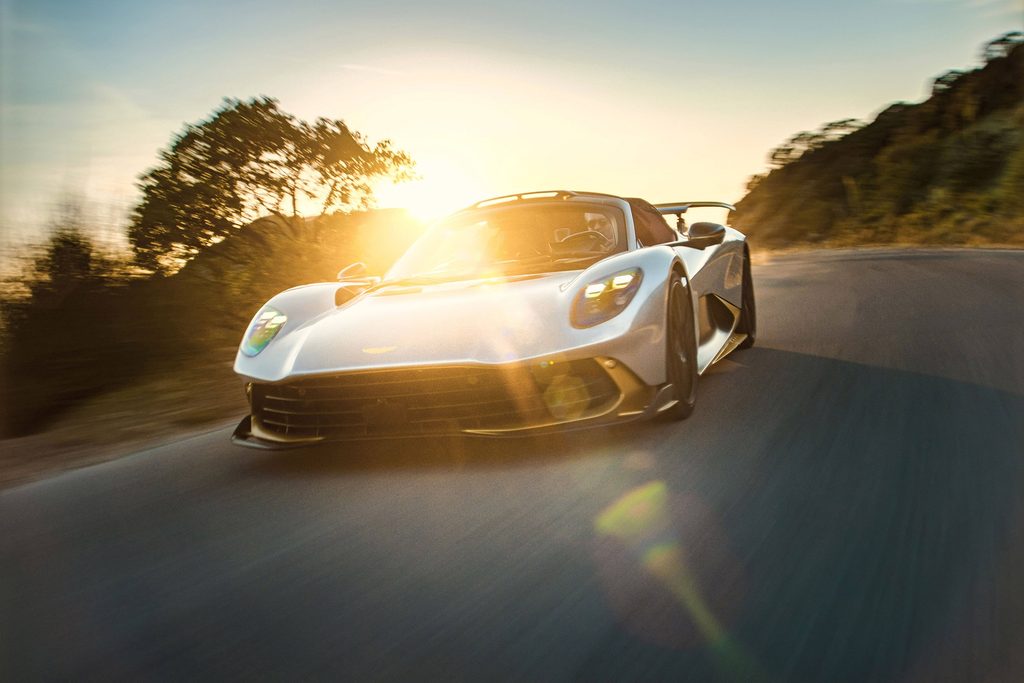
Aston Martin has locked in production specifications for the Valhalla Spider. It matches the coupe's 217-mph ceiling. With the roof down. That claim alone stopped the room at the Concours at Wynn in Las Vegas, where the car made its public debut on 27 October.
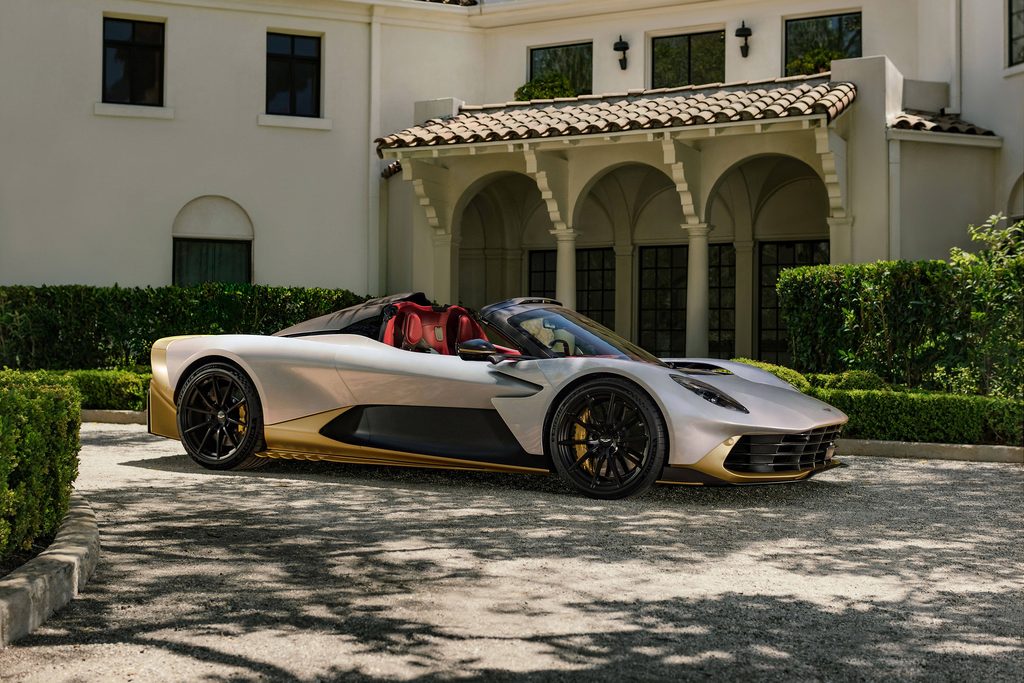
The Spider is the first mid-engined open-cockpit production car in Aston Martin's 111-year history, according to Aston Martin's official product announcement published October 2024. That matters because no predecessor — not the Vanquish Volante, not the V8 Vantage Roadster — ever placed the engine behind the driver in a convertible body. The coupe Valhalla arrived earlier in 2024; the Spider follows it into a segment where Ferrari's SF90 Spider and McLaren's 750S Spider have already set the pace.
Powertrain Numbers: What 1,064 hp Actually Means Here
The hybrid system pairs a twin-turbocharged 4.0-litre V8 with three electric motors driving all four wheels. Combined output is 1,064 hp and 811 lb-ft of torque, figures identical to the coupe. European hypercar manufacturers expanding open-top coachbuilt models have rarely held powertrain parity between coupe and convertible variants — Ferrari quoted an 18 hp deficit on the SF90 Spider versus the SF90 Stradale at launch in 2021. On the speed side, the arithmetic is straightforward: with the carbon-fibre hardtop fitted, top speed is 217 mph (349 km/h). Swap to the factory fabric roof and the ceiling drops to 124 mph (200 km/h) — a reduction of 93 mph, or 42.9 percent of the car's maximum capability. Calculated explicitly: (217 − 124) ÷ 217 × 100 = 42.9 percent speed loss attributed solely to roof material. Aston Martin has not published a kerb-weight figure for the Spider, so the mass penalty over the coupe remains unconfirmed at the time of writing.
Hallmark's Case for All-Weather Usability
Aston Martin chief executive Adrian Hallmark framed the Spider's brief in a single sentence issued alongside the Las Vegas debut: 'High speed or low speed. Rain or shine. Roof on or roof off. Road or track. Valhalla Spider ticks every box.' That eight-word closing claim is doing a lot of work. Hallmark, who joined Aston Martin as CEO in September 2023 after leading Bentley Motors through its Bentayga expansion, has consistently argued that usability — not outright track metrics — separates Aston from single-purpose rivals. The Spider operationalises that argument: a removable wind deflector deploys when the roof comes off, then folds flat and stows in compartments integrated into the car's structure. When the roof goes back on, the deflector disappears. It is not a bespoke item kept in the boot. That distinction matters for a car expected to be driven, not trailered.
The Price Aston Martin Hasn't Named
One number is conspicuously absent from every document Aston Martin released alongside the Las Vegas debut: a purchase price. The Valhalla coupe carries a list price of approximately £800,000 in the United Kingdom, according to Aston Martin's configurator data current as of October 2024. The Spider's sticker has not been disclosed. That silence is unusual for a car with a confirmed Q3 2027 delivery window — roughly 33 months from announcement. Coachbuilt programmes at this production level typically require deposits and allocations well ahead of build slots. Bentley, for comparison, published indicative pricing for the Batur within six weeks of its Pebble Beach reveal in August 2022, despite that car being even lower volume. What Aston Martin has confirmed is that a new carbon-fibre Touring Seat comes as standard equipment and that the coupe's more aggressive carbon-fibre seat is available at no additional cost. Seat choices, yes. Price, no.
How the Spider Sits Against Open-Top Hypercar Rivals
The segment the Spider enters is small but established. McLaren's 750S Spider, priced from £289,500 in the UK at launch in 2023, produces 740 hp and reaches 204 mph — 13 mph short of the Valhalla Spider's claimed maximum. Ferrari's SF90 Spider outputs 986 hp and is quoted at 211 mph, again below 217 mph, though Ferrari's figure applies with the retractable hardtop in place rather than a separate panel. Lamborghini has not yet offered a convertible variant of the Revuelto. The Valhalla Spider's 1,064 hp therefore exceeds every current open-top production rival by at least 78 hp. Whether that gap survives independent dyno testing is a separate question; Aston Martin's own press materials carry the standard 'figures unverified by independent testing' caveat. Production volume has not been confirmed, though Aston Martin characterises the Spider as a limited coachbuilt model, implying a run well below 500 units.
What the Spider Means for Aston Martin's Near-Term Model Mix
The Valhalla Spider's Q3 2027 slot lands inside the window Adrian Hallmark has publicly described as Aston Martin's period of controlled volume growth. The company posted a full-year adjusted EBITDA of £282.8 million for 2023, according to Aston Martin Lagonda's Annual Report and Accounts 2023, published February 2024, page 6. A limited-run coachbuilt hypercar at or above £900,000 per unit contributes disproportionately to revenue per vehicle even at low volumes. For the Gaydon factory, the Spider also validates the Valhalla platform's structural architecture. The carbon-fibre tub that holds 1,064 hp in coupe form now carries certification for open-cockpit loads — a result that could influence future DBR-series or Valkyrie-adjacent decisions. What it does not resolve is Aston Martin's pending first fully electric model, which Hallmark confirmed in mid-2024 has been delayed without a revised launch date. The Spider keeps combustion and hybrid engineering at the front of the order book through at least late 2027.
The Valhalla coupe's development programme logged more than 27,000 km of testing at circuits including Nürburgring and Silverstone before sign-off, according to Aston Martin engineering briefings released in 2024. The Spider inherits that base but requires its own structural sign-off for open-top torsional loads — a process Aston Martin has not put a timeline on. Deliveries remain Q3 2027. The complete Aston Martin model history and specifications are catalogued in the Global Auto Index manufacturer database.
