São Paulo assembly lines now producing BYD and GWM vehicles could show Brussels what tariffs alone cannot achieve.
Brazil sells 2.7 million vehicles a year. Chinese brands want a large slice of that. They are not just importing — they are building. That shift from dock to factory floor is the detail Brussels keeps glossing over.
The EU's provisional countervailing duties on Chinese-built battery electric vehicles, announced in June 2024 and codified under Commission Implementing Regulation (EU) 2024/2767 published October 2024, pushed several Chinese OEMs to accelerate localisation plans outside China. Brazil, already the world's sixth-largest passenger car market according to the Associação Nacional dos Fabricantes de Veículos Automotores (Anfavea) Annual Report 2024, absorbed that pressure first. Europe is watching, but slowly.
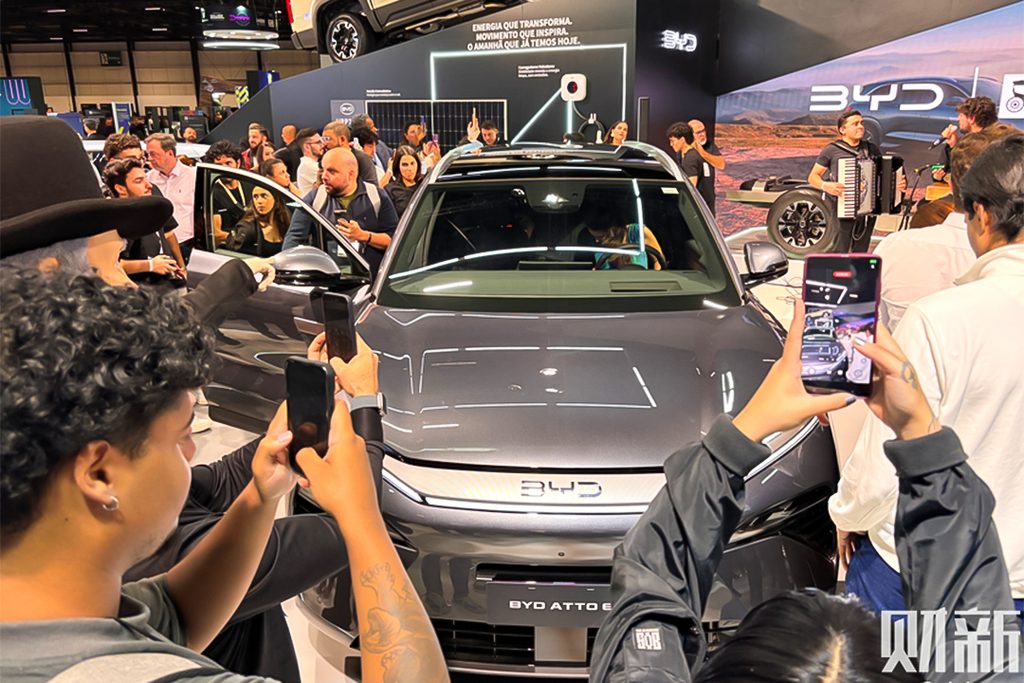
BYD Chose Camaçari, Not Rotterdam
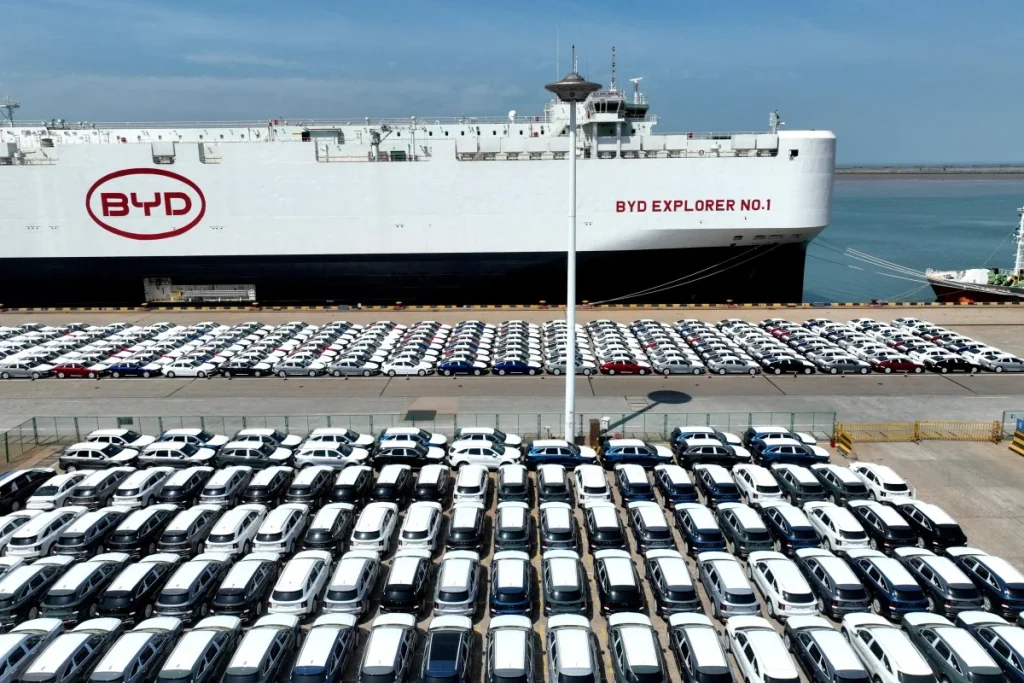
BYD signed a purchase agreement in July 2023 for the former Ford Camaçari plant in Bahia state — a facility Ford shuttered in January 2021 after 51 years of operation. Construction crews moved in within six months. BYD do Brasil confirmed a first-phase production capacity of 150,000 units annually, with a second phase targeting 300,000 units. The company did not ship finished vehicles and hope for the best. It hired Brazilian engineers, negotiated with the Sindicato dos Metalúrgicos da Bahia, and applied for Inovar-Auto successor incentives under the Mover programme, which the Brazilian federal government enacted in June 2024. That sequence — site acquisition, workforce agreement, incentive application — took under eighteen months. No European government has yet seen a Chinese OEM move through an equivalent domestic approval chain at comparable speed. Changan's rejection of shared European production sites underlines how different the calculus looks from the Chinese side when local incentives are absent.
The Arithmetic of Brazilian Local Content
Brazil's Mover programme ties a 1% reduction in the Imposto sobre Produtos Industrializados (IPI) excise rate to each percentage point of local content above a 50% threshold, up to a maximum 7-point IPI reduction. BYD's Camaçari plant, at planned capacity, imports roughly 35% of components by value — battery cells, power electronics, and certain chassis stampings — leaving 65% sourced domestically or regionally. Calculation: 65% local content minus the 50% floor = 15 percentage points of eligible credit, capped at 7 IPI points of relief. On a R$150,000 vehicle (approximately €26,500 at the April 2025 Banco Central do Brasil reference rate of 5.66 BRL/EUR), a 7-point IPI reduction saves roughly R$10,500 per unit — €1,855. Across 150,000 first-phase units, that is R$1.575 billion in annual consumer-facing tax relief, or approximately €278 million. The EU's current blunt-instrument tariff of up to 35.3% on BYD imports generates revenue but generates no domestic assembly jobs. Brazil's tiered model does both.
São Paulo vs Stuttgart: Two Responses to the Same Pressure
Brazil imposed a phased import tariff on Chinese EVs beginning in January 2024 — starting at 10%, rising to 18% by July 2024, and scheduled to reach 35% by 2026 under a three-year glide path published by the Câmara de Comércio Exterior (Camex) Resolution 413/2023. The tariff rise was explicitly linked to localisation timelines: OEMs that committed to Brazilian manufacturing received extended zero-rate windows. The EU, by contrast, applied its additional duties as a fixed penalty with no production-commitment offset mechanism. Germany's federal government, which initially opposed the EU duties in the October 2024 Council vote, argued for precisely such a conditional structure — and lost. The EU Industrial Accelerator Act gestures toward investment conditionality but contains no binding local-content schedule comparable to Mover. The result: Chinese OEMs have built factories in Bahia. They have announced studies for Slovakia, Hungary, and Spain — none has broken ground.
What Anfavea Actually Said
Anfavea's Annual Report 2024, released in March 2025, stated directly that "Chinese-origin brands accounted for 11.4% of new vehicle registrations in Brazil in 2024, compared with 1.8% in 2021" — a 9.6-point gain in three years. The same document recorded that domestically assembled Chinese-brand vehicles represented 23% of all Chinese-brand sales in Brazil by December 2024, up from zero in 2021. Anfavea president Márcio de Lima Leite, speaking at the São Paulo Motor Show in November 2024, described the dynamic as "not a threat absorbed but a transition managed" — eight words that European trade ministries have not yet found an equivalent for. The distinction matters: Anfavea was not praising Chinese OEMs. It was crediting the Mover incentive architecture for converting import pressure into domestic output. That is a policy claim with a verifiable number attached, which is more than the EU's October 2024 regulation currently offers. Jaecoo's UK sales milestone shows the import-only trajectory Europe is currently on.
The Number That Does Not Fit the Narrative
Here is the complication Brazilian officials do not foreground: GWM's Iracemápolis plant in São Paulo state, which has produced Haval and ORA models since 2021, ran at an estimated 38% of its 100,000-unit annual nameplate capacity through 2024, according to production data filed with the Secretaria de Desenvolvimento Econômico do Estado de São Paulo. At 38,000 units against 100,000-unit capacity, the plant consumed local-content incentives — land tax relief, ICMS waivers, state-level training subsidies — while delivering well below the output used to justify those concessions. Anfavea's own report acknowledges a "ramp-up lag" without specifying duration or penalty trigger. No clawback mechanism exists in GWM's state agreement if capacity utilisation remains below 60% beyond 2026. European negotiators drafting local-content conditions for any future conditional tariff regime should treat Iracemápolis as the control case, not Camaçari. The US tariff debate similarly sidesteps enforcement mechanics on utilisation thresholds. The gap is not unique to Brazil — but Brazil is the only market where the gap is already measurable.
One data point European trade ministers have not cited publicly: Brazil's National Institute of Industrial Property (INPI) recorded 47 new automotive patent filings in Brazil during 2024 — up from 9 in 2020. Patents precede products. That five-fold increase in four years suggests Chinese OEMs treat Brazil as an R&D jurisdiction, not merely an assembly address. The complete BYD and GWM model histories and specifications are catalogued in the Global Auto Index manufacturer database.
