
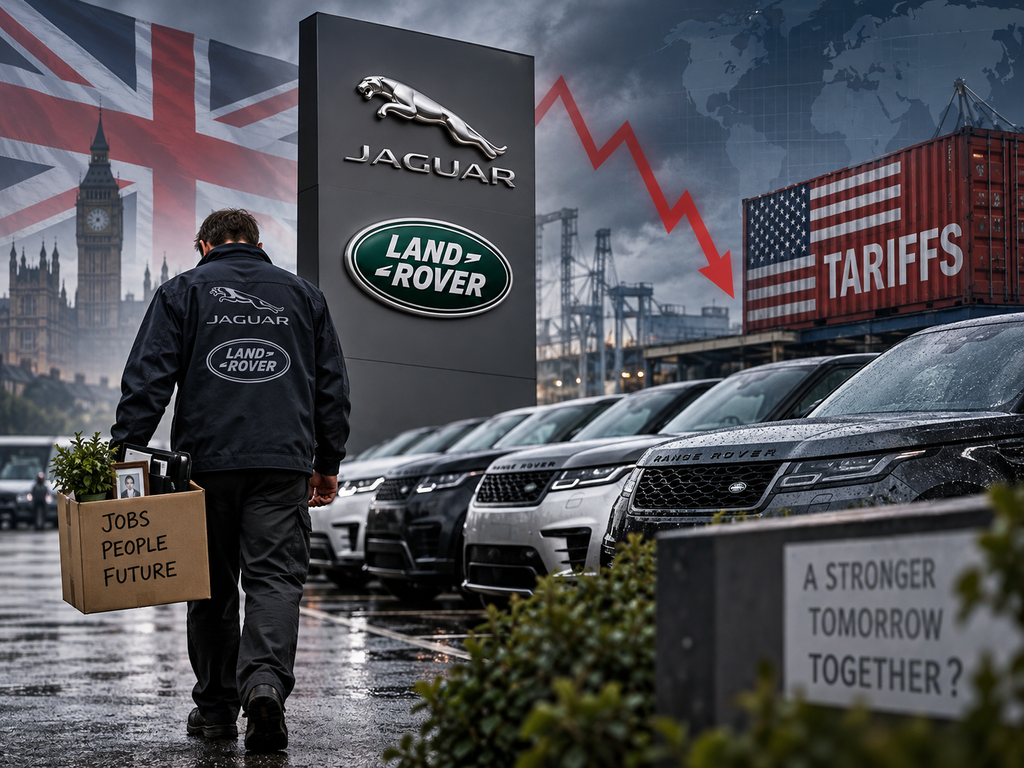
Audi's Neckarsulm plant holds a job-security pact until 2033, yet its core model lineup expires in the same window VW plans cuts.
Six thousand people. One factory gate. One very clear message. On July 29, 2026, Audi workers at Neckarsulm walked out in force to warn Volkswagen that reviewing a plant and closing one are not the same thing — and that the workforce knows the difference.
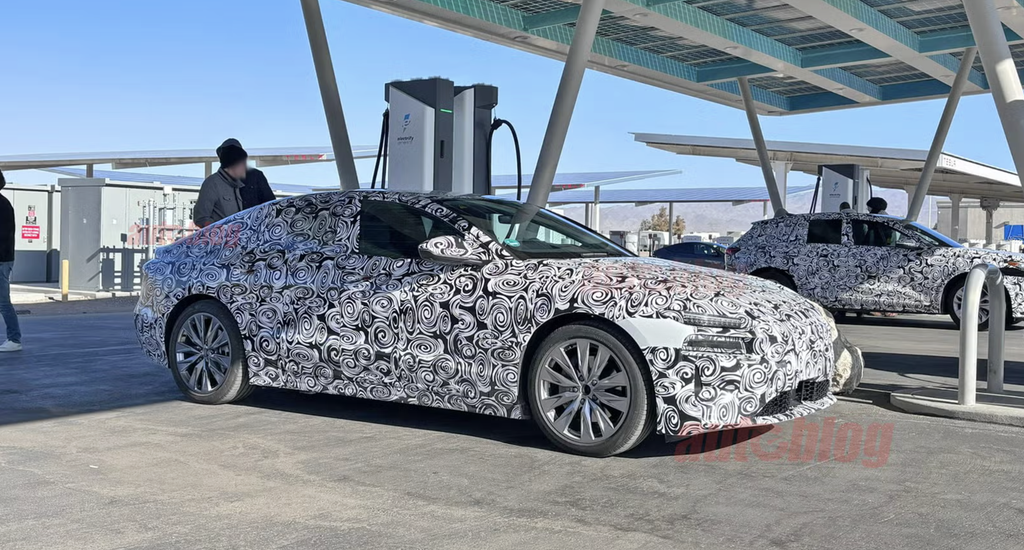
Neckarsulm is one of four German Volkswagen Group sites — alongside Emden, Hanover, and Zwickau — now under formal capacity review, according to VW Group supervisory board disclosures reported in July 2026. That is a sharper list than anything the group published during its 2022 cost rounds, when only two locations were flagged. The plant builds the A5, A6, A8, and E-Tron GT on an agreed installed capacity of 225,000 vehicles per year, yet every one of those nameplates faces an end-of-cycle cliff between 2031 and 2034.
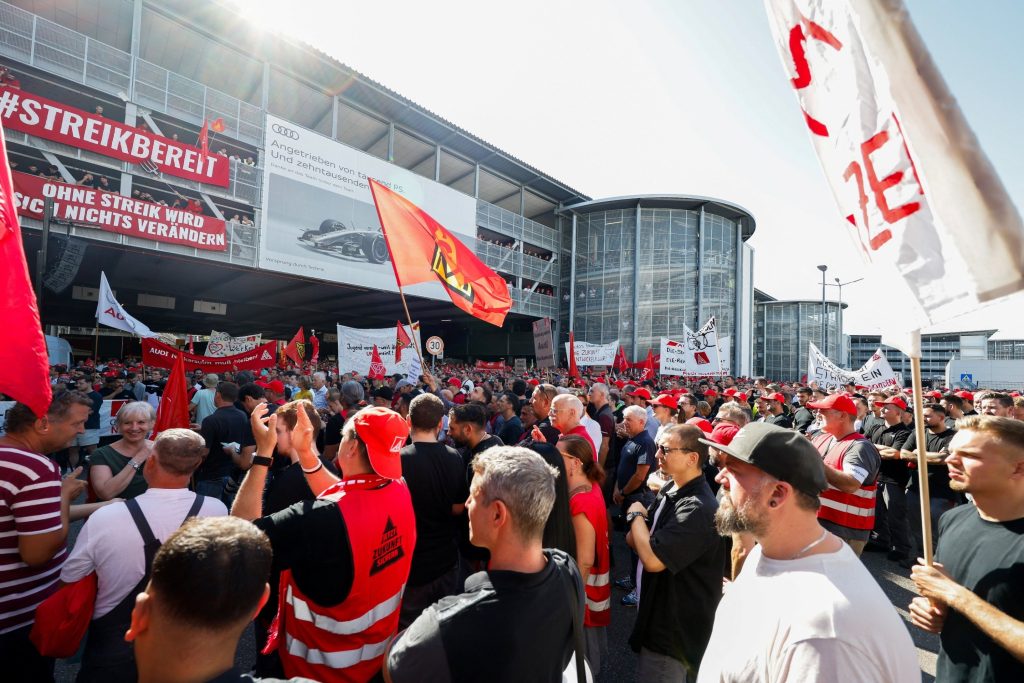
How July 29 Unfolded Outside the Plant Gates
Workers began gathering before the morning shift on Tuesday, July 29, 2026. By mid-morning the crowd outside the main entrance had reached what IG Metall — the German industrial union that organised the action — counted as roughly 6,000 employees. Banners called on Volkswagen's supervisory board to commit to firm product allocations, not vague pledges. Works council chair speakers told the crowd that the plant's Zukunftsvereinbarung, or future agreement, already earmarks a dedicated fund for electric-platform investments, and that VW should activate it rather than let the site drift toward the capacity-surplus column. The demonstration did not stop production. It stopped conversations. Within hours, regional media in Baden-Württemberg had picked up the footage and the protest had become the headline on VW's restructuring story across Germany — which, given CEO Oliver Blume's ongoing effort to manage the narrative around plant futures, was precisely the point the workforce wanted to make. This story sits within the broader industry restructuring coverage for 2026 tracked across GlobalAutoIndex.
The Numbers Behind VW's Cost-Cutting Target
Volkswagen Group has confirmed a target of approximately 50,000 job reductions across its German operations by 2030. Internal planning documents cited in German business press indicate a second tranche of cuts tied specifically to plant closures, which would push the worldwide total toward 100,000 positions. At Neckarsulm alone, the agreed installed capacity stands at 225,000 vehicles per year. Four models currently share that capacity: the A5, A6, A8, and E-Tron GT. If the A8 ends its lifecycle first — industry analysts place that around 2027–2028 — and the combustion A5 and A6 follow in the 2031–2032 period, Neckarsulm could be operating at well under 50 percent of nameplate capacity before any formal closure decision is even tabled. The arithmetic: 225,000 units of installed capacity minus one flagship sedan (A8, estimated 20,000–25,000 units annually at peak) minus two volume models leaves the E-Tron GT, a low-volume halo car, carrying a facility built for nine times its current output. That gap is what VW's finance team is looking at.
What the Zukunftsvereinbarung Actually Promises
The Zukunftsvereinbarung — Audi's site-level future agreement — commits Volkswagen Group to no compulsory redundancies at German Audi locations through December 31, 2033. The document also establishes a forward investment fund tied to electric-vehicle platform transitions, described in Audi's own communications as a mechanism to "secure competitive new projects for existing sites." That eight-word phrase is doing a lot of work. It is not a guarantee of specific models. It is not a volume commitment. Neckarsulm's works council has pointed to the fund repeatedly as evidence that management retains the option — and the financial instrument — to keep the plant alive into the mid-2030s. What the agreement does not contain, according to union officials, is any named product earmarked for Neckarsulm beyond the current generation of vehicles. Peter Mosch, chairman of Audi's general works council, told reporters in late July 2026 that the workforce expects VW's board to translate the fund into concrete model allocations before the end of 2026 planning cycles.
The Contradiction at the Centre of VW's Position
Here is what does not add up. Volkswagen Group holds a job-security pact at Neckarsulm running to the end of 2033. Separately, it is conducting a formal plant-viability review with a planning horizon of 2031–2034. Those two windows are nearly identical. A company that genuinely intended to keep a site open through 2033 would not simultaneously be modelling production taper scenarios for 2031 onward. Yet both things are true at once, and VW has not explained how they coexist. The supervisory board, which includes worker representatives holding half the seats under German co-determination law, has pushed back against closure-first thinking — but it has not blocked the review. CEO Oliver Blume has used the phrase "smart solutions" in public remarks without defining what that means for Neckarsulm specifically. The works council's own communications acknowledge uncertainty about what gets built there once the A6 and A5 combustion lines end. This kind of deliberate ambiguity is not unusual in German industrial relations, but it is particularly uncomfortable when Chinese manufacturers are simultaneously rejecting shared European production arrangements that might have filled spare capacity at sites like this one.
What Closure Would Mean for Baden-Württemberg
Neckarsulm sits in Baden-Württemberg, a state that already faces pressure from restructuring at Bosch, Mercedes-Benz's supplier base, and ZF Friedrichshafen. A full closure of the Audi plant would remove what local government officials describe as one of the region's ten largest single-site employers. The plant's payroll supports an estimated supply chain of several hundred smaller businesses concentrated within a 50-kilometre radius of the city. Baden-Württemberg's economics ministry has not published a formal economic impact assessment for a Neckarsulm closure scenario, and as of the date of the July 29 protest, no such document had been commissioned or disclosed — that absence is itself a data point about how early-stage this review remains. For Audi as a brand, the consequences run beyond headcount. The A8 is built nowhere else in the world. Losing Neckarsulm without a receiving plant means losing the A8 entirely, which would leave Audi without a full-size flagship saloon in a segment where BMW continues to invest heavily in high-output variants through at least 2027.
Neckarsulm has operated continuously since 1906, making it one of the oldest active automotive assembly sites in Germany . The plant survived two world wars and four ownership changes before becoming part of Audi AG. A decision either way is not expected before Q1 2027, according to VW Group board scheduling reported . The complete Audi model history and specifications are catalogued in the Global Auto Index manufacturer database.
