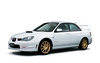
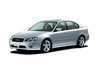
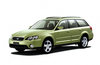
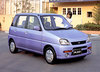
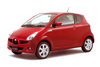
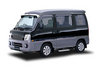
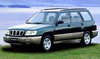
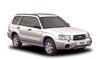
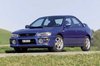
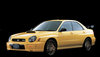
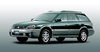
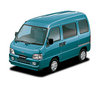
Intro: Fuji Heavy Industries, like so many of the Far Eastern conglomerates, branched into car manufacturing quite late in its existence. Fuji, itself, was a development of the Nakajima Aircraft Company that had produced wartime aircraft. As with other Japanese manufacturers, the first car was a tiddler, a 360cc mini-car that would provide minimalist transportation in city environments. The company’s first venture into full-size cars arrived with the Leone model, which developed into a 1.6-litre flat-four engined saloon and estate car by the end of the 1970s. Exports started in earnest with this model. The cars were certainly very characterful and had a cheery disposition, allied to their mildly advanced and avant-garde styling. Four-wheel-drive was the next innovation. Although the company had started rallying by the mid-1980s, it was on a low-key basis and really just a means to prove the rugged nature of the engineering standards. The company’s profile was heightened in the early-1990s, when Colin McRae took to the helm of a Legacy RS Turbo model and then an Impreza Turbo, which achieved cult status across Europe. From being a quirky producer of city cars and then the oddball flat four saloons and estates of just twenty years earlier, Subaru had developed into the car that everyone just had to own.
It is the Impreza which now forms the basis for a Saab - another result of GM influence.
Domestic production in 2002: 436355 units. Domestic sales in 2002: 260381. Overseas production in 2002: 104663 units. Overseas sales including CKD units: 294530 units.
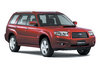
Japanese production in 2003: 450,000 units. Pleo 55 000, Samber 80 000, Forester 121 000, Impreza 99 000, Legacy 95 000. |