Intro: In 1914 John and Horace Dodge, also known as the Dodge Brothers, entered the newly emerging automotive marketplace with the goal of producing a solid, reliable, no-frills car proving to be practical in every respect. Even after the 1928 Chrysler buyout, Dodge cars remained true to their founder's ideals until about 1955. In the hands of the Chrysler Corporation, Dodge cars filled the niche above Plymouth and below DeSoto.
The well-known ram hood ornament was introduced in 1932, creating a popular mascot for the company, while designs became more graceful in the late 1930's. During the 1950's things at Dodge changed, such as names and designs, but the big news
was the 1953 introduction of the Red Ram V8. New bodies, and the Red Ram, helped Dodge shed it's stoic image, targeting a youthful market. Zeroing in on this new corporate identity, Dodge introduced the D-500 in 1956, one of
the first, true High-Performance Dodges. However, staying true to their early-day roots, Dodge also introduced a series of compact and intermediate cars during the 1960's, such as Lancer and Dart. The gas wars of 1974 saw the beginning of the end for big and fast cars.
In 1980, the front-wheel drive platform took shape at Dodge, and four-cylinder power accompanied this
new platform. The result was the Aries K, or K-Car. It was on this platform that most Chrysler cars would be built. Trying to revive the spirit of high performance at Dodge, the front-wheel drive Daytona was introduced in 1984 with optional turbo, while the Caravan helped change the image of minivans.
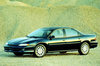
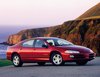
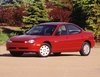
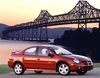
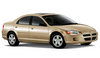
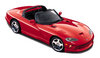
Rear-wheel drive was discontinued in 1987, with the exception of trucks and vans. Dodge for the late 1980's, and through the majority of the 1990's, expanded the lineup with the Dynasty, Shadow, Intrepid, and Viper. Soon, Neon, and Stratus joined the lineup, and the Daytona succumbed to the Avenger.
|