|
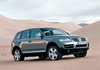
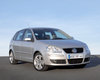

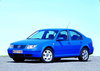
Volkswagen Bora |
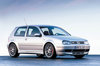
Volkswagen Golf |

Volkswagen Golf |
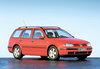
Volkswagen Golf |

Volkswagen Polo |
No image
Seat Ibiza
(2003 – 2005) |
Intro Volkswagen Bratislava was created on 30th May 1991 after signing an agreement between the Government of the Slovak Republic, the local Skoda assembly plant and Volkswagen AG. Since January 1995, it belongs solely to the German concern. First Passat estate variants were assembled locally, then from 1995 the Golf and Bora accompanied by technology transfer. In 1998 the Passat was discontinued to be replaced by the Lupo. A year later Europe's most advanced Volkswagen paint shop began operation. The Bratislava plant was selected to manufacture the new range of off-roaders, developed jointly by Volkswagen and Porsche. While the Touareg is completed on the site, the Cayenne is being finished at Porsche's Leipzig plant. Between January, 2003 and Spring, 2005 part of the Seat Ibiza production was transferred from Spain. Volkswagen also has a components plant in Martin, where gearboxes and other parts are being manufactured. From 2006 the new Audi Q7 off-roader will join the Touareg and Cayenne.
Extended editorial reference for Volkswagen Group's Bratislava manufacturing operation — verified production history, current model assignments, and strategic role within Central European automotive output. Compiled from corporate disclosures, plant communications, and independent industry sources.
Multi-Brand Production Hub Premium SUV Assembly Cross-Group Platform Sharing
Bratislava Plant in the Volkswagen Group Production Network
Volkswagen Slovakia's Bratislava plant operates as one of the few Volkswagen Group facilities assembling vehicles for three different Group brands on overlapping platforms. Its position in Devínska Nová Ves places it inside the Vienna–Bratislava industrial corridor, with direct access to road and rail logistics serving both Western European OEM customers and the Central-Eastern supplier base.
The site began operations on 30 May 1991 under a joint arrangement between the Slovak government and the original Bratislava-based Škoda assembly plant. Volkswagen AG took full ownership in January 1995, and the plant has since transitioned from a low-volume Western-platform assembler into a designated full-cycle manufacturing site for several premium and large SUV programmes.
Editorial Verification Note
Production assignments and operational dates listed below are cross-checked against Volkswagen Group annual reports, plant press communications, and historical European automotive industry records. Where production years remain ambiguous between sources, the more conservative range is used. Updates to model assignments occur regularly — readers verifying this entry against current production rosters should consult Volkswagen Group's most recent investor disclosures.
Production Timeline
The earliest assembly programmes at Bratislava covered Passat estate variants, drawing on the existing Škoda body-in-white competence already present at the site. Following the 1995 ownership transition, the plant absorbed Golf and Bora assembly together with structured technology transfer from German parent facilities — the first phase of bringing Bratislava output to the same internal Volkswagen quality benchmarks applied at Wolfsburg and Emden.
In 1998 the Passat line was retired locally and replaced by Lupo. The following year a new paint shop entered service — at that point one of the most technically advanced surface-finishing facilities in the Group, built around water-based base coats and reduced-emission process engineering uncommon at the time in Central European plants.
The strategic shift toward large SUVs began in 2002 with the start of Volkswagen Touareg production, on the shared full-size SUV platform jointly engineered with Porsche. From 2005 onward the plant added Audi Q7 and a relocated portion of Volkswagen Polo output. Between January 2003 and spring 2005 a share of Seat Ibiza assembly was also transferred from Spain — a temporary capacity arrangement rather than a long-term assignment.
Current Model Assignments
| Volkswagen Brand
Volkswagen Touareg
Full-Size SUV · 2002 – present
Built on the shared Volkswagen Group full-size SUV architecture co-engineered with Porsche. Bratislava is the lead production site for the model across all generations, with body shell, paint, and final assembly performed locally. |
Audi Brand
Audi Q7
Large Premium SUV · 2005 – present
Audi's flagship SUV programme, technically aligned with the Touareg and Cayenne family. Bratislava handles full vehicle assembly including aluminium-intensive body construction processes specific to the Q7 platform. |
| Volkswagen Brand
Volkswagen Polo
Compact Hatchback · 2005 – present
Compact-segment assignment that demonstrates the plant's capability to operate mixed production streams — small-segment vehicles built on the same site as full-size SUVs, requiring distinct line balancing and stamping schedules. |
Component Plant
Martin Components Site
Gearboxes & Driveline Parts
Volkswagen Slovakia's secondary site in Martin produces transmissions and driveline components feeding both Bratislava assembly and Group plants elsewhere — part of the wider integrated supply network. |
Cross-Brand Platform Architecture
The Bratislava facility's defining technical characteristic is shared-platform manufacturing across three Volkswagen Group brands. The full-size SUV platform underpinning Touareg and Q7 was developed jointly by Volkswagen and Porsche engineering teams, with the Porsche Cayenne built on the same architecture at Porsche's Leipzig site. This split-site arrangement allows the Group to pool platform engineering investment while keeping brand-specific final assembly distinct.
| Group-Level Manufacturing Relationships | ||
|---|---|---|
|
Porsche
Co-Engineering Partner
Joint development of the full-size SUV platform shared with Touareg and Q7. Cayenne final assembly takes place at Leipzig, not Bratislava — a deliberate brand separation within the same technical family. |
Audi
Group Brand Customer
Q7 production assigned to Bratislava as part of the Group's premium SUV consolidation strategy — placing two flagship SUV lines under one roof while preserving brand-distinct quality control routines. |
Seat
Historical Capacity Share
Between 2003 and 2005 a portion of Seat Ibiza output was assembled at Bratislava as a temporary capacity-relief arrangement for Spanish operations. This was a closed chapter rather than an ongoing assignment. |
Quality Standards and Process Controls
Vehicles leaving Bratislava are subject to the same internal Volkswagen Group audit procedures applied at parent facilities — including end-of-line inspection, water-tightness testing, dynamic short-loop road verification, and statistical process control on key body and paint metrics. The 1999 paint shop investment laid the basis for surface-quality results consistent with the Group's premium portfolio, and subsequent investments have aligned the plant with current Group environmental and process standards.
Long-Term Reliability Context
Independent reliability evaluation of full-size SUVs assembled at Bratislava — Touareg in particular — has historically reflected the structural engineering maturity of the platform rather than any plant-specific outlier behaviour, with mid-pack to above-average outcomes in segment-level studies tracking long-running ownership data.
Methodology and per-segment data sources used for cross-brand reliability comparisons are documented in GlobalAutoIndex's Global Vehicle Reliability Index 2019: Methodology and Results, which sets out the framework applied to Volkswagen Group products across European production sites.
Earlier Production Assignments
|
Volkswagen Passat (estate)
From 1991, retired 1998
First model assembled under the joint Slovak–VW arrangement, drawing on existing local body-in-white experience. |
Volkswagen Golf & Bora
From 1995
Compact-segment assembly added after full VW ownership transfer, aligned with structured technology transfer from German parent plants. |
Volkswagen Lupo
From 1998
Replaced Passat output as the plant's compact assignment, ahead of the SUV-led repositioning of the early 2000s. |
|
Seat Ibiza
January 2003 – Spring 2005
Partial assembly transferred from Spanish operations as a short-term capacity arrangement, not a permanent assignment. |
Earlier Golf generations
Multiple model cycles
Successive Golf generations were assembled or partially assembled at Bratislava, with hand-offs to other Group plants between cycles. |
Earlier Polo generations
Pre-2005 phases
Polo assembly at Bratislava preceded the formal 2005 assignment, with overlapping production phases shared with other Group sites. |
Position in the Slovak and Central European Industry
Volkswagen Slovakia is one of the foundational foreign direct investment projects underpinning Slovakia's position as one of the world's highest per-capita vehicle producers. Together with the country's other major OEM sites, the plant has anchored a tier-1 and tier-2 supplier ecosystem across western Slovakia — ranging from stamping and seating to electronic modules and exhaust systems — that today supplies multiple manufacturers, not only Volkswagen Group.
For broader regional industry context, Volkswagen Slovakia's role is best read alongside the rest of Slovakia's vehicle manufacturing footprint and the Group's wider Central European supply structure, including the Martin components facility and shared logistics with Group plants in neighbouring countries.
Why Bratislava Matters in the Group's SUV Strategy
The plant's importance to Volkswagen Group is structural rather than incremental: removing Bratislava would mean redistributing two flagship full-size SUV programmes — Touareg and Q7 — to alternative sites, alongside reassigning Polo capacity and the Martin component flows. Few Group plants serve a comparable cross-brand role within a single building, which explains the recurring reinvestment cycles the site has received since the late 1990s.
For readers tracking specific models, additional reference entries cover the Volkswagen Touareg, Volkswagen Polo, and Audi Q7 in detail, including generational specification history.