An internal memo sent to factory workers puts a figure on the gap: Wolfsburg's main plant is €300 million short of its restructuring goal.
Thomas Schäfer said it plainly. The Volkswagen chief executive told employees in an internal memo that the group cannot fund preliminary development work on an electric Golf. Not delayed. Not paused pending review. Can't afford it. The admission landed days after VW confirmed it had suspended the ID. Golf project.
The freeze matters beyond one nameplate. The Golf has logged more than 37 million sales across eight generations since 1974, making it Volkswagen's highest-volume car globally. According to Reuters, which first reported the memo's contents in November 2024, Schäfer's language was unusually direct for a company of VW's scale. The European Commission's Zero Emission Vehicle mandate still requires 100 percent of new car sales to be zero-emission by 2035, and VW's volume leader sits at the centre of that calculation.
Schäfer's Memo: 'We Simply Can't Afford This Work Right Now'
The sentence that travelled furthest was the shortest. "We simply can't afford this work right now," Schäfer wrote to Volkswagen employees, according to the Reuters report published in November 2024. He prefaced it with an acknowledgement of the car's weight: "I know what the Golf means for Volkswagen and for Wolfsburg. That's why this decision was really not an easy one for us." The candour is unusual. Corporate communications from manufacturers this size tend toward careful ambiguity. Schäfer offered none. The memo did not specify when preliminary development work might resume, nor did it attach a revised launch window to the electric Golf project. What the company did not confirm — and has not confirmed since — is any formal shift in the car's target on-sale date. That silence is doing considerable work. For readers tracking EU zero-emission vehicle regulation in Europe, the gap between VW's public commitments and its internal financial reality is now on the record, in the CEO's own words.
Wolfsburg's €300 Million Shortfall — and What the Numbers Say
Volkswagen's Wolfsburg plant is €300 million ($336 million at November 2024 exchange rates) short of its internal cost-reduction target, according to the Reuters report. That figure sits inside a larger restructuring that VW says will cut approximately 100,000 jobs across its German operations. Running the arithmetic: if each eliminated position saves an average of €60,000 annually in direct employment cost — a figure consistent with mid-range German automotive wage data from the German Association of the Automotive Industry (VDA) workforce report, Q3 2024 — the theoretical saving reaches €6 billion per year. The Wolfsburg gap of €300 million represents 5 percent of that projected annual saving. In other words, one plant alone is responsible for a shortfall equivalent to the annual payroll cost of roughly 5,000 workers. The plant is not on the list of four German VW Group facilities reportedly under review for potential closure, which raises its own question: if Wolfsburg is missing targets and still considered safe, the four facilities that are under review face steeper arithmetic still.
The Works Council Says No Delay. The Platform Says Otherwise.
Volkswagen's works council told employees the temporary spending freeze on preliminary development work would not affect the electric Golf's planned launch window, and that lost time could be recovered. That position is difficult to square with the platform's own history. The Scalable Systems Platform — SSP, the architecture on which the ID. Golf is expected to be one of the first production models — was originally targeted for 2026 availability. It has already slipped. VW previously indicated publicly that it did not need an electric Golf in 2028, repositioning the car's arrival toward the end of the decade. The works council's reassurance was not accompanied by a revised SSP readiness date, nor by any documentation of how the preliminary development gap would be closed. What was not published: any updated engineering milestone schedule. What was not answered: whether the SSP delay and the funding freeze are being tracked as separate problems or as one compounding one.
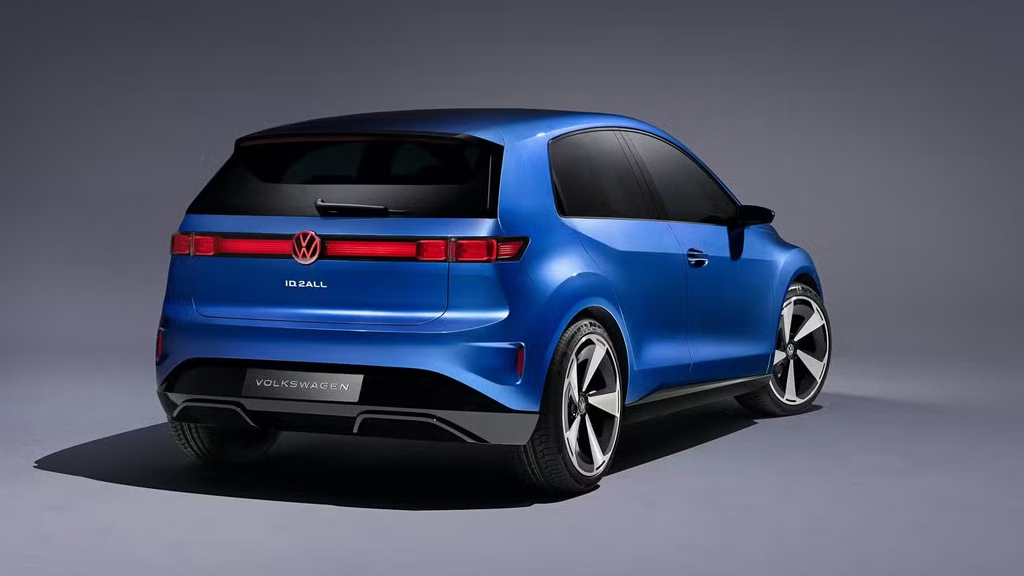
ID.3 Neo Fills the Gap — but It Isn't the Golf
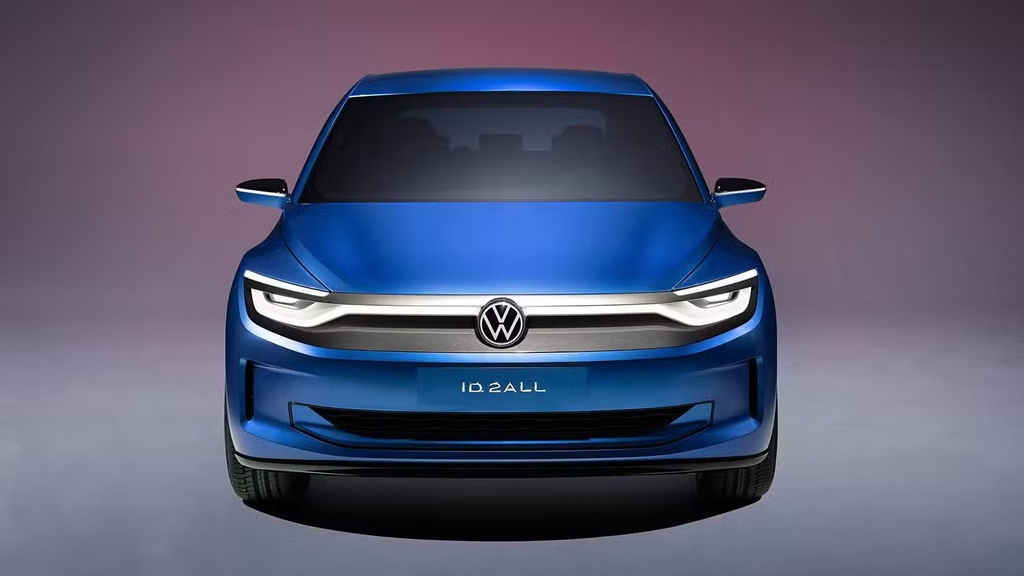
Until the electric Golf arrives, Volkswagen's answer to its own volume gap is the ID.3 Neo. The car is smaller, carries a different nameplate, and does not carry the Golf's 50-year recognition in European retail markets. By comparison, Stellantis launched the electric Peugeot e-208 and Opel/Vauxhall Corsa Electric on the same platform in 2023, giving both brands a sub-€35,000 electric entry point with established nameplate recognition. VW's ID.3 Neo starts above that band in most European markets. The combustion Golf, meanwhile, is scheduled to move production from Wolfsburg to Puebla, Mexico, in 2027 — a geographical shift that will itself carry retraining costs, logistics adjustments, and union scrutiny. The contrast with 2019 is direct: five years ago, VW was presenting the ID. family as the Golf's electric successor on an accelerated timetable. The timetable is now open-ended, and the CEO has put that in writing.
What the Freeze Means for VW's 2035 ZEV Commitments
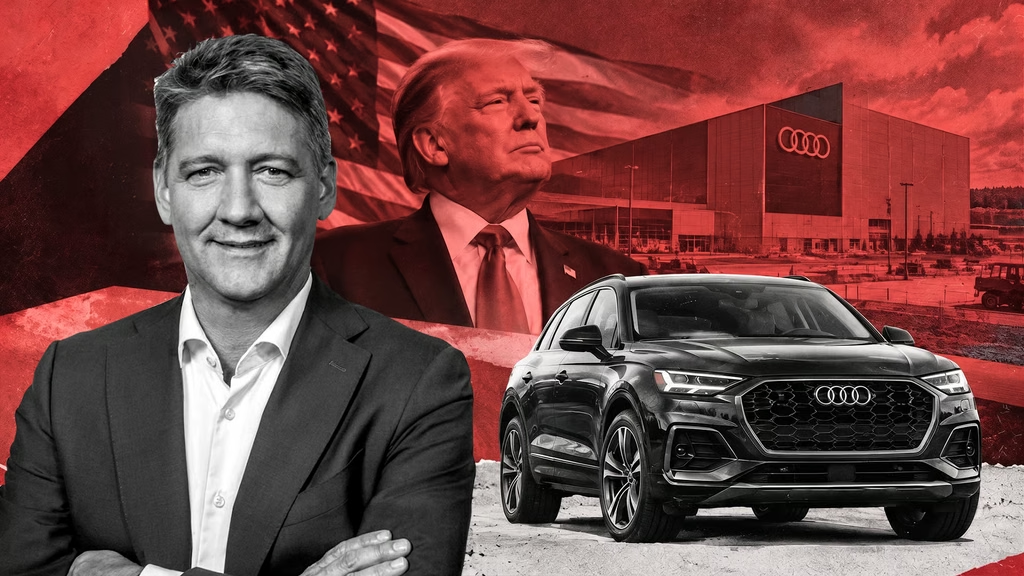
The European Commission's ZEV regulation, adopted under Regulation (EU) 2023/851 and confirmed without amendment following the March 2023 trilogue agreement, requires passenger car CO₂ emissions to reach zero fleet-average by 2035. Volkswagen AG, as the group's volume brand, carries the largest share of registration numbers. Thomas Schäfer's decision to suspend ID. Golf development affects the one model that could plausibly move the needle on VW brand ZEV share at mass-market price points. The ID.3 Neo cannot replicate Golf volumes alone. Audi's proposed $4 billion investment in a new United States facility, which VW workers have already objected to, drains capital that could otherwise fund SSP acceleration. The consequence for Volkswagen AG specifically: every quarter the electric Golf remains in suspended development is a quarter in which the gap between the brand's current EV mix and its 2035 obligation widens. According to the European Automobile Manufacturers' Association (ACEA) registration data, published January 2024, battery-electric vehicles represented 14.6 percent of EU new car registrations in 2023. VW needs that figure to approach 100 percent within eleven years.
The Golf nameplate has appeared in every VW annual report since 1974 and currently spans eight generations of production. Generation nine in combustion form is confirmed for continued sale into the second half of this decade, with Mexican production from 2027 onward. No ninth-generation electric variant has a confirmed on-sale date. The complete Volkswagen model history and specifications are catalogued in the Global Auto Index manufacturer database.
