
Waymo's sensor suite will be fitted on the Takaoka assembly line, not retrofitted afterward — a first for the partnership.
Toyota and Waymo announced a factory-integrated autonomous vehicle program on October 30. The bZ4X gets Waymo hardware during the standard assembly run at Takaoka. Japan comes first. No vehicle count, no city names, no fares — not yet.
The deal is the first time Waymo has embedded its Driver system at an OEM's production line rather than adapting finished vehicles. That matters because Waymo's existing Jaguar I-Pace fleet in Tokyo — already operating under a commercial taxi license approved for 2027, according to Waymo's October 2024 operational briefing — runs on a retrofit basis. Two separate autonomous platforms tied to one city in the same year is an unusual concentration of regulatory risk for both companies.
Takaoka Plant Gets a Second Job
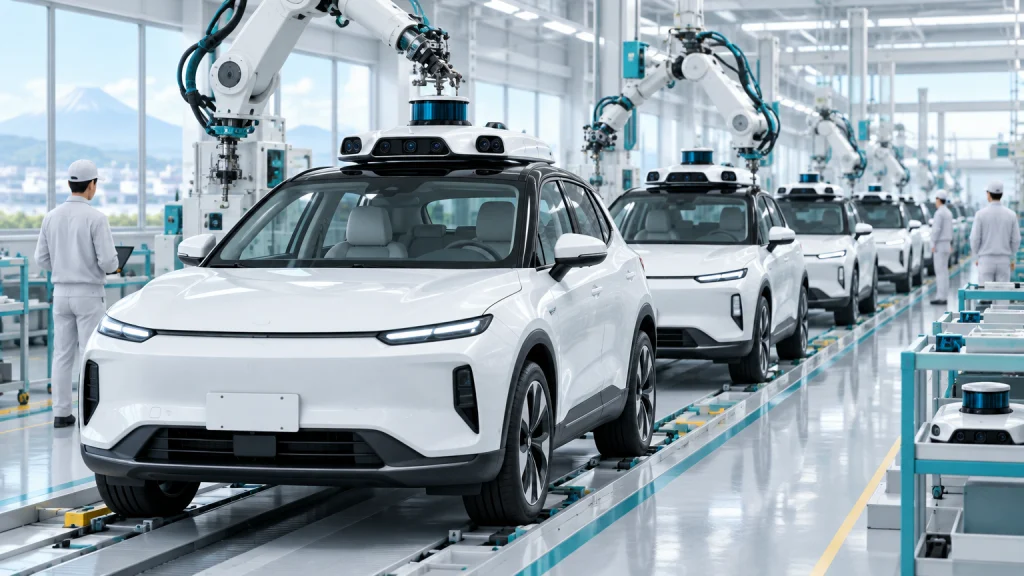
Toyota's Takaoka plant, located in Toyota City, Aichi Prefecture, already produces the facelifted bZ4X that went on sale in Japan in late 2023. Under the new agreement, a portion of that same line will receive Waymo's lidar arrays, cameras, and compute hardware before vehicles leave the building. Workers fit the sensors during the same production sequence as the standard EV's battery pack and inverter. No separate facility, no post-delivery conversion garage. Toyota's engineering team described the approach as consistent with how the company has previously embedded safety hardware — such as Toyota Safety Sense pre-collision systems — directly into production rather than treating them as dealer-installed options. The bZ4X robotaxi variant will carry Waymo's fifth-generation Driver hardware, though Toyota has not confirmed sensor counts or compute specifications for the production units. Read more about Toyota's global product decisions from the 2000s to the present in the Global Auto Index cluster archive.
Two Platforms, One City, One Year: The Numbers Behind Waymo's Japan Push
Waymo currently operates robotaxi services across four US cities: San Francisco, Phoenix, Los Angeles, and Austin. Its London I-Pace pilot, launched in partnership with Uber, covers a defined zone of approximately 50 square kilometres in the west of the city. The Tokyo I-Pace operation — separate from the bZ4X program — is scheduled for driverless commercial fares in 2027. That means Waymo will run two distinct autonomous platforms in Japan simultaneously: the I-Pace fleet and the incoming bZ4X test vehicles. If the bZ4X program adds even 50 units in year one, Waymo's Japan-facing vehicle count would double relative to its current Tokyo deployment. The arithmetic is rough because neither company has published a target figure, but the structural point holds: 1 city × 2 platforms × 1 calendar year = a regulatory approval load that Japan's Ministry of Land, Infrastructure, Transport and Tourism has not publicly addressed for multi-platform operators. Japan passed its revised Road Traffic Act amendments permitting Level 4 operation in April 2023, but those rules cover single-operator approvals, not concurrent multi-fleet licensing.
What Toyota's CTO Actually Said — and What Was Left Out
Toyota Chief Technology Officer Hiroki Nakajima, speaking at the October 30 announcement, described the initial bZ4X autonomous fleet as "small" in scale. That eight-word characterisation is the only volume guidance either company provided. Nakajima did not define a unit range, a city, or a test corridor. Waymo's co-CEO Tekedra Mawakana, who appeared alongside Nakajima at the event, confirmed the right-hand-drive market focus but declined to give UK launch dates. The joint statement published the same day described 2027 as a "testing and validation phase" — language that stops well short of a commercial service commitment. Waymo's investor communications from Q3 2024 characterised its international expansion as proceeding "market by market based on regulatory readiness," according to Waymo's Q3 2024 operational update, published October 2024. That framing is relevant: Japan granted Level 4 approval nationally in 2023, but the UK's self-driving vehicle legislation — the Automated Vehicles Act 2024 — only received Royal Assent in May 2024, leaving secondary regulations still unwritten as of the announcement date.
The Private-Vehicle Firewall Nobody Has Explained
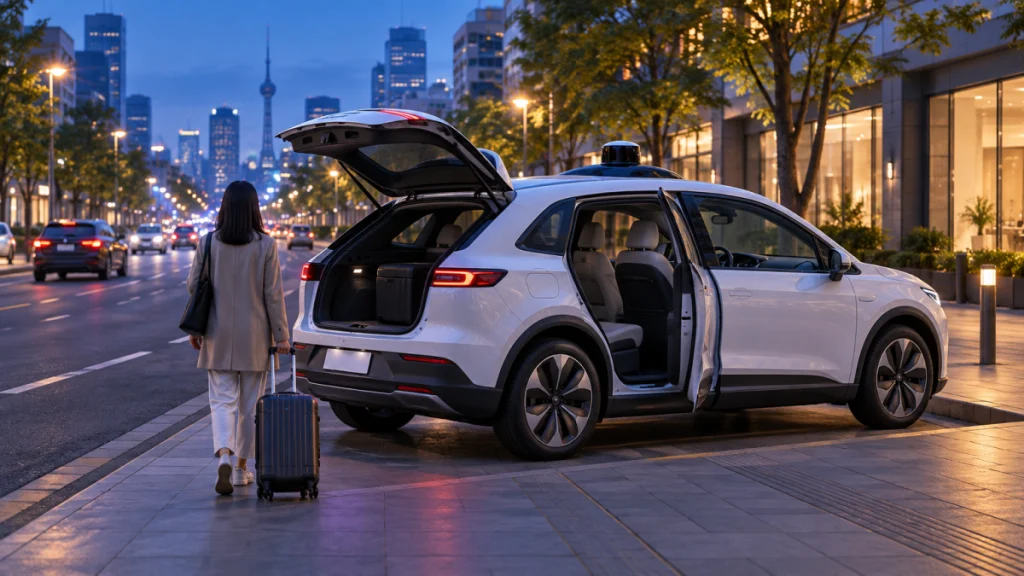
Toyota has been explicit: the Waymo deal does not touch products sold to private buyers. The company confirmed it will continue separate work on vehicle-to-infrastructure communication and driver-assistance advances through its own Toyota Research Institute programs. That separation raises a question the announcement did not answer. The bZ4X is a volume production EV, not a purpose-built robotaxi chassis. Every hardware and software refinement Waymo and Toyota develop for the Takaoka-built autonomous units will exist inside a car that is also sold to retail customers — yet Toyota says none of that carries over. Waymo's arrangement with Stellantis for the Chrysler Pacifica minivan worked differently: the Pacifica was modified so extensively that it effectively became a separate vehicle. The bZ4X program shares the retail production line. How Toyota intends to maintain that firewall — legally, in terms of software liability, and in terms of type approval across different regulatory regimes — was not addressed in any document released on October 30. That gap is the one worth watching before 2027.
Factory Integration vs. Retrofit: What the Jaguar I-Pace Comparison Shows
Waymo's I-Pace fleet, which entered service in San Francisco in 2018 and expanded to Tokyo in 2023, was built by Jaguar Land Rover at its Castle Bromwich plant and subsequently converted by Waymo at a separate facility in Michigan. That retrofit process added roughly six months between vehicle delivery and deployment readiness, according to Waymo's 2022 fleet operations disclosure. The bZ4X program eliminates that step. If Takaoka integration cuts conversion lead time to near zero, Waymo could compress its Japan ramp timeline significantly — assuming regulatory approval keeps pace. The I-Pace also uses a 90 kWh battery pack and produces 294 kW combined output. The bZ4X's standard 71.4 kWh pack produces 160 kW in all-wheel-drive trim. That is 45 percent less peak output and 21 percent less battery capacity — numbers that matter for robotaxi duty cycles where vehicles run 18-20 hours per day. Whether Toyota will specify a larger pack for the autonomous variant, or whether Waymo will accept the range trade-off, was not disclosed.
Toyota sold 24,000 bZ4X units globally in the first half of 2024, according to Toyota Motor Corporation's H1 2024 sales report, published July 2024 — a figure that underlines how thin the model's volume base remains relative to the production commitment now being asked of the Takaoka line. The robotaxi variants will carry Japanese Ministry of Land, Infrastructure, Transport and Tourism type approval separately from retail units. Approval timelines for multi-sensor autonomous configurations have averaged 14 months in Japan since the 2023 Road Traffic Act revision. The complete Toyota model history and specifications are catalogued in the Global Auto Index manufacturer database.
